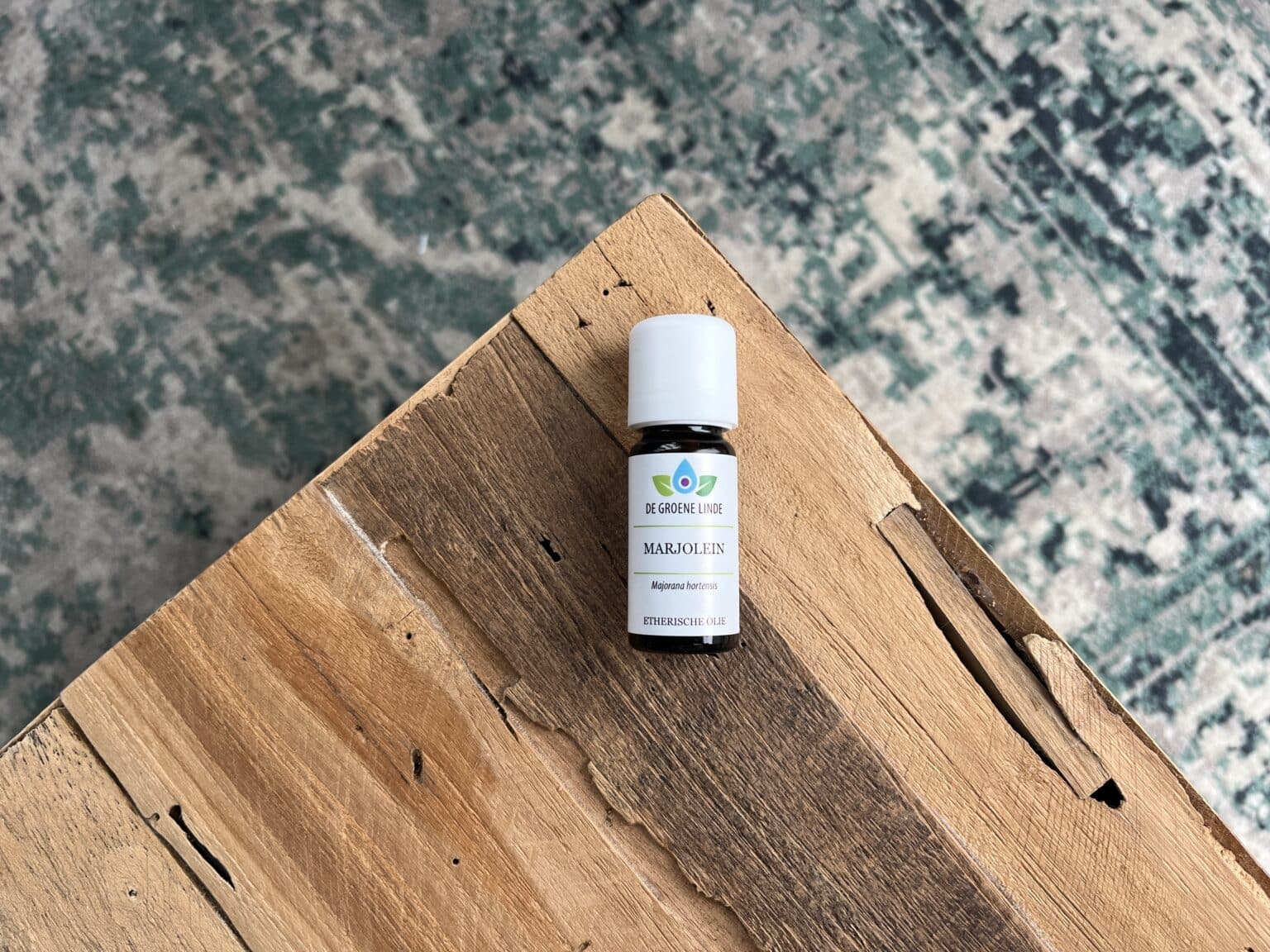

Marjoram is a delicious herb that many people use in cooking, in sauces, salads and soups. But an essential oil is also available from this lovely little plant. Not that you should start using the oil to give your dishes a bit of extra flavour – you should definitely continue to use the fresh herbs for that.
Marjoram oil, a fresh and herbaceous scent. It is reminiscent of tea tree but smells sweeter and a little milder, even slightly more floral. Marjoram, Origanum majorana, is a perennial aromatic plant with dark green leaves and greyish-white to lilac flowers. The herb’s spicy scent promotes a good mood and relaxation. Only the flowering plant is used for distilling the essential oil. It is a light yellow to deep amber-coloured oil.
Among the ancient Egyptians, the herb was dedicated to Osiris. It was planted on tombs to bring spiritual peace. The Egyptians also used it as an ingredient in perfumes and medicines. The name ‘Origanum’ derives from the Greeks and means ‘The Joy of the Mountains’.
People who could really benefit from Marjolein may feel helpless and lost. They often come from a stressful situation or a home life characterised by a great deal of tension. Leaving the past behind and opening your heart to other people in new situations can be difficult in such circumstances. Marjolein oil can help you with this.
What can you use Marjolein for?
Marjoram is widely used for its antispasmodic and analgesic properties. It also helps to lower blood pressure thanks to its vasodilatory effect. It is a fantastic oil to use for muscle pain, muscle cramps, sprains and rheumatic pain. Marjoram also offers support during times of grief and mourning. It provides comfort and warmth when feeling lonely.

Do you suffer from headaches or even migraines? Marjoram is brilliant for this. But it’s also a lovely oil to have at home for insomnia, anxiety, stress, colds, flu and period pain. Marjoram has a calming effect on the nervous system and is therefore a good natural antidepressant. It makes you feel calm and optimistic.
Marjolein helps to relieve spasms associated with respiratory infections and spasms, such as bronchitis, sinusitis, shortness of breath and whooping cough. A brilliant oil to use when the R is back in the month’s name!
How do you use the oil?
Marjoram is a common kitchen herb used by many people to add flavour to their cooking. However, we advise against taking marjoram essential oil orally! This isn’t necessary anyway, as there are many – and safe – ways to use this oil.
Diffuser or burner
When you could really do with a bit of a boost! Whether it’s mental or physical, Marjolein’s here to support you! Are you mentally exhausted? Then take 2 dr. Marjolein, 1 dr Rosemary and 1 dr Lemon oil in a diffuser or burner. Also helpful for coughs and shortness of breath. If you’re feeling mentally tired, you can replace the lemon with the Orange, which brings warmth and cheer.
Got a cold? Add 3–5 drops of marjoram to a bowl of warm water for a steam treatment.
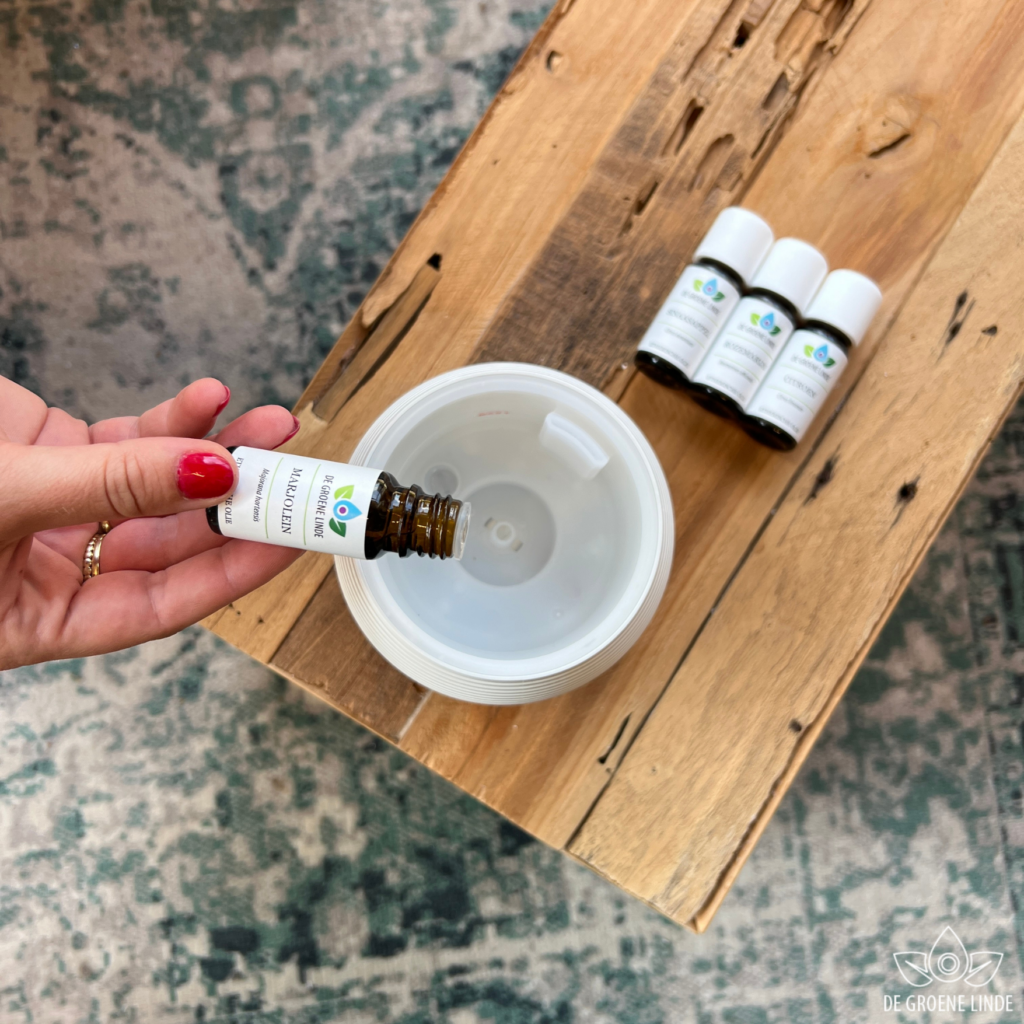
For comfort and support whilst grieving, it’s a good idea to make a blend of 2 dr Marjolein, 2 dr Bergamot and 1 dr Lavender and diffuse it in the room where you spend a lot of time. You could also make a little extra of this blend and take a sniff of it now and then when you could do with a bit of a hug. If you’re feeling stuck in your grief, this is a lovely blend to use for massage. It opens the heart, allowing the sadness to be felt and released.
Applying ointments, massaging and inhaling
To relieve sore muscles in the neck and shoulders, make a soothing massage oil. Mix 30 ml St John’s Wort oil with 5 Dr Marjolein, 2 Dr Manuka and 1 dr Thyme. Rub this into sore muscles or enjoy a massage with it. It’s also a lovely mixture to rub in if you have back pain.
For stomach ache and period pain, it helps to rub 10 ml into the stomach and massage the area Almond oil containing 2–4 dr Marjolein. This can also help to relieve tension-related abdominal pain.
If you’re suffering from insomnia, place a cotton pad with 2 dr Marjolein next to your pillow for greater peace and relaxation.
Do you experience a lot of anxiety and stress? Add a drop of marjoram to a small dish of carrier oil. Rub it into your hands until it feels warm, then cup your hands over your mouth and nose. Take a few deep breaths in and out. You can also make a blend of Marjolein and Watercress in cases of anxiety.
If you have an earache, you can put 1 or 2 drops of marjoram on a cotton bud and dab the ear canal with it. Be sure to apply the oil not in your ear and make sure you not too deep into the ear, just at the entrance to the ear canal. It’s enough simply to press gently on the entrance to the ear canal. Apply a little around the ear Kamille Rooms essential oil. Our Chamomile Cream is a 10% solution in jojoba oil. This means you can apply the chamomile directly to the skin around the ear.
In the bath or a foot bath
If you’re feeling stressed, anxious or unable to sleep, it’s lovely to have a bath with the right essential oils. Make a mixture of a generous scoop of Epsom salt, a splash Bath oil, 5 dr Marjolein, 3 dr Lavender and 3 dr Ylang Ylang. Add this to a warm bath and sit back and enjoy the relaxation. Also Neroli is a lovely oil to use in your mixture. Don’t have a bath at home? Then make a lovely foot bath as described above, but reduce the number of drops of essential oil slightly to a total of 5 drops.
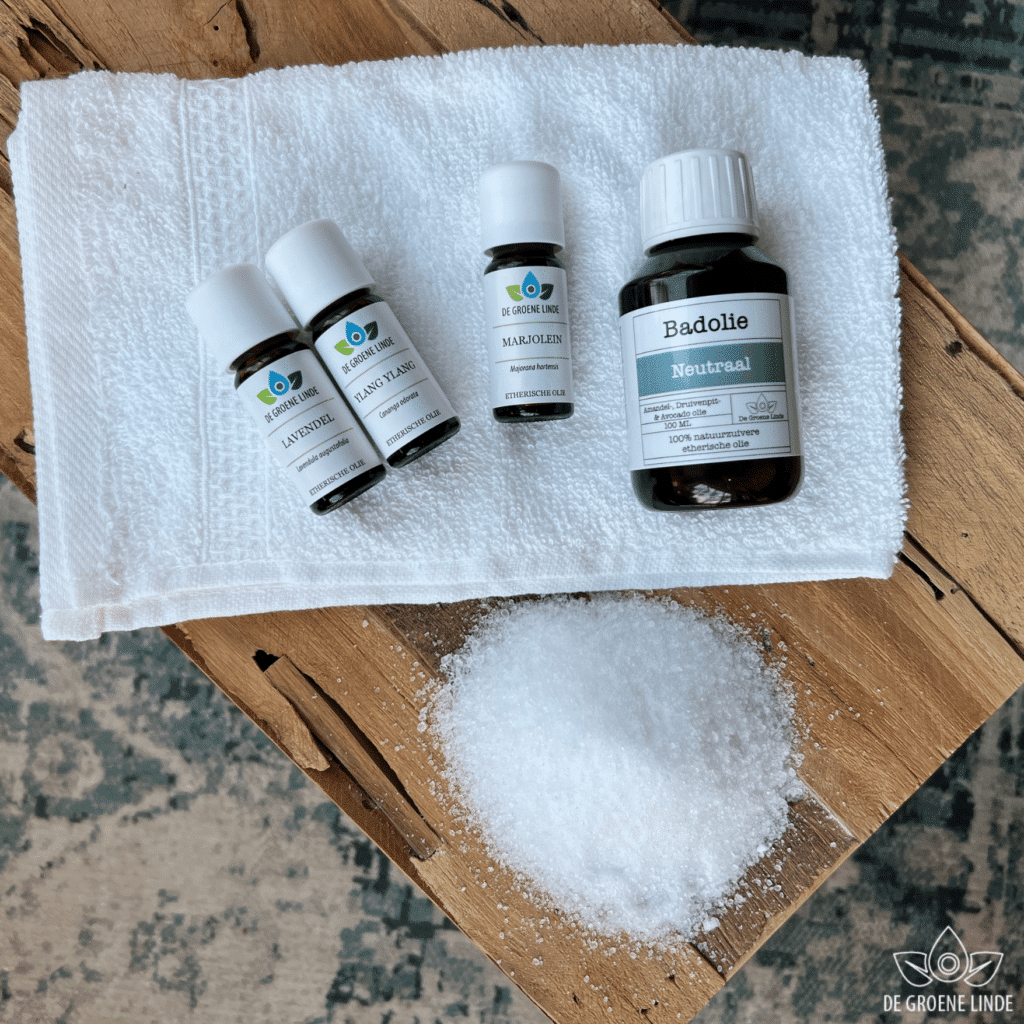
If you’re suffering from PMS symptoms, it’s lovely to have a bath with a mixture of 5 dr Marjolein and 3 dr Geranium and 2 dr Sandalwood. This mixture can also help to restore hormonal balance in teenagers going through puberty 😉 Prepare the mixture as described above before adding it to your (foot) bath.
Be sure to read the descriptions of the oils that blend well with Marjolein – see the list at the bottom of the blog. That way, you can create the best blends yourself! There are so many possible combinations, which is why essential oils are such fun to work with 😉
Some final information about Marjolein
↠ Not use for low blood pressure
↠ Not for use during pregnancy and for young children up to the age of 8
↠ The use of thyme may, in some people, skin irritation or hypersensitivity may cause. Use sparingly, and only in diluted form.
↠ Marjolein It goes well with the following oils:
Ylang-Ylang, Bergamot, Lavender, Blue and Roman Chamomile, Cypress, Cedar wood, Scots Pine, Geranium, Rosemary, Oregano, Peppermint, Eucalyptus, Orange, Grapefruit, Watercress, Roos, Neroli, Sandalwood, Incense.
Related articles

Himalaya Ceder, stevig met je voeten op de grond
De etherische olie Himalaya Ceder heeft een warme, diepe en houtachtige geur. Een geur die je even uit je hoofd kan halen en terugbrengt naar het hier en nu. De...
Read more

Groene Citroen etherische olie, een sprankelende geur
De etherische olie Groene Citroen hebben wij nieuw in ons assortiment. Het is echt een hele andere geur dan onze normale Citroenolie. Waarom dit zo is lees je in dit...
Read more
Lavender – so many varieties….
On our website, you’ll find many different varieties of lavender. As a result, you can no longer see the lavender field for all the different varieties 😉 Lavender is known for its calming and relaxing effects. All...
Read more