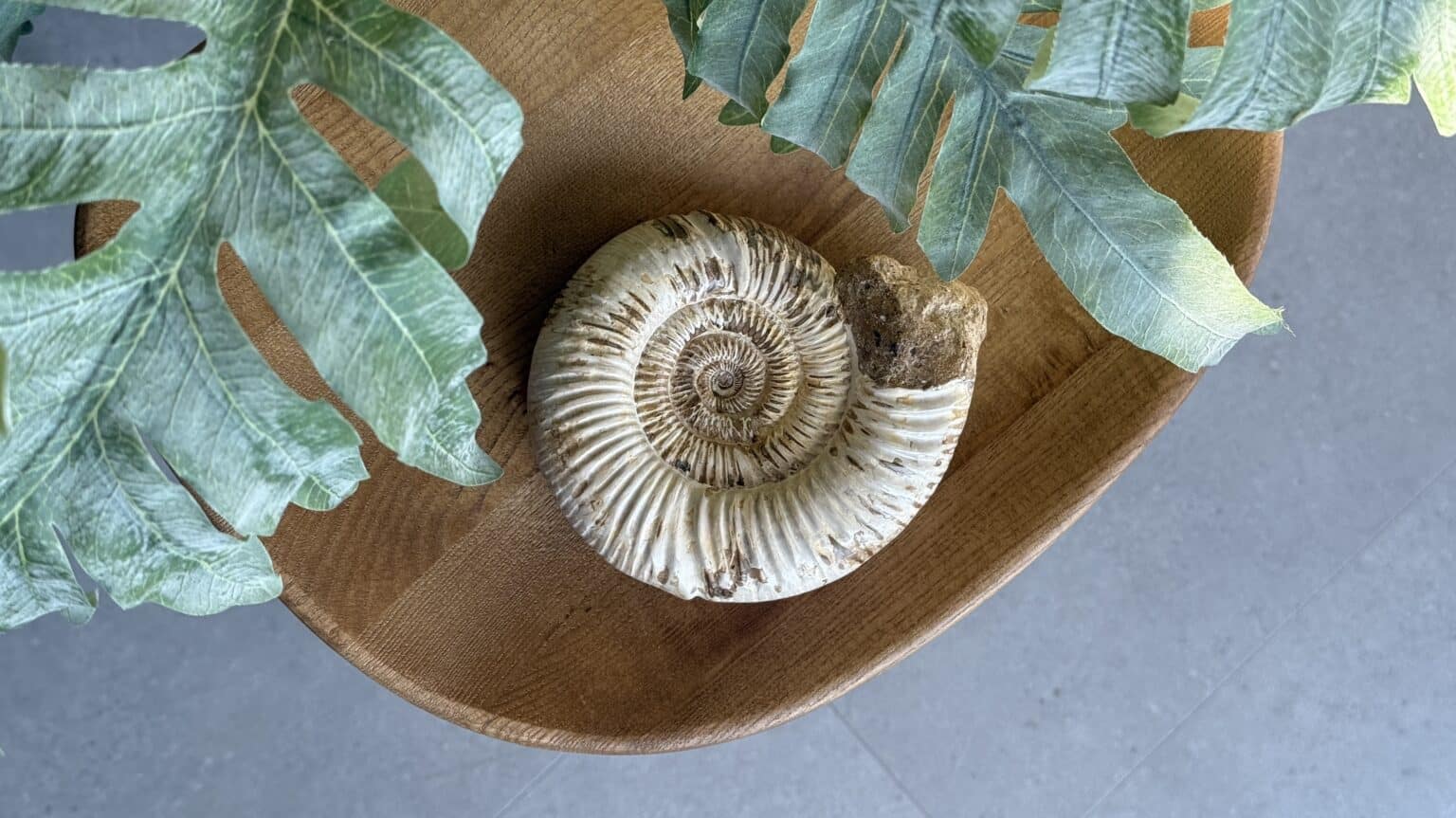

I’d like to tell you a bit more about the ammonite, my colleague Noëlle’s favourite stone 😉. Whilst buying new gemstones and minerals, she spotted a beautiful ammonite and asked if I’d like to write a blog post about it. Noëlle – together with Mirjana – always takes care of the lovely photos for the blogs, so she had a good reason to capture these beauties on camera 😉.
What is an ammonite?
An ammonite is the fossilised material of an ammonite shell. The shell can have a beautiful pearlescent sheen, featuring mainly red, green and yellow hues. These beautiful hues are caused by aragonite, and such an ammonite is known as a geopalised ammonite. An ammonite is an extinct species belonging to the class Cephalopoda (cephalopods). The fossilisation process began as soon as an ammonite died and sank to the seabed.
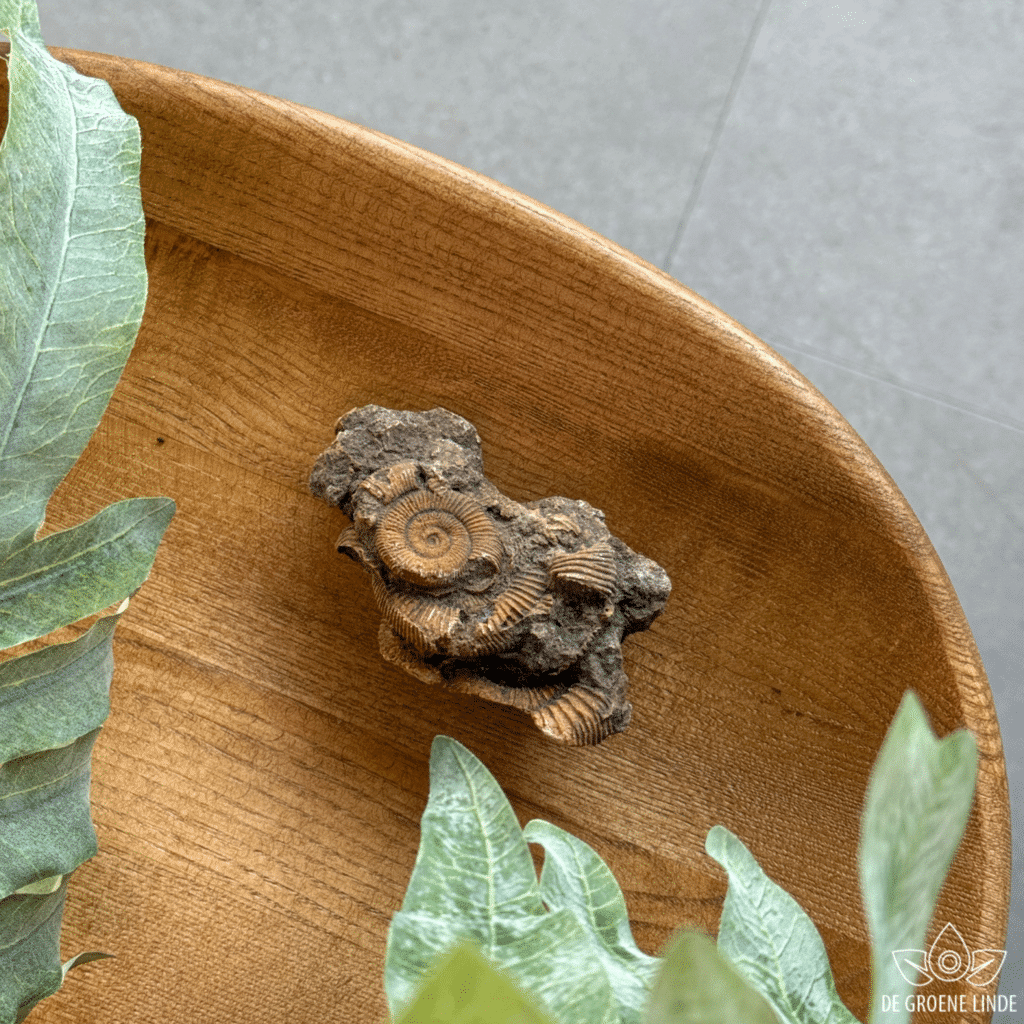
This squid-like creature lived some 400 million years ago in a sort of snail shell. Unfortunately, they became extinct around 65 million years ago. We still find the ‘shells’ of this species of cephalopod today. Because they have been buried in the ground for so long, they have become fossilised.
An ammonite had a flat, spiral-shaped shell made up of several chambers. Whenever the ‘house’ became too small for the animal, a new, larger outer chamber was formed. The diameter of such a ‘house’ could be as much as 2.5 metres!
For more than 300 million years, new species of ammonites continued to emerge. The different species are easily recognisable by the shape of their shells. On the outside of the shell, you can clearly see ridges. These were formed to make the shell harder for predators to crack. Ammonites lived in all the world’s oceans, so you might just find an ammonite!
The name ‘Ammonite’
But if these cephalopods went extinct so long ago, how did they come to be given this name?
The ribbed and twisted appearance of this stone was compared to the horns of the Egyptian and Greek god ‘Ammon’. These horns, which resemble those of a ram, bore such a resemblance to this unusual rock that the connection was quickly made.
The effects of Ammonite
You can well imagine that a stone which has been on Earth for so many millions of years has a very powerful, grounding effect. As well as this effect, the stone also has purifying properties – and you can link that, in turn, to the fact that this stone has actually been lying in purifying seawater! The stone also promotes the flow of energy.
Perhaps the most obvious effect is the sense of calm this stone brings when you carry it with you. The stone offers support when dealing with anxiety and helps you find a better sense of balance. Do you find it difficult to live in the here and now? Then carry the ammonite with you!
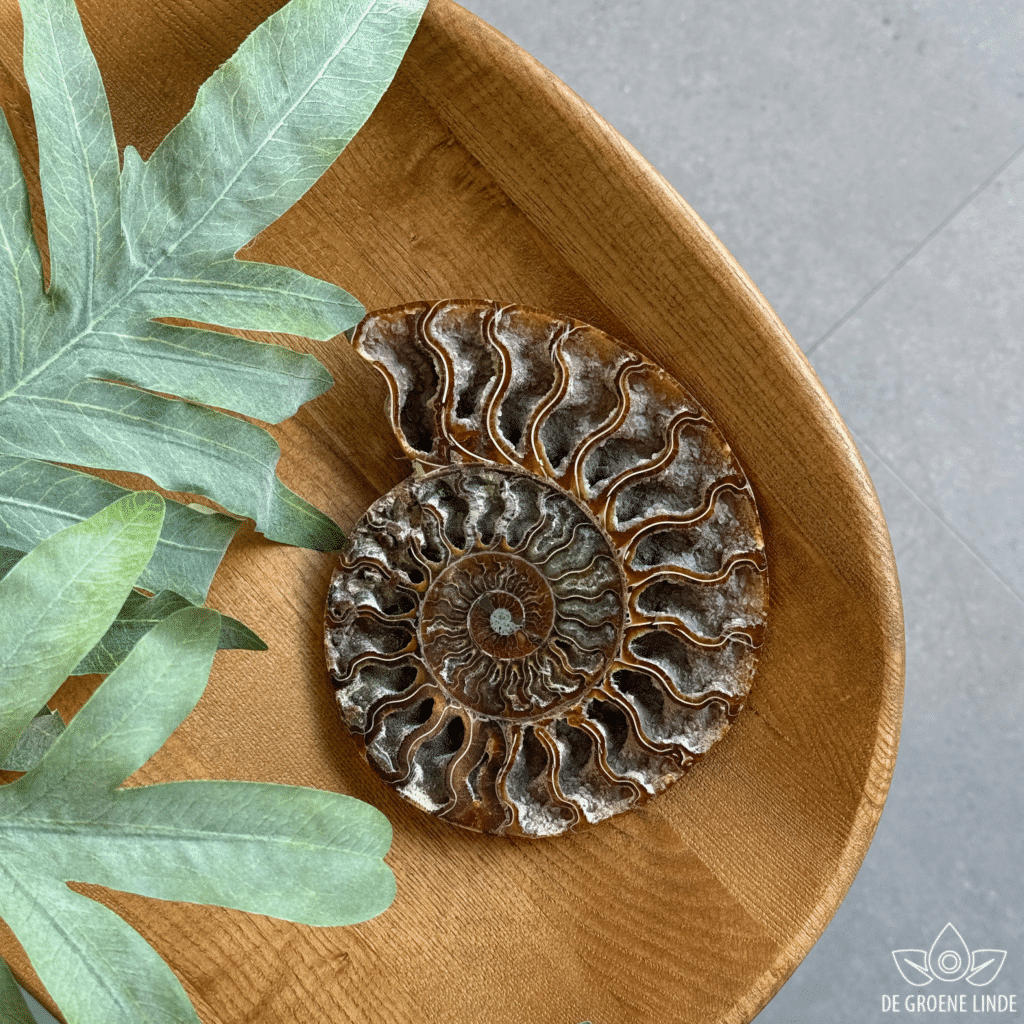
Thanks to its deep and purifying energy, it is a lovely stone to carry with you when you are feeling down or depressed. The shell, as it were, draws in the heavy, negative energy and transforms it into positive energy.
It also helps you gain a better understanding of your problems, thanks to the loving primal energy that this stone carries. This primal energy is uncomplicated, and the stone therefore works in a simple way. And that can be quite a relief at times in this complicated world.
It is also a lovely stone to carry with you when you are working through past trauma or emotional wounds. As the stone cleanses and balances the energy of the chakras and supports the flow of energy, it activates the body’s self-healing capacity.
A geopalised ammonite contains many colours. These resonate with the chakras and have a positive effect on them. A colourless ammonite does possess the stone’s general properties, but does not offer the additional support provided by the resonating chakras. However, it does have a strong influence on the root chakra, thanks to its grounding effect.
A rather special little stone with a rather special story behind it. I can well see why this is one of Noëlle’s favourites 😉.
𝙻𝚒𝚎𝚏𝚜 𝚁𝚎𝚋𝚎𝚌𝚌𝚊
Related articles
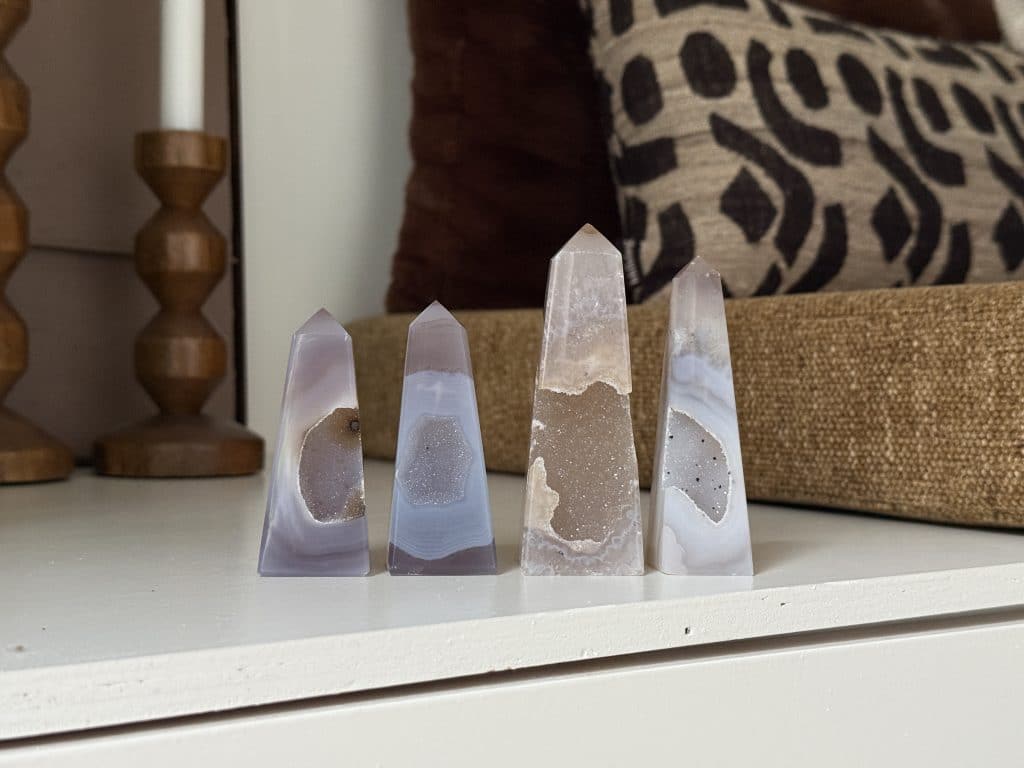
Druzy Agate, a beautiful stone that sparkles
Druzy Agate immediately catches the eye thanks to the thousands of tiny crystals that sparkle in the light. This unique stone combines the grounding properties of agate with a sparkling crystal surface that offers plenty...
Read more
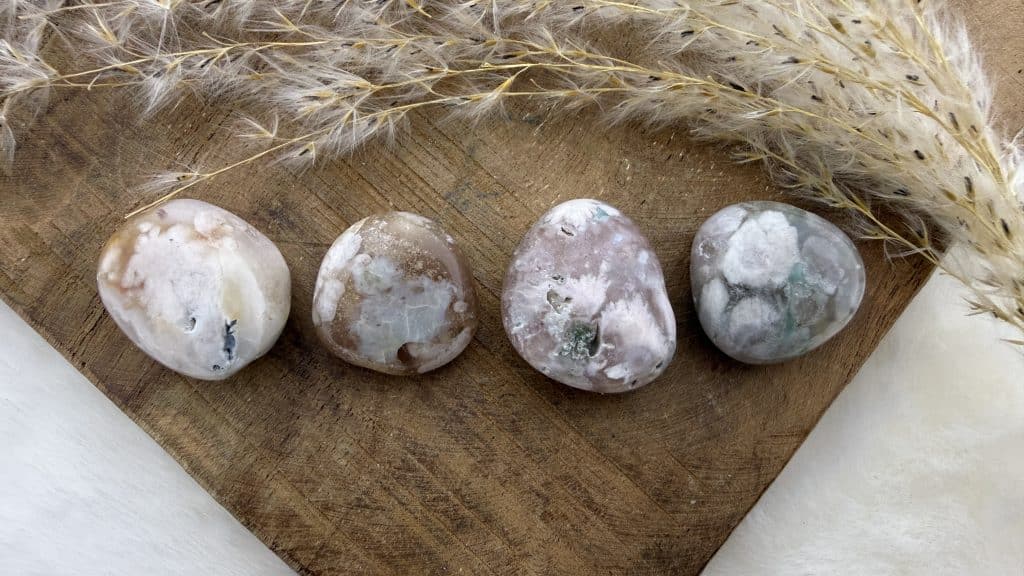
Flower Agate: the stone of growth, blossoming and new possibilities
Flower Agate is one of the most popular gemstones of recent years. Its soft pink and white hues, combined with flower-like patterns, have made us fall in love with it...
Read more
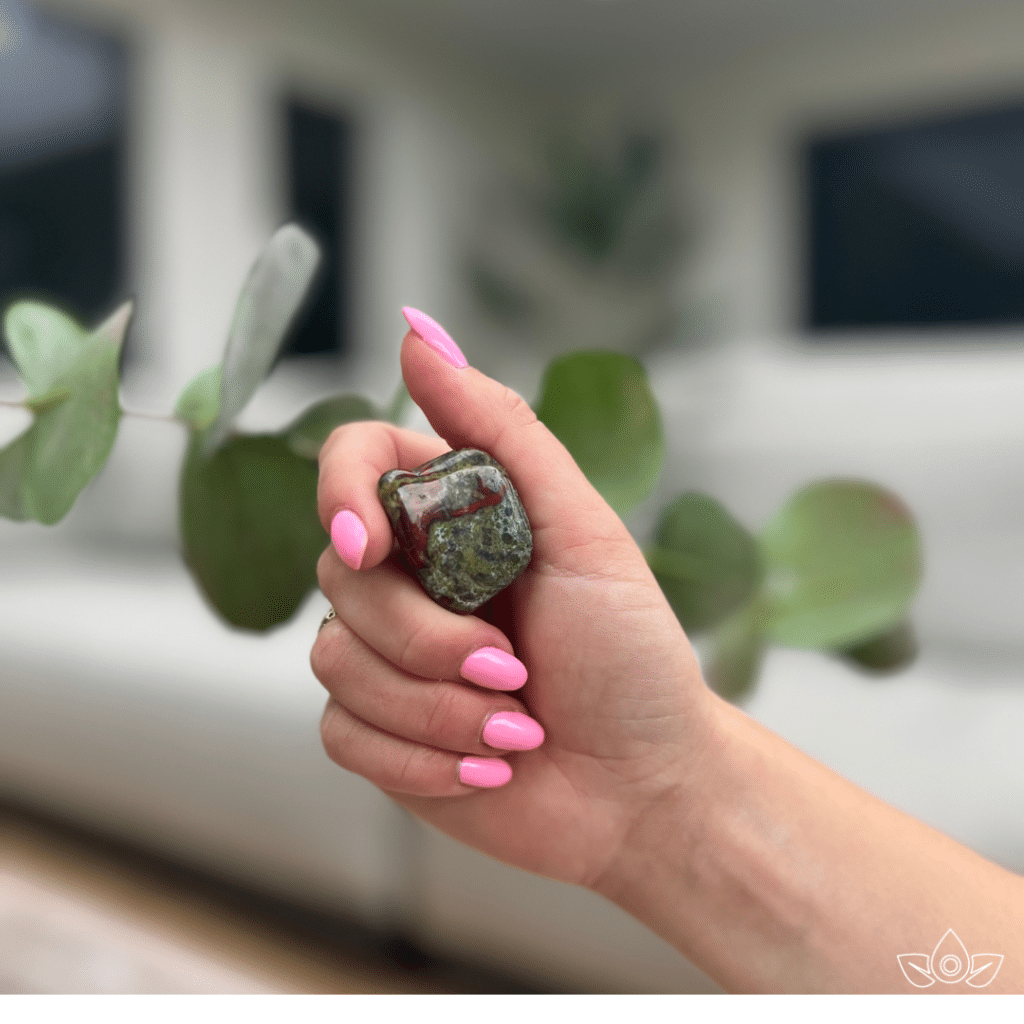
Dragon’s Blood Stone
Dragon’s blood stone is a unique type of crystal with a striking green colour and red patterns. This stone consists of a combination of different minerals and has a rich history steeped in symbolism...
Read more