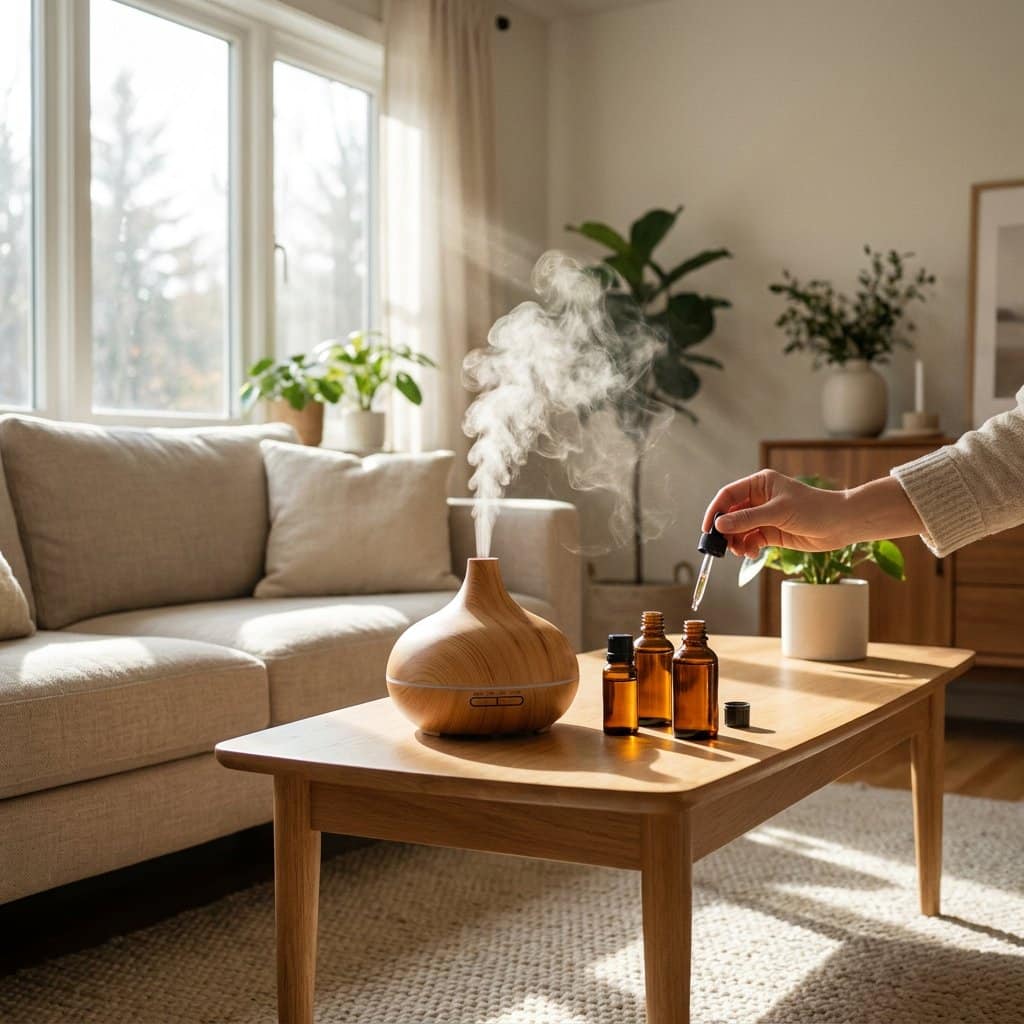

Blending essential oils for your diffuser is a simple way to create exactly the scent and atmosphere that suits you. By following a few basic rules, you can avoid your blend becoming too heavy, too sharp or, conversely, too bland. This allows you to experiment with pure oils at home at your leisure and discover which combinations feel right for you.
Whether you prefer fresh citrus, soft floral notes or warm woody scents: a good blend starts with balance. Below, you can read about how to mix essential oils in a diffuser, how many drops are usually pleasant, and which combinations work well together.
How to start blending essential oils in a diffuser
Keep it simple to begin with. Two or three oils are usually more than enough to create a lovely fragrance combination. If you work with too many scents at once, it becomes harder to distinguish what each oil contributes.
A useful rule of thumb is to start with a base note and add one supporting or softening scent to it. Think, for example, of lemon with lavender, or peppermint with eucalyptus. You can then make small adjustments until the blend feels better balanced.
- Start with 2 oils if you don’t have much experience yet
- Choose one dominant scent and 1 additional fragrance
- Work in drops so that you can easily make adjustments
- Write down your mix if you want to remember a combination
How many drops of essential oil should you put in a diffuser?
The right amount depends on your diffuser, the capacity of the water reservoir and how strong the oils smell. For a small or medium-sized diffuser, it’s usually best to start off gently. You can always add an extra drop, but too much oil can quickly make the scent overpowering.
As a practical starting point, you could follow this advice:
| Water in the diffuser | Total amount of oil |
|---|---|
| 100 ml | 3–5 drops |
| 200 ml | 5–8 drops |
| 300 ml | 8–10 drops |
If you’re using a strong oil such as peppermint, eucalyptus or patchouli, using it less frequently is usually sufficient. With milder citrus oils or floral blends, you can sometimes use a slightly higher concentration without the scent becoming too overpowering. Please also read the guidelines for safe use in Safety when using essential oils.
Which scents go well together?
A blend usually turns out better if you combine scents that complement one another. Fresh oils add lightness, floral oils soften the scent, and woody oils lend depth. By consciously combining these elements, you can more easily create a fragrance that comes across as well-rounded and soothing.
Easy combinations to get you started
- Citrus + floral – for example, orange and lavender
- Mint + fizzy – for example, peppermint with eucalyptus
- Woody + floral – for example, cedarwood with lavender
- Warm + fresh – for example, incense with peppermint
- Earthy + soft – for example, patchouli and lavender
De Groene Linde’s range also includes well-known combinations such as incense with peppermint and ylang-ylang, and patchouli with lavender or cedarwood. These are lovely examples of blends in which fresh, soft and deep notes are perfectly balanced. You can find more inspiration on blending at the fragrance profiles of essential oils.
4 simple ways to create a blend
1. Fresh and light
Choose a citrus oil as a base, such as lemon, orange or grapefruit. Then add a milder oil to round out the scent, such as lavender or geranium.
2. Calm and gentle
Start with lavender or another mild floral oil and combine it with a warm, grounding scent such as cedarwood or frankincense.
3. Clear and invigorating
Use a fresh, invigorating combination such as peppermint and eucalyptus. You could add lemon if you want to make the blend a little lighter.
4. Warm and earthy
Start with a deeper-scented oil such as patchouli, frankincense or cedarwood, and choose a softer or fresher oil for the second note, so that the scent doesn’t become too heavy.
Examples of essential oil blends for the diffuser
These examples have been deliberately kept simple so that you can easily use or adapt them. The quantities are suitable as a starting point for an average diffuser. Feel free to adjust them slightly depending on the size of your diffuser and your fragrance preferences.
A quiet evening
- 3 drops of lavender
- 2 drops of cedarwood
- 1 drop of orange
Soft, warm and with a soothing scent.
A fresh focus
- 2 drops of peppermint
- 2 drops of eucalyptus
- 2 drops of rosemary
A crisp combination with a fresh and energetic scent.
Light and cheerful
- 3 drops of orange
- 2 drops of grapefruit
- 1 drop of bergamot
Fruity and sunny – lovely during the day or in the living room.
Soft and floral
- 3 drops of lavender
- 2 drops of geranium
- 1 drop of ylang-ylang
Full-bodied, floral and with a slightly rounder character.
Deep and balanced
- 2 drops of frankincense
- 2 drops of peppermint
- 1 drop of ylang-ylang
An interesting blend of fresh, warm and soft. If you’re looking for more inspiration, have a look at these too All-Day diffuser blends.
What sort of oil do you use in a diffuser?
It is best to use pure essential oil that is suitable for use in a diffuser. According to De Groene Linde’s general guidelines, essential oils can, in principle, be used in a diffuser. Sprays and roll-ons are not intended for this purpose.
If you’d rather not mix your own, you can also opt for a ready-made essential oil blend for use in a diffuser, such as a Healing Composition. This is handy if you want a lovely scent combination but don’t want to experiment with the proportions yourself.
Common mistakes when blending essential oils
- Using too many drops – the scent quickly becomes too strong
- Combining too many oils at once – the blend loses its balance and focus
- Select only strong scents – as a result, a mix can feel stifling or sluggish
- Do not test and adjust – small changes often make a big difference
FAQ
Can any fragrance oil be used in a diffuser?
Not all fragrance oils are the same. For a diffuser, it’s best to choose an essential oil that’s suitable for that purpose. Sprays and roll-ons should not be used in a diffuser. If you don’t have a diffuser yet, take a look at the diffuser sets for a complete start.
Can you combine a single oil with a blend?
Yes, that’s perfectly fine as long as you add them sparingly and the scent remains balanced. For example, you could complement an existing blend with a single fresh or gentle note. If you’d like to choose or compare oils, you can take a look at Single oils A–Z.
How can you tell if a blend is too strong?
If the scent quickly starts to feel overpowering, sharp or tiring, you’re probably using too much oil or combining too many strong scents at once. Next time, try adding fewer drops or simplifying the blend. If you use your diffuser frequently, do also read the Tips for looking after your diffuser.
Related articles

Update on The Gambia
The first consignment has arrived in The Gambia. We have some great news about our Gambia project! The first consignment of clothes, shoes, toys and other donations has arrived safely in The...
Read more
Himalayan Cedar: keeping your feet firmly on the ground
Himalayan Cedar essential oil has a warm, deep and woody scent. A scent that can help clear your mind for a moment and bring you back to the here and now. The...
Read more
Druzy Agate, a beautiful stone that sparkles
Druzy Agate immediately catches the eye thanks to the thousands of tiny crystals that sparkle in the light. This unique stone combines the grounding properties of agate with a sparkling crystal surface that offers plenty...
Read more