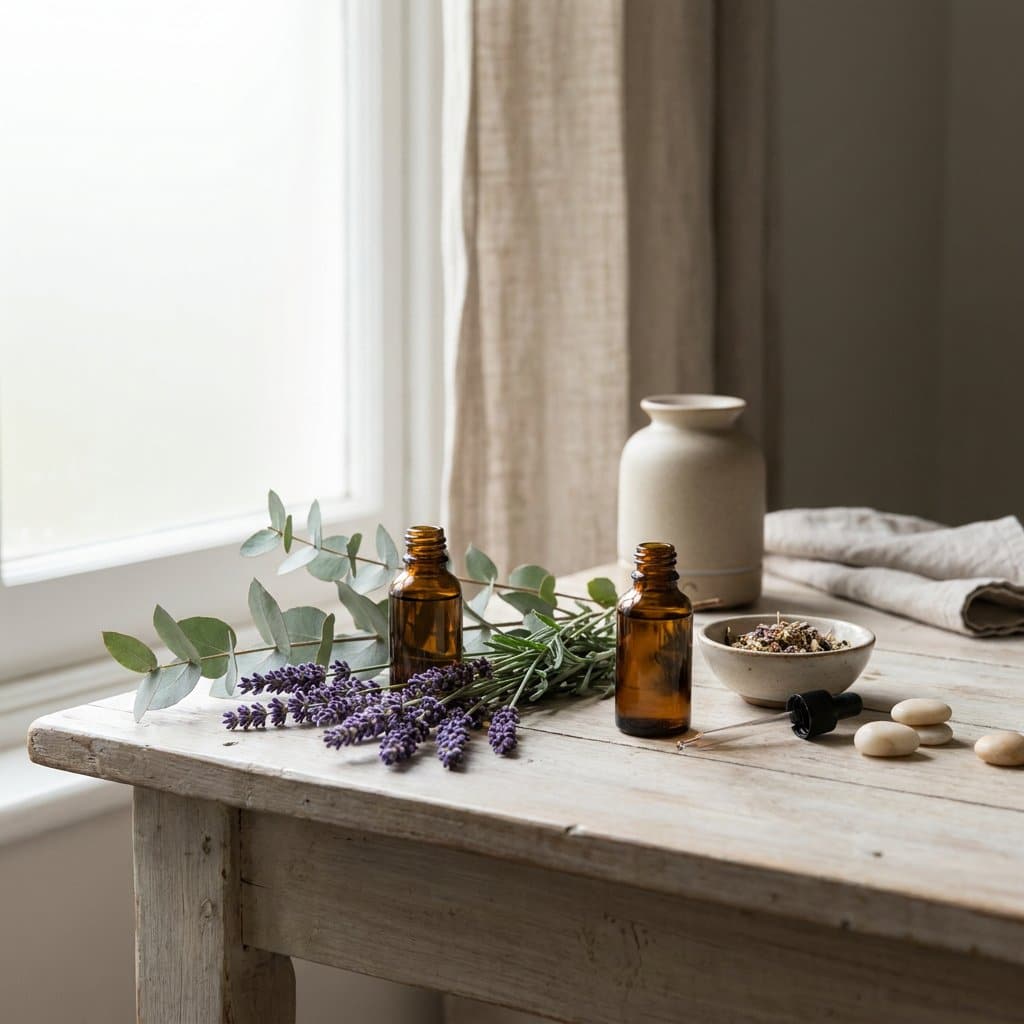

Are you unsure whether to choose essential oil or fragrance oil? The short answer is simple: essential oil is a natural and concentrated plant extract, whilst fragrance oil is a blended scent that is often partly or entirely synthetic. Which is the best choice depends on what you’re looking for. If you’re looking for a pure, plant-based fragrance experience, essential oil is usually the better choice. If, on the other hand, you’re mainly looking for a specific, stable fragrance for items such as candles or home fragrances, fragrance oil is often the preferred option.
What is essential oil?
Essential oil is extracted from plants, flowers, leaves, peels, resins or wood. It consists of the plant’s volatile aromatic compounds. As a result, essential oils often have a lively, complex and natural scent. At the same time, they are highly concentrated: a small amount of oil often requires a great deal of plant material. Would you like a basic overview? Essential oils: what are they?
How is essential oil made?
The most commonly used method is steam distillation. In this process, steam passes through the plant material, carrying the aromatic compounds with it, and is then cooled so that the oil and water can be separated. Cold pressing is often used for citrus fruits, as the aromatic compounds are mainly found in the peel. Precisely because it is a natural product, the scent may vary slightly from one harvest or season to the next.
What is essential oil used for?
Essential oils are widely used in diffusers, aromatic rituals, massage oils and natural skincare products, provided the product is suitable for this purpose and is diluted correctly. People often choose them because they are plant-based and because they consciously want to use a 100% natural fragrance in their home or on their skin.
What is fragrance oil?
Fragrance oil, also known as perfume oil, is a blended scent. Such oils may contain synthetic fragrances, sometimes supplemented with natural fragrance components. The aim is usually not to produce a pure plant extract, but to replicate a specific fragrance profile or, conversely, to create something that rarely occurs in nature, such as the scent of fresh laundry, baby powder or a dessert fragrance.
Why do people choose fragrance oils?
Fragrance oil is often chosen when scent strength, recognisability and consistency are important. This is practical for candles, wax melts, soap or scented products, as the scent often remains consistent from batch to batch. The choice of scents is also usually much wider than with essential oils. That doesn’t necessarily make fragrance oil a bad choice, but it is different in terms of its origin and intended use. Are you looking for a natural alternative that offers a similar fragrance experience? Choose by fragrance profile.
A summary of the main differences
| Characteristic | Single oils | Fragrance oil |
|---|---|---|
| Origin | Derived from plants, flowers, bark, wood or resins | A compound fragrance, often partly or entirely synthetic |
| Production | Usually steam distillation or cold pressing | Formulated to create a specific fragrance profile |
| Scent experience | Of course, sometimes more subtle and less predictable | Often powerful, recognisable and very consistent |
| Fragrance types | Limited to what plants provide naturally | Very wide range, including non-natural fragrances |
| Usage | Often chosen for use in diffusers, aromatherapy and natural skincare | A popular choice for candles, soap and scented products |
| Use of the skin | Only when diluted, and provided the product is suitable for this purpose | Only use if it is explicitly stated that it is suitable for cosmetic use |
| Objective | Natural fragrance and plant-based origin | Distinctive scent, stability and creative freedom |
The main difference between fragrance oil and essential oil therefore lies not only in the scent, but above all in their origin. Essential oil starts with the plant. Fragrance oil starts with the desired scent.
Which oil is right for your needs?
For a diffuser or a natural fragrance experience
If you’d like your home to smell as natural as possible, essential oils are usually the most logical choice. Especially if you’re consciously opting for pure ingredients and want the characteristic scent of lavender, orange, eucalyptus or frankincense to come genuinely from the plant itself. Need some practical tips? Natural fragrance diffuser, fragrance-free.
For candles, wax melts or soap
If you make your own fragrance products and are looking, above all, for a stable, distinct scent that holds up well, fragrance oils are often used. Do always check, however, whether the oil is suitable for that specific application, as not every fragrance behaves in the same way when exposed to heat, wax or a soap base.
For use on the skin
Never simply assume that either type of oil is safe. Essential oils should usually be diluted in a carrier oil. Fragrance oils are only suitable for use on the skin if the supplier clearly states so. A pleasant scent alone is no guarantee that an oil is safe for cosmetic use.
Safe and responsible use
- Always read the label and the product specifications.
- Only use essential oils on the skin when diluted and in accordance with the instructions; see Safe use of essential oils.
- Only use fragrance oil for the purpose for which it is intended.
- Ensure there is adequate ventilation when using this indoors, particularly in small rooms.
- Take extra care if you are pregnant, have young children, keep pets or have sensitive airways.
- If in doubt, it is always wise to seek personal or professional advice.
Frequently Asked Questions
Is ‘etheric oil’ the same as ‘essential oil’?
Yes. In Dutch, the two terms are used interchangeably. The terms ‘etherische olie’ and ‘essentiële olie’ generally refer to the same natural plant extract.
Can you use fragrance oil in a diffuser?
Only if the supplier explicitly states that this is possible. Not every fragrance oil is intended for use in diffusers or for aromatic purposes. You should therefore always check the product’s instructions for use.
Does essential oil always have a less intense scent than fragrance oil?
Not always, but the scent of essential oil is often more natural and sometimes more fleeting. Fragrance oil is usually formulated to make a scent stronger, more recognisable or longer-lasting.
Which one would you choose if you wanted to live as naturally as possible?
This usually leads you to pure essential oil. When choosing one, make sure it comes with clear product information, a reliable source and a formulation free from unnecessary additives. Read on to find out how we ensure purity and safety: Quality management and safety at De Groene Linde.
Would you like to make a conscious choice to use 100% natural essential oils? At De Groene Linde, we use pure ingredients and artisanal blends, so you know exactly what you’re using and why. Take a look at the Single essential oils (A–Z).
Related articles

Update on The Gambia
The first consignment has arrived in The Gambia. We have some great news about our Gambia project! The first consignment of clothes, shoes, toys and other donations has arrived safely in The...
Read more

Himalayan Cedar: keeping your feet firmly on the ground
Himalayan Cedar essential oil has a warm, deep and woody scent. A scent that can help clear your mind for a moment and bring you back to the here and now. The...
Read more
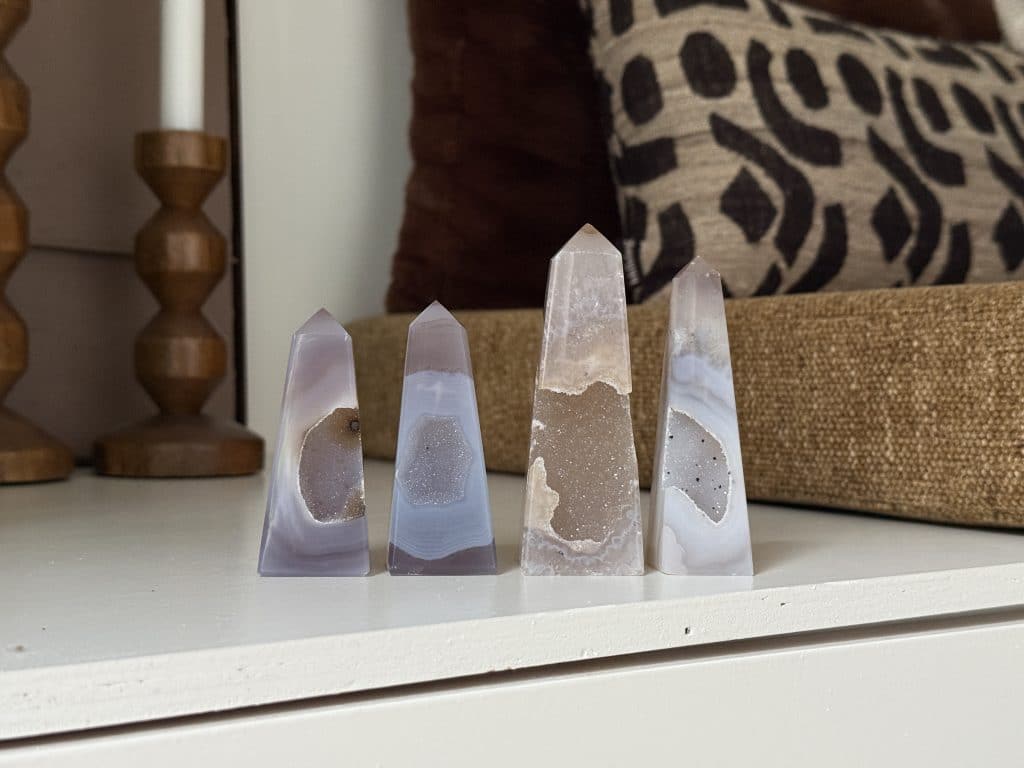
Druzy Agate, a beautiful stone that sparkles
Druzy Agate immediately catches the eye thanks to the thousands of tiny crystals that sparkle in the light. This unique stone combines the grounding properties of agate with a sparkling crystal surface that offers plenty...
Read more