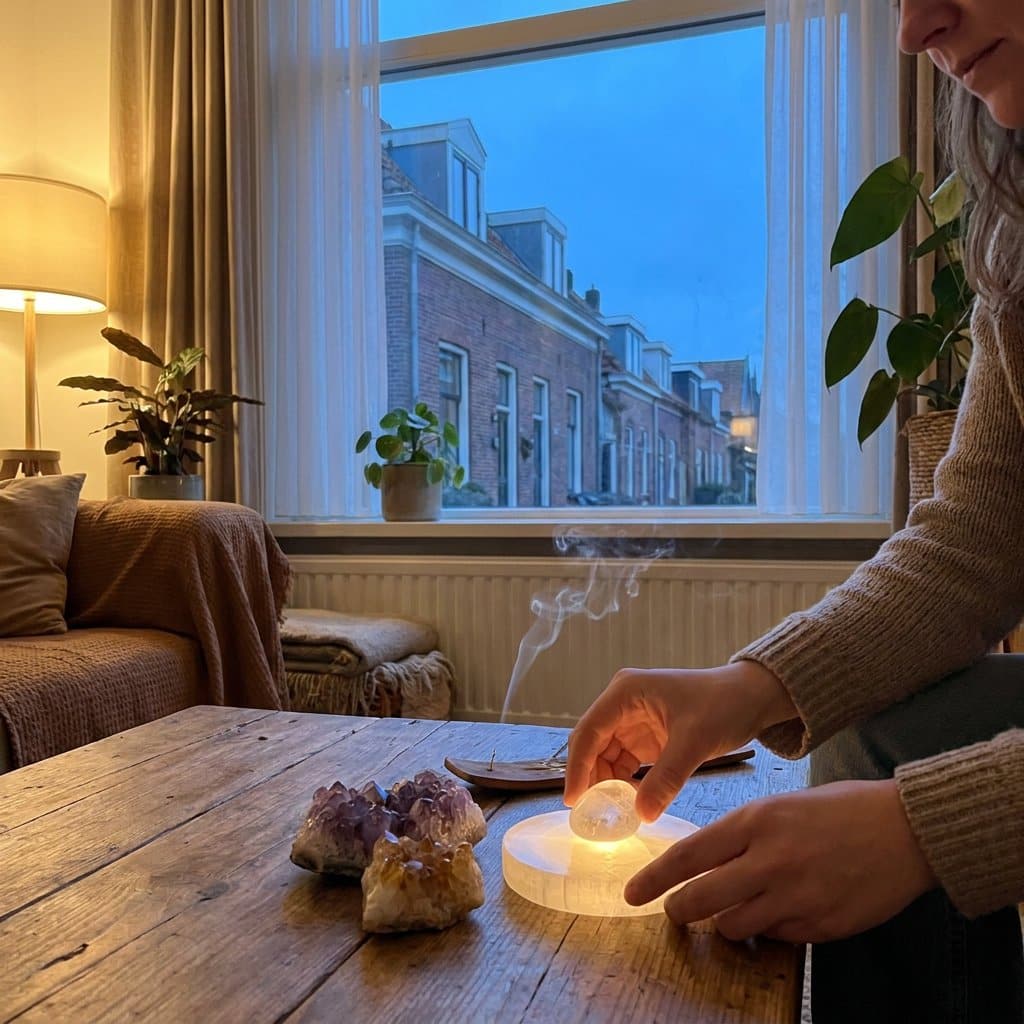

Cleaning crystals
Do you want to cleanse your crystals without damaging them? Then always choose a method that’s suitable for the stone. Water only works for some crystals, whilst incense, selenite or haematite are actually safer for delicate varieties. The text on our website specifies the suitable method for each stone. You can then recharge your crystal in moonlight, on rock crystal or on a selenite slab. Below, you can read exactly how to do this in a practical and gentle way.
When a crystal needs a refresh
Cleaning a crystal can be very practical, for example because it has dust or fingerprints on it. Many people also cleanse their crystals on an energetic level. When people talk about ‘cleansing’ or ‘purifying’ crystals, they usually mean the same process: making a stone feel fresh, clear and light again.
Good times to cleanse your crystals are:
- after purchasing a new crystal
- after intensive use during meditation or a ritual
- if you often wear a crystal as a piece of jewellery
- if a stone feels dull, dusty or heavy to the touch
- after a period during which you have experienced a great deal of unrest or turmoil
Good to know: cleansing and charging are not the same thing. Cleansing involves removing dirt or accumulated energy. Charging, on the other hand, involves restoring peace, focus or a new intention to the crystal. It is precisely this combination that you often see, as in our guide Cleaning and charging crystals and stones.
Do you use a set of chakra stones? Read Cleansing chakra stones for specific tips for each set.
First, choose a secure method
Not every crystal can withstand water, salt or strong sunlight. Soft, porous or metal-containing stones require extra care. If you’re unsure which crystal you have, it’s best to opt for a gentle method. We usually follow a simple rule: better to be too gentle than too harsh.
|
Method |
Good for |
Please note |
|---|---|---|
|
Running water |
Hard, smooth stones that are non-porous |
Not suitable for soft, soluble or metal-containing crystals |
|
Incense or smoke |
Virtually all crystals, including delicate varieties |
Work calmly and keep your distance from heat |
|
Selenite or haematite |
Delicate stones and crystals that you’re not quite sure about |
Clean the auxiliary crystals yourself from time to time as well |
|
Earth |
Sturdy stones that can withstand a more thorough clean |
Not ideal for moisture-sensitive crystals |
|
Moonlight |
Gently charge after cleaning |
Only store stones outdoors in a dry and sheltered place |
Is your crystal set in a pendant, ring or other piece of jewellery? If so, take even greater care. Soaking for long periods, hot water and vigorous scrubbing can damage not only the stone but also the setting.
Cleaning crystals with water
Cleaning crystals with water is popular because it’s quick and easy. However, this is only a good option if the stone can actually withstand it. It’s best to use cold or lukewarm running water and keep it brief.
How to clean with water
Rinse briefly
Hold the crystal under gently running water for about 30 seconds to 2 minutes. This is usually long enough to remove everyday dirt and freshen up the stone. There’s no need to scrub it hard.
Dry thoroughly
Then pat the crystal dry with a soft cloth and leave it to air-dry for a little while. It is best not to place it directly in bright sunlight, as this may cause some stones to lose their colour.
Which crystals should not be placed in water?
Avoid water with crystals that are soft, porous or soluble. Well-known examples include selenite, halite, malachite, calcite, angelite and lapis lazuli. Raw haematite, pyrite and other stones with a high metal content may also react less well to prolonged exposure to moisture. If you’re not sure, simply skip the water. With Smudge sticks You can’t go wrong with selenite.
How do you make a crystal clear again?
If your crystal is mainly dull due to dust, skin oils or deposits, a dry microfibre cloth will often do the trick. If the stone can get wet, you can rinse it briefly with lukewarm water and pat it dry straight away. It’s best to avoid using harsh cleaning products. These are rarely necessary for a natural crystal and can actually reduce its lustre.
Cleaning without water
For many types of stone, cleaning without water is the safest option. These methods are gentle, simple and ideal if you’d rather not take any risks.
Cleansing crystals with incense
Cleansing crystals with incense is a good choice for sensitive stones and for those who prefer a short ritual. Allow the smoke from incense, sage or palo santo to drift gently around the crystal for 30 to 60 seconds. You don’t need to hold the stone in thick smoke, nor do you need to place it close to the heat. It’s best to work in a well-ventilated room and always handle fire with care. See our step-by-step guide: Energetic cleansing with sage and palo santo.
Do you prefer to work with sprays or blends? Read: Scent frequencies for energetic cleansing.
Cleansing with selenite, haematite or rock crystal
Another gentle method is to place your crystal on top of or next to another crystal. Selenite and rock crystal are often used to gently refresh other stones. Hematite, on the other hand, is often chosen to first discharge a stone. Place your crystal on a selenite slab, in a small bowl with hematite chips, or next to a piece of rock crystal for a few hours. This is a very pleasant method if you’re unsure whether a stone can tolerate water.
Earth and salt for deeper cleansing
If you’re looking for a more thorough reset, you can place a robust crystal in dry soil overnight. This method is particularly suitable for stones that can withstand the elements well. Salt is also often mentioned, but caution is key here. Direct contact with salt can damage a crystal. If you do wish to use salt, it is better to opt for an indirect ‘bowl-within-a-bowl’ method, where the stone does not come into contact with the salt.
Looking for tools and sprays? Take a look at our Products for energetic cleansing.
Charging and activating crystals
After cleansing, many people choose to recharge their crystal. It doesn’t have to be complicated. A quiet moment, a suitable spot and a little attention are usually enough.
Charging crystals in moonlight or under a full moon
Charging crystals in moonlight is one of the most common methods. Place your stone outside in a dry spot or by the window in the evening, and collect it again the following morning. Many people feel that the full moon is particularly powerful, which is why terms such as ‘charging crystals under the full moon’ and ‘full moon crystal charging’ are so popular. Think of it simply as a gentle, recurring moment to help your crystals feel refreshed and re-calibrated.
Can it also be charged in sunlight?
Yes, but only briefly and with care. Some stones, such as amethyst, rose quartz and fluorite, can become discoloured in bright light. It is therefore best to opt for soft morning light and keep the session short. If you’re unsure about a particular stone, moonlight is usually the safer choice.
How do you activate a new crystal?
Activating a new crystal doesn’t have to be a big deal at all. First, gently cleanse the stone, then hold it in your hand for a moment. Decide what you want to use it for – for example, as a lovely reminder of calm, focus or mindfulness. A brief intention, a few calm breaths or a brief moment of silence is often enough to connect with your stone.
Frequently Asked Questions
How often should I clean my crystals?
That depends on how you use them. A crystal that you wear every day or hold frequently can be cleansed more often than one that is simply sitting on a shelf. Many people choose to cleanse them once a week, once a month or after intensive use.
Can I cleanse and charge crystals on the same day?
Yes, that’s actually very common. First cleanse your crystal, for example with incense or briefly with water if it’s safe to do so, and then charge it in moonlight, on selenite or next to rock crystal.
What should I do if I don’t know which crystal I have?
In that case, choose the safest course of action. Avoid water, salt and direct sunlight. Incense, selenite and haematite are usually the safest options in such situations.
Can all crystals be placed out under the full moon?
Most crystals do just fine in moonlight, as long as they are kept dry and sheltered. If you leave them outside, do watch out for dew, rain and the cold. A windowsill is often an easy and safe place to charge crystals during a full moon.
Is Swarovski crystal the same as natural crystal?
No. Swarovski is cut crystal glass and requires gentle cleaning rather than the same care as a natural mineral. It is best to use a soft, dry cloth and avoid harsh or abrasive products.
If you’re ever in any doubt about a stone, simply choose the gentlest method. With a little care, your crystals will stay beautiful, clear and a pleasure to work with.
Related articles
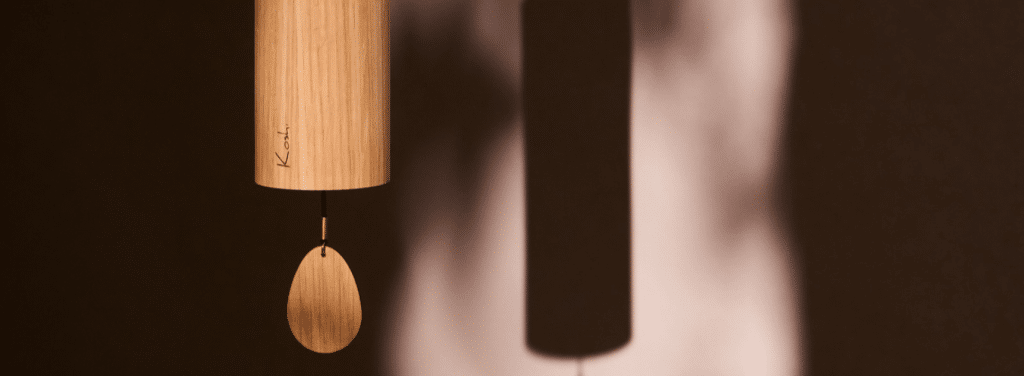
Koshi, discover the magic of sound and nature
A gentle breeze, the sound of rippling water or the rustling of leaves. Sound can have a special effect on you. It can take you out of your head and draw your attention...
Read more

Working with Koshi’s, the magic of sound and the four elements
Perhaps you’ve experienced that moment when someone plays a Koshi. During a yoga class or some other relaxing moment. The first notes sound clear and soft, and then seem to….
Read more
Happy Autumn: turning inwards, letting go and enjoying the moment
Autumn is here. Whilst for some it means cosiness, for others autumn can evoke a completely different feeling. And with that different feeling, I am...
Read more