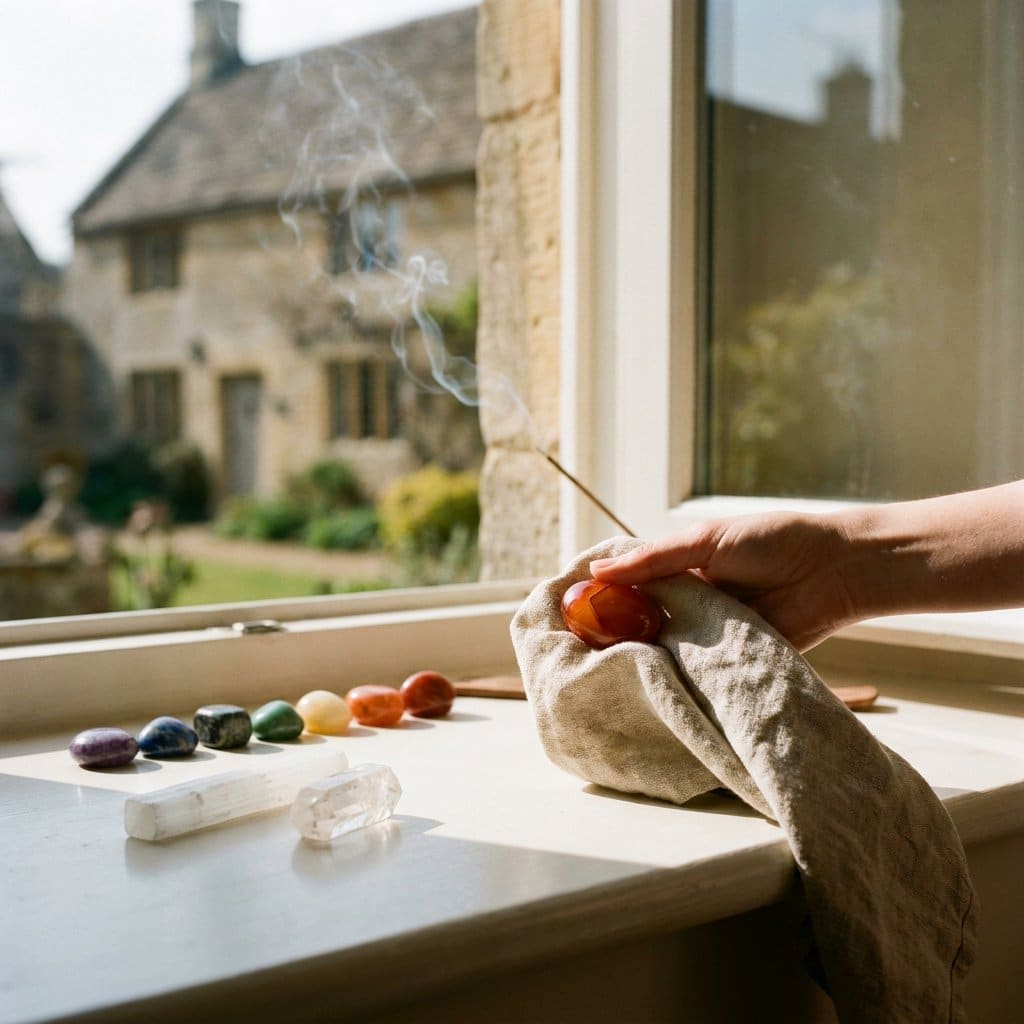

If you use your chakra stones for meditation, balance or a ritual, regular cleansing is a logical step. Many people find that stones may need to be cleansed and refreshed after use, after purchase or following intense contact. Using the right method, you can keep your chakra stones clean, usable and suited to your moments of tranquillity and mindfulness.
Not every type of stone can be cleaned in the same way. That’s why it’s a good idea to choose a method that’s safe for the type of stone you’re using.
Why cleanse chakra stones?
Chakra stones are often used intentionally during meditation, relaxation or energy work. Precisely because they are used with intention, many people choose to cleanse them intentionally as well. This is often done in three situations:
- First-time use – to allow the stone to settle for a moment and rid itself of all the energy it has absorbed along the way
- After a session or meditation – especially if the stone has been used extensively
- When the stone feels dull or heavy to the touch – as a sign that a bit of a spruce-up can be nice
Cleansing and charging are often mentioned in the same breath, but they are not quite the same thing. Cleansing is about making the stone clean and energetically refreshed. Charging is the next step, in which you allow the stone to return to a state of calm or to an energy that suits you. You can read more about this on the page about Cleaning and recharging crystals.
Safe ways to cleanse chakra stones
When it comes to chakra stones, gentle methods are usually the most practical. Particularly with sets containing different types of stone, it is wise to adopt a safe, broad-based approach.
1. Cleaning with smoke
Smoke from, for example, incense, sage or Palo Santo is a popular method because it means the stone doesn’t get wet. Gently pass the stone through the smoke and take your time doing so. If you’d like to do this step by step, read our guide on energetic cleansing with sage and palo santo. If you prefer to use a bundle, then choose smudge sticks.
2. Cleansing with selenite or haematite
Another gentle method is to place your chakra stones on a plate for a while selenite, in a selenite bowl or on haematite chippings to lay them out. It’s simple, tidy and enjoyable if you have a fixed spot for your stones. This method suits a peaceful ritual at home.
3. Rinse briefly with water
Some chakra stones can be rinsed briefly under running water. Only do this if you are sure the stone can withstand it. Not all minerals are suitable for water, and chakra sets in particular often consist of different types. If in doubt, a dry method is safer.
4. Cleaning with a spray
If you’d rather not use water or smoke, you can also opt for a cleaning spray designed for crystals. This is particularly handy if you want a quick and easy way to clean them between uses. At De Groene Linde, for example, some crystal sets come with a Clean Energy Bring along some spray to clean the crystals. Take a look at our products for energy cleansing for sprays and accessories.
Which method should you be careful with?
Water is not suitable for every stone. Some stones are soft, porous or prone to damage. As a result, a chakra set may well contain stones that are best not held under the tap. If you’re not sure exactly which minerals your stones are made of, it’s best to opt for smoky quartz, selenite or haematite.
Direct, bright sunlight isn’t always ideal either, particularly when charging delicate or discolouring stones. For many people, moonlight or a spot on selenite is therefore a gentler option.
How to cleanse your chakra stones, step by step
- Choose a quiet spot where you won’t be disturbed for a while.
- Decide which method is best suited to your stones: smoke, selenite, haematite, water or spray.
- Clean the stones one by one or as a set, taking your time.
- Then set them aside for a while to dry or rest.
- If you want to charge it as well, please do so only after cleaning it.
You don’t need to overcomplicate things. A simple routine that you stick to often works better than an elaborate ritual that you rarely do.
When should you recharge your chakra stones?
After cleansing, many people choose to charge their chakra stones as well. This can be done, for example, on selenite, on rock crystal chips or in moonlight. For many people, this feels like a logical next step, particularly after intensive use, after purchase or following a series of meditations.
How often you do this depends on how you use your stones. If you use them frequently, you can clean and recharge them more often. If you use them only occasionally, a less frequent routine is usually sufficient.
Practical tips for chakra stones
- If in doubt, always choose the gentlest method – smoky quartz, selenite or haematite are often safe options
- Clean new bricks first – many people find that more comfortable when using it for the first time
- Keep stones in a quiet place – for example, in a small dish, box or bag
- Combine cleaning with intention – a brief moment of focus often makes the ritual feel more complete
FAQ
How can I cleanse my chakras?
If you work with chakra stones, you can cleanse the stones yourself using smoke, selenite, haematite gravel or a suitable spray. If you use them directly during meditation or moments of rest, many people then use the stones again in a peaceful setting to refocus their attention on the chakras.
Which stones correspond to which chakras?
This varies depending on the tradition and the set. Colours are often used as a starting point, such as red for the root chakra, green or pink for the heart chakra, and purple or white for the crown chakra. You should therefore always refer to the instructions for your specific stone or set. If you’d like to find out more, you can also read about meaning of chakra stones.
How long should you leave the stones to cool?
That depends on the method. In the case of smoke, a brief, deliberate cleansing is often sufficient. If you place your stones on selenite, haematite or rock crystal, many people choose to leave them there for a few hours or overnight. More important than the exact timing is that you choose a method that is safe for your stones.
Related articles

Samenwerking in Ontspanning en Welzijn voor de Zorg!
Stichting Massage voor de Zorg is een prachtig initiatief waar wij graag mee in verbinding zijn. Door het fijne contact met operationeel directeur Eric Both hebben wij al veel mogen...
Read more

Koshi, discover the magic of sound and nature
A gentle breeze, the sound of rippling water or the rustling of leaves. Sound can have a special effect on you. It can take you out of your head and draw your attention...
Read more

Working with Koshi’s, the magic of sound and the four elements
Perhaps you’ve experienced that moment when someone plays a Koshi. During a yoga class or some other relaxing moment. The first notes sound clear and soft, and then seem to….
Read more