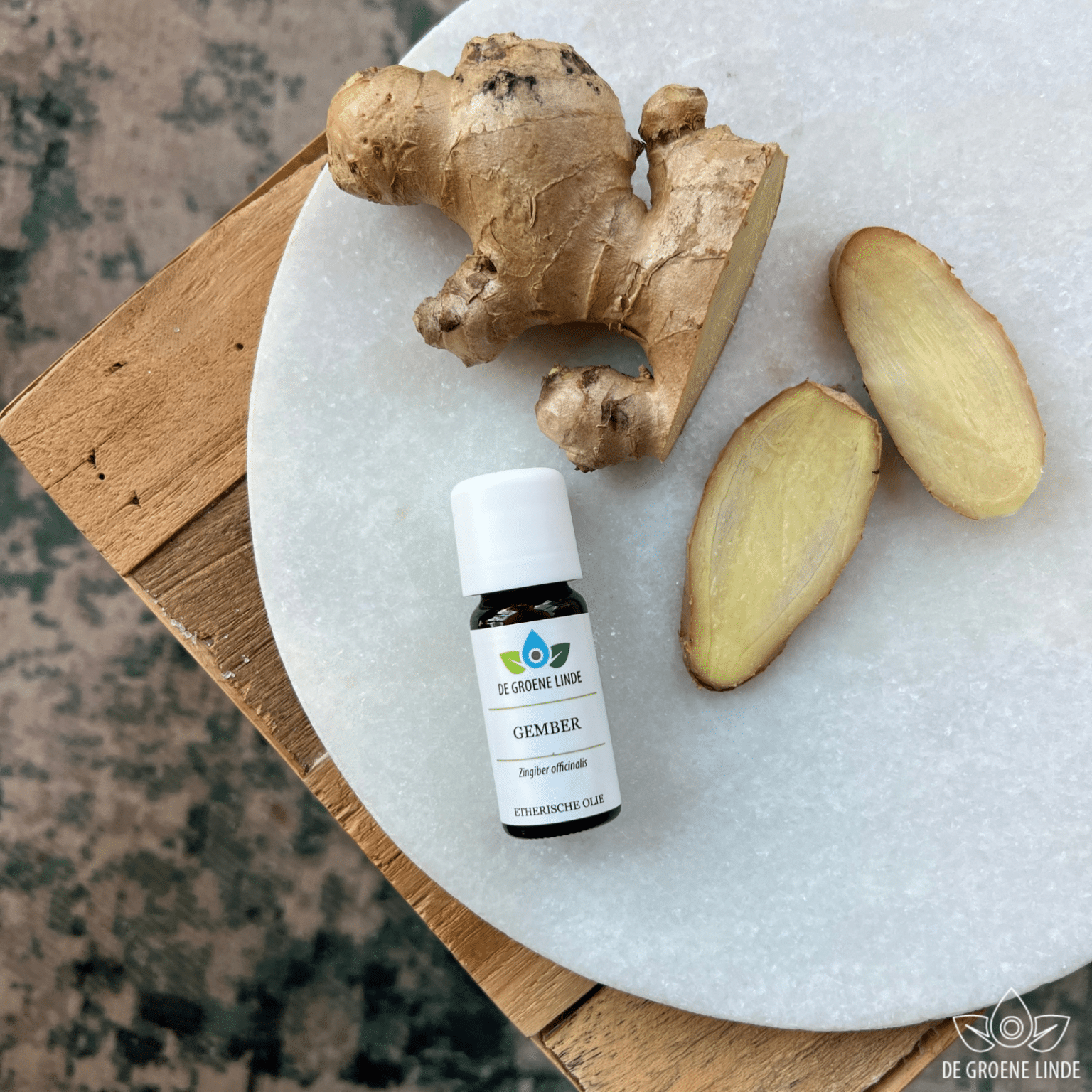

We are regularly asked whether our essential oils are suitable for oral consumption or for use in cooking. In the interests of safe and informed use, we are very clear on this point:
We advise against ever ingesting essential oils.
This advice has nothing to do with the quality or purity of our oils. On the contrary: precisely because essential oil is a powerful and concentrated natural product, it requires respectful and careful use.
Why ingesting essential oils can be dangerous
Essential oils consist of highly concentrated plant compounds. A single drop of oil often requires large quantities of plant material. When you ingest these compounds, they come into direct contact with your mucous membranes, liver and digestive system.
Potential risks associated with taking essential oils include:
- irritation or a burning sensation in the mucous membranes
- stress or damage to the liver and kidneys
- disruption of the gut flora
- the development of allergies or hypersensitivities
- unpredictable reactions with repeated use
It’s also worth noting that, to work with essential oils on an energetic level, you don’t need to ingest the oil. The scent, frequency and energy of an oil take effect simply through inhalation or when applied to the skin in a diluted form.
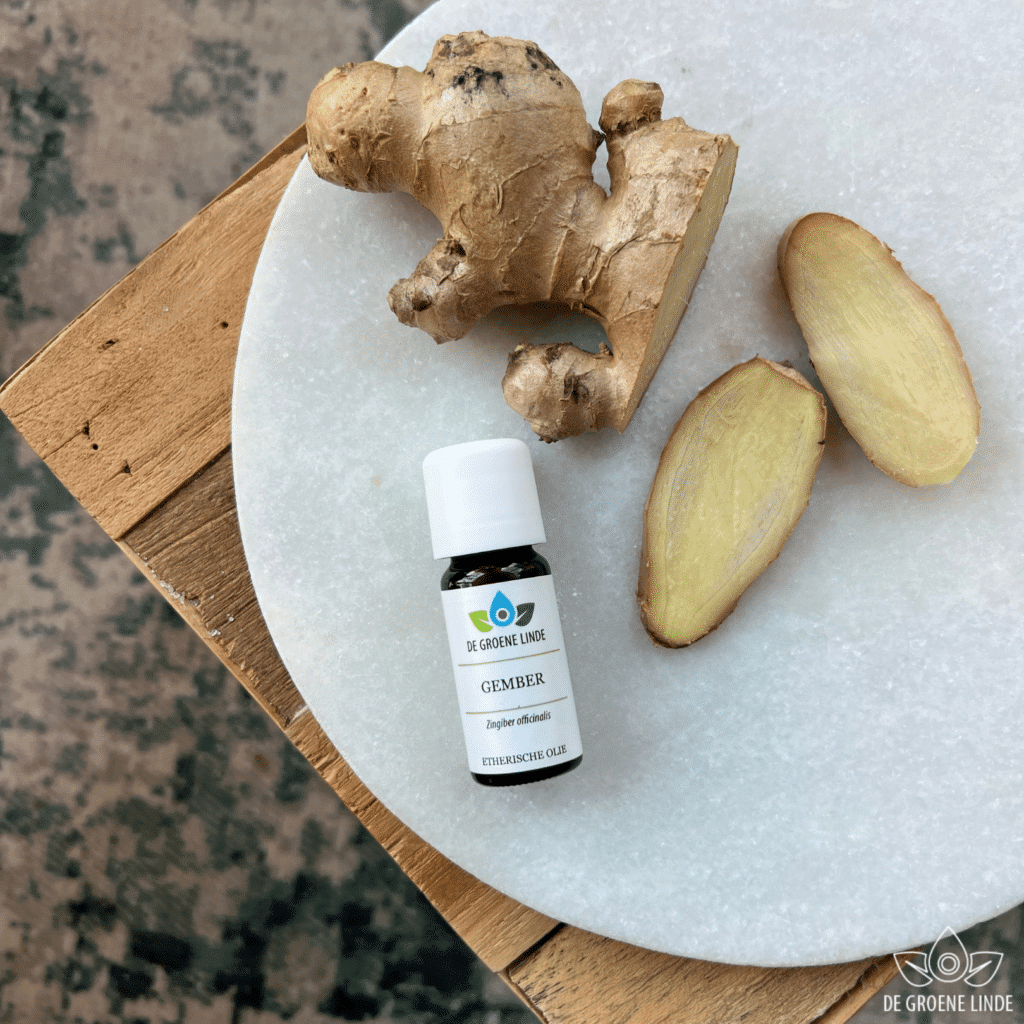
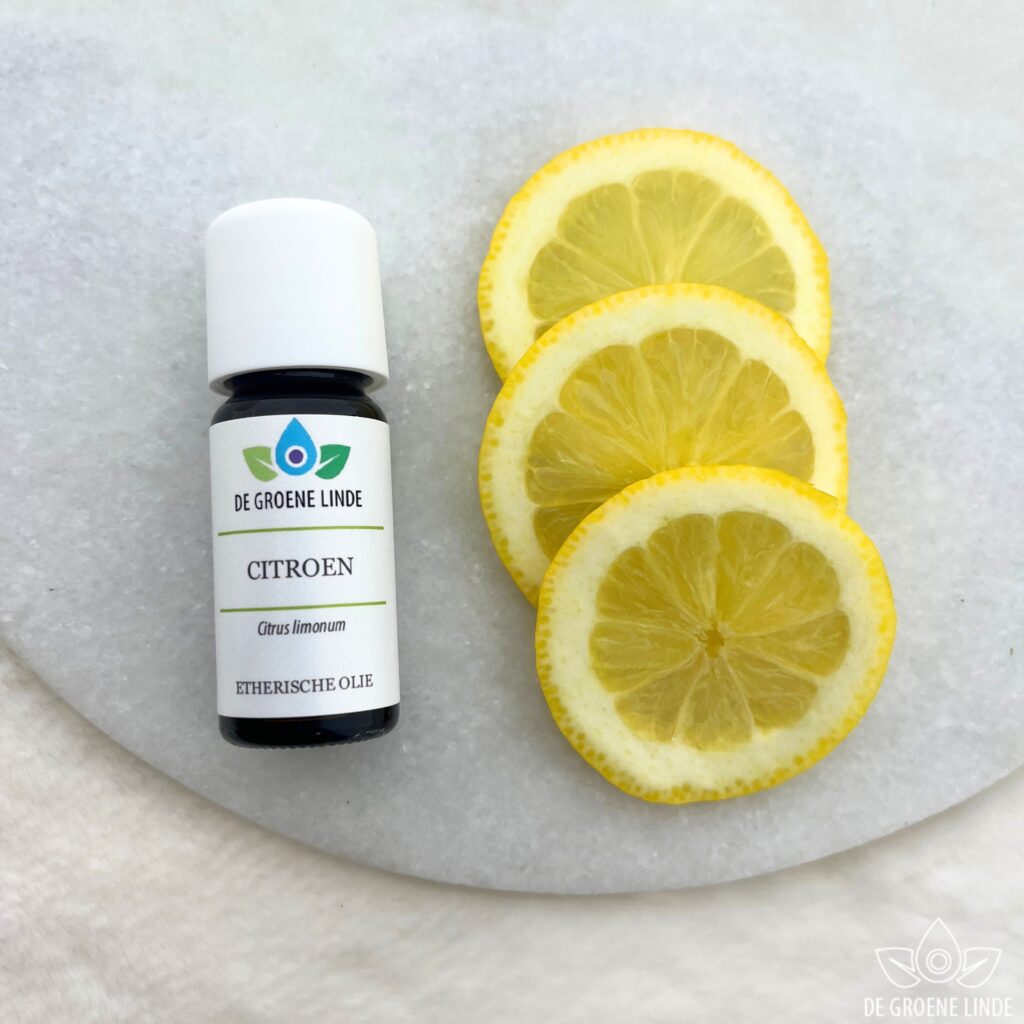
Lemon or ginger oil in water: is it a good idea?
l
We’re often asked this question too:
“Can’t I just add a single drop of lemon or ginger oil to my water for flavour?”
Our answer remains: no, we’d rather not.
Essential oil doesn’t mix with water. Oil is lighter than water and floats on top of it. This means that when you drink it, you ingest a concentrated amount of oil all at once. And that’s exactly what you don’t want!
A safe and tasty alternative
You don’t need essential oils to give your water a lovely flavour:
- Add a slice of fresh lemon and/or ginger to your water
- or make a ginger shot:
- Blend fresh (peeled) ginger with lemon juice
- Freeze this in ice cube bags
- Take one tablet daily with warm water
Here’s how to safely enjoy flavour, energy and nature
So how do we actually use essential oils?
We use essential oils because of their energetic properties. The scent is, of course, lovely too, but for us, it is the energy of the oil that is key.
There are various safe ways to use essential oils:
❧ a few drops on a cotton pad next to your pillow
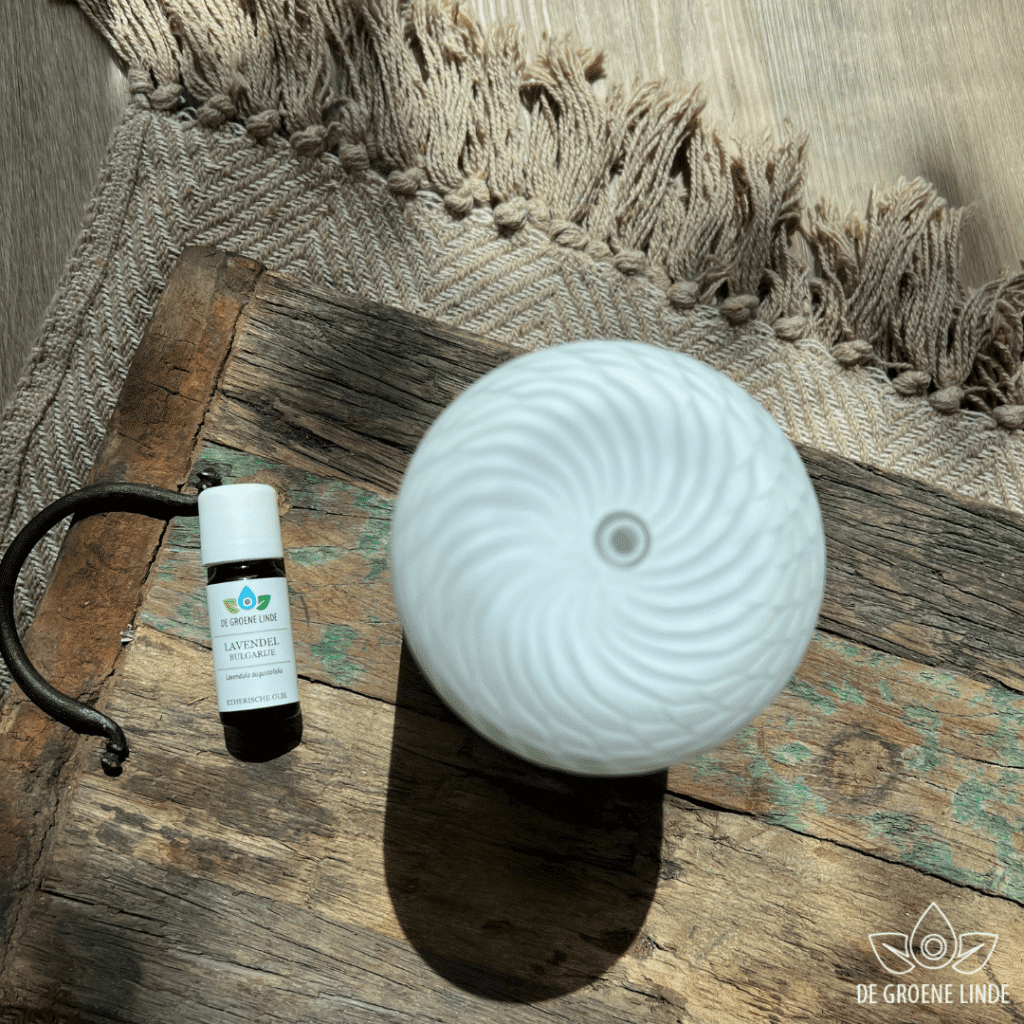
❧ in a diffuser or aroma burner
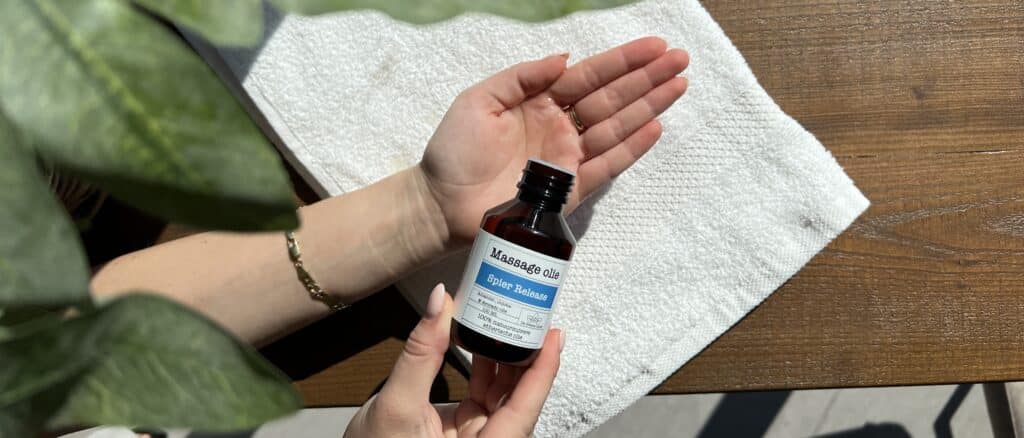
❧ as a massage oil (always diluted with a base oil)
❧ during cupping or steam treatment
❧ keep the bottle close by (for example, next to your bed or carry it with you)
❧ a few drops in a frequency hanger or piece of jewellery
Where does our essential oil come from?
Our essential oils and base oils come from various suppliers with whom we maintain personal contact. Marianne and Ton also frequently visit distilleries to see for themselves how the oils are produced. They ensure that the crops are cultivated and distilled with care, whilst respecting both people and nature.
A good example is our Ardèche Lavandin. This comes directly from the Ardèche region in France, from the Lavender Museum. The lavender grows there in a beautiful setting, is harvested by hand and processed without the use of chemical pesticides. Distillation is carried out using traditional methods, with even the plant’s waste material being used as fuel. It doesn’t get much purer than this!
Are the oils organic?
At present, we do not (yet) carry the official organic certification mark on all our oils. This certification mark is costly and administratively demanding, and does not always fully reflect the actual quality.
Some of our oils are organically grown, but when we sell them in smaller quantities or use them in blends, we are no longer permitted to label them as organic under Skal Biocontrole’s rules.
We are, however, working towards offering single-origin organic oils in the future, so that you can make an informed choice for yourself. This is our goal for 2026!
Why are our essential oils affordable?
We are often told that our oils are remarkably cheap. This sometimes raises the question of whether they are actually pure. We understand that, but the answer is simple.
We are a small family business. We do everything ourselves, from blending to bottling. We don’t use expensive marketing structures, commissions or middlemen. This enables us to offer pure, high-quality oils at a fair price. We want to ensure that everyone has access to the benefits of these oils.
Why do you offer some oils as a 10% solution?
Oils such as Roos, Jasmine, Neroli, Lemon balm and Chamomile are extremely expensive. To make them accessible nonetheless, we offer them as a 10% solution in jojoba oil. We always state this clearly on the label.
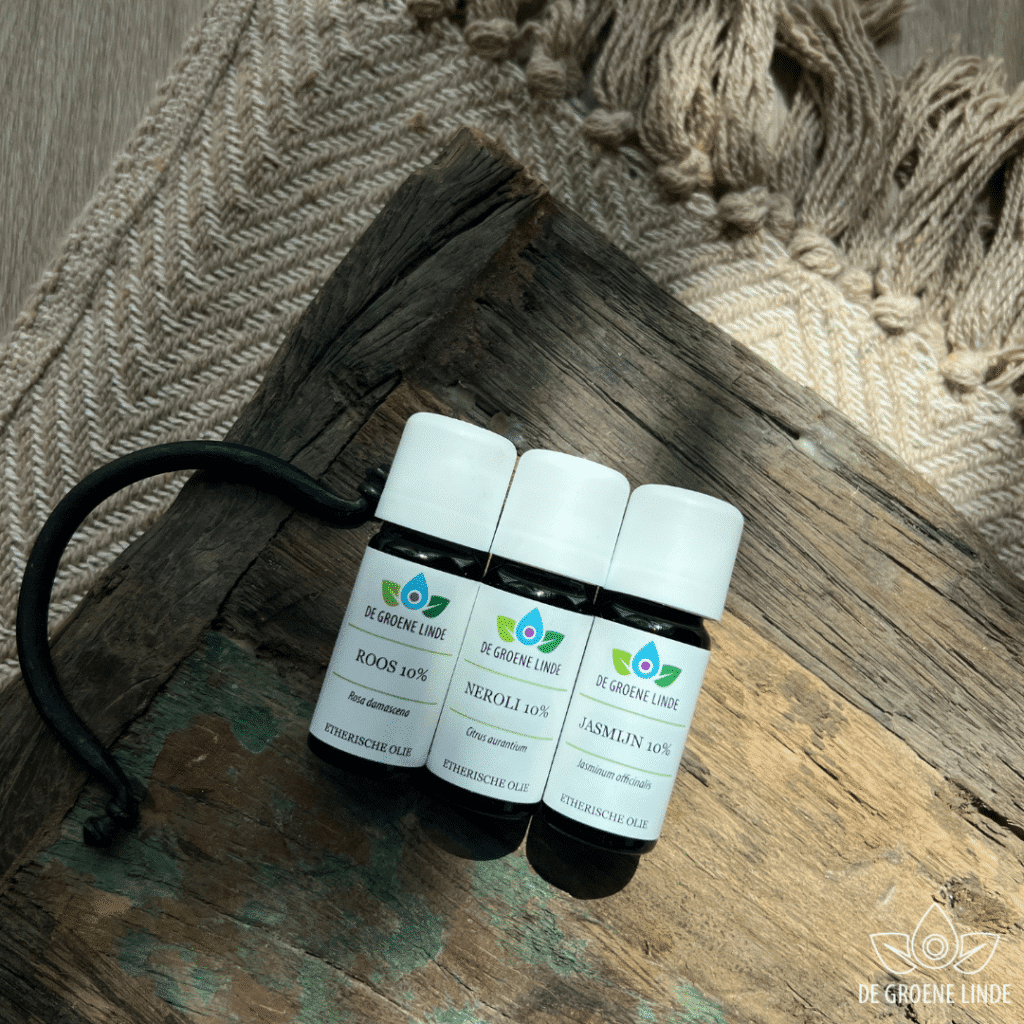
l
Jojoba oil:
- is a stable and skin-friendly carrier
- won’t go off any time soon
- supports the body’s energy flow
- is also suitable for use in the diffuser
The fragrance remains strong enough to allow you to enjoy these special oils at a lower price.
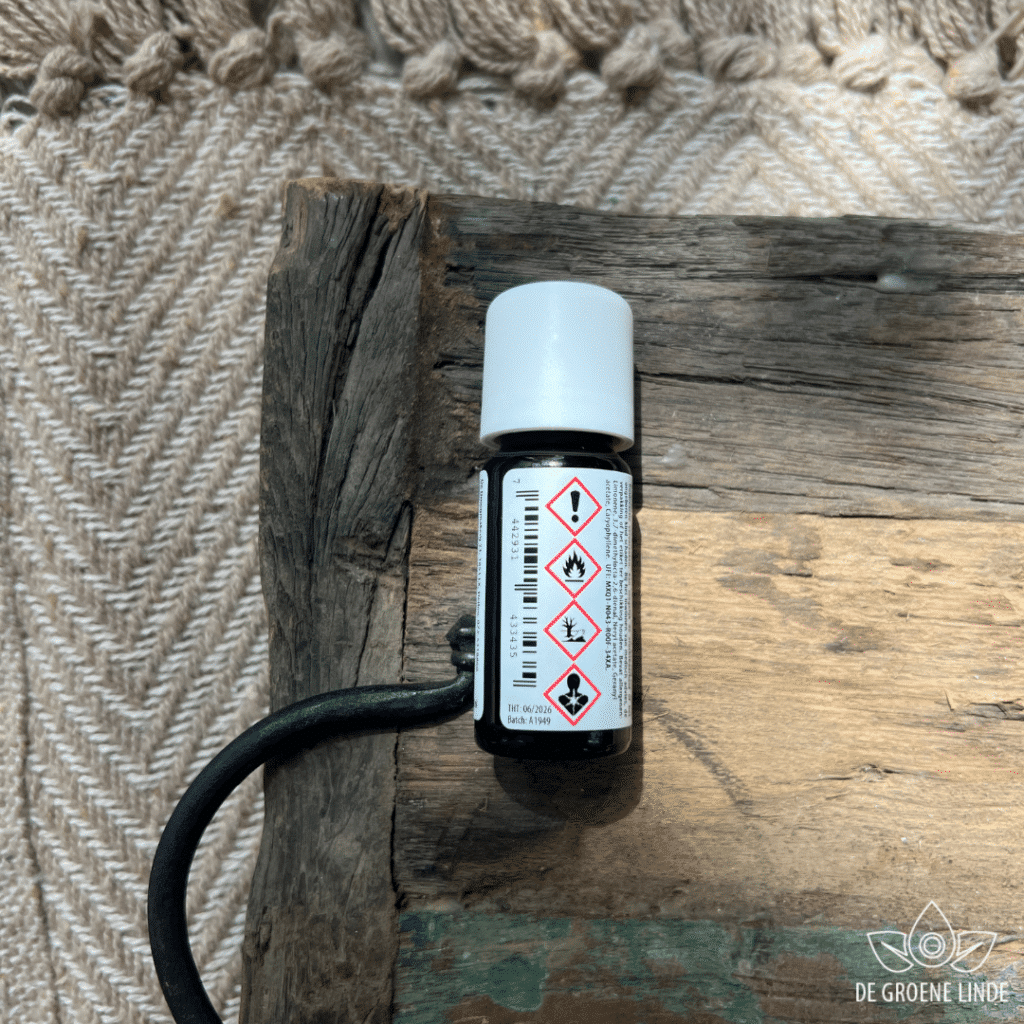
Safety symbols on essential oil labels: why are they necessary?
Essential oils are natural, but natural does not automatically mean harmless. Essential oils naturally contain chemical compounds which, if used incorrectly, can also have adverse effects.
In Europe, essential oils are subject to GHS (Globally Harmonised System) legislation. We are therefore obliged to include safety symbols and warnings on the label. Unfortunately, these symbols are actually intended for containers of 1,000 litres or more. However, we are required to include them on our 10 ml bottles.
These symbols do not take dosage into account, but are intended to provide information to you, the user. You can find more information on quality management in our comprehensive blog.
]
]
Ultimately, it’s all about dosage and knowledge. Many natural substances can be harmful if used incorrectly – just think of salt or caffeine. You use essential oils for your wellbeing, and you can do so safely, as long as you know what you’re doing.
Follow the guidelines, listen to your body and enjoy these powerful gifts from nature
A delicious and potent oil
Our oils are used daily by therapists and professionals, with wonderful results on an energetic level. Thanks to our personalised approach, we maintain close contact with our customers and regularly receive wonderful feedback from the field.
Do you have any questions about safe use or our products? Please feel free to contact us. We’re happy to help – honestly, transparently and with a passion for what we do.
𝙻𝚒𝚎𝚏𝚜 𝚁𝚎𝚋𝚎𝚌𝚌𝚊
Related articles
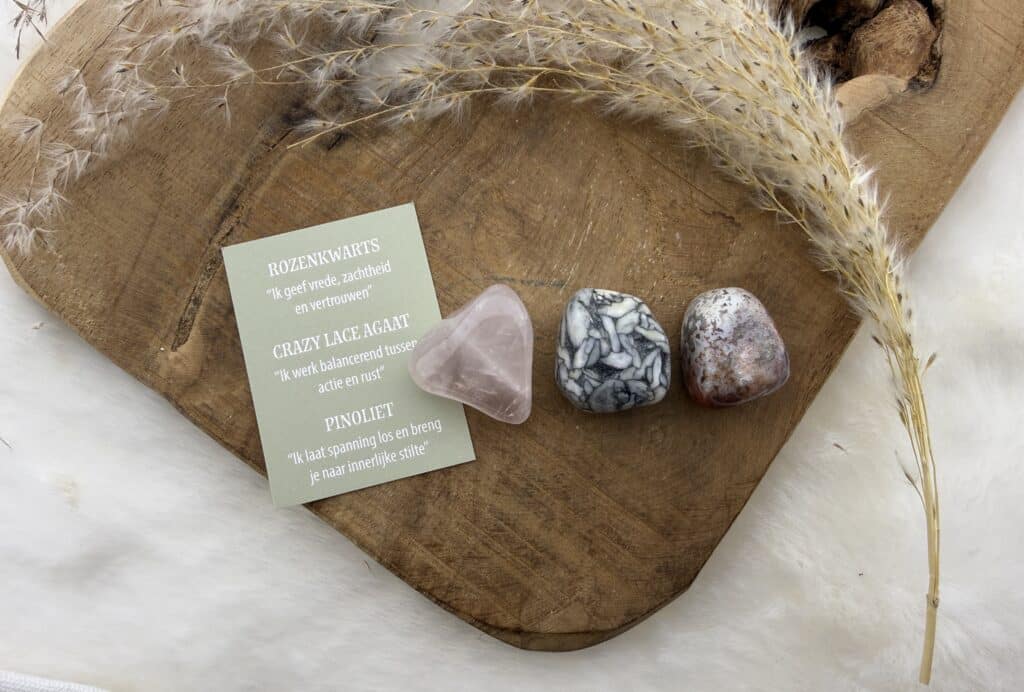
Crystal bags: small gifts with great significance
Crystals – here at De Groene Linde, we absolutely love them! Not just because of their unique and beautiful appearance, but also because of their spiritual properties. But which crystal exactly has...
Read more
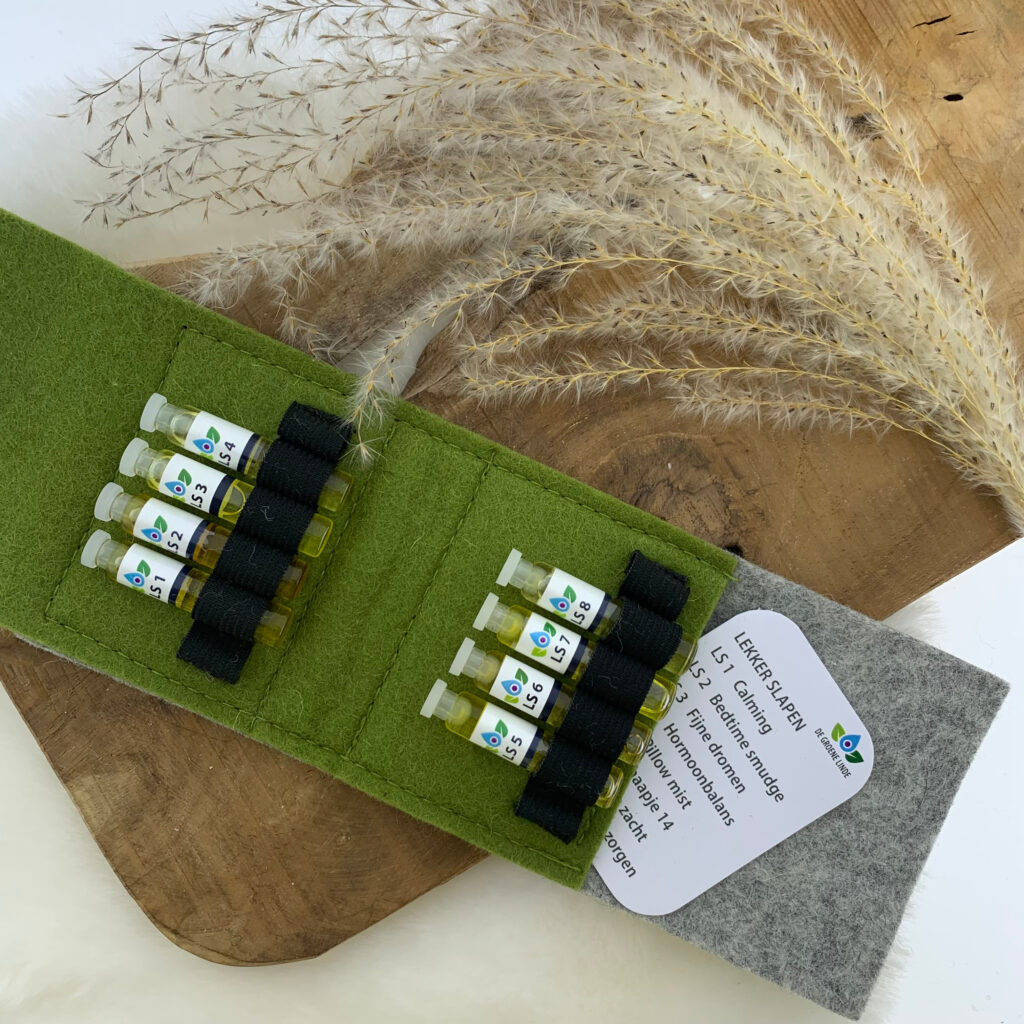
How to use the test kit
We have a test kit for almost every product line in our range. But how exactly do you use them, and what can you do with them? Can you only use them to...
Read more
Massage with essential oils
One plus one equals three … The power of essential oils never ceases to amaze me. After completing my training in holistic massage at the Academy for Massage and Movement, I went on to...
Read more