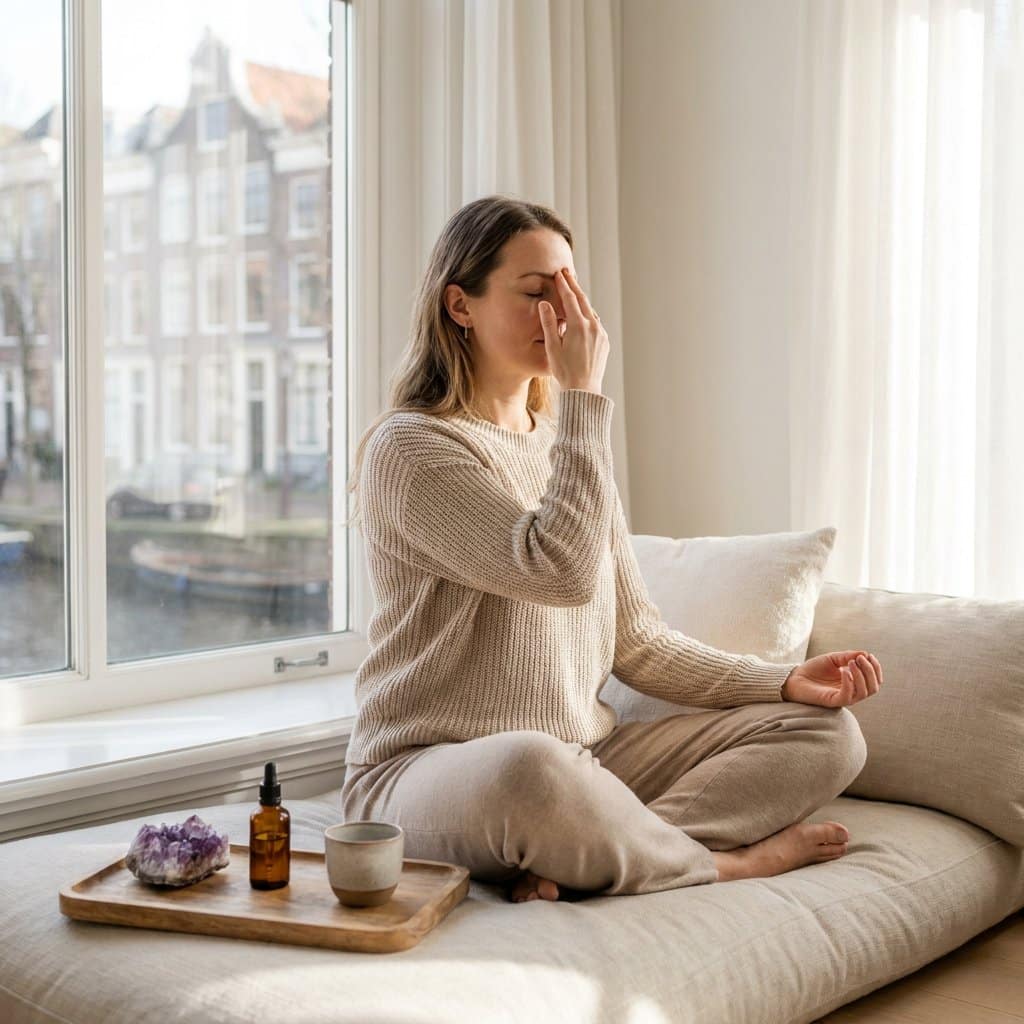

In the doctrine of the chakras, the third eye represents intuition, inner insight and clear perception. This usually refers to the sixth chakra (third eye) This refers to the Ajna chakra, also known as the third eye, which is located on the forehead between the eyebrows. If you’re looking for a straightforward explanation and practical ways to get started with this, you’ll find the essentials here without any unnecessary detours.
What is the third eye?
The third eye is a spiritual concept referring to one’s inner power of perception. It is therefore not about seeing with one’s physical eyes, but about sensing, recognising and understanding what is going on beneath the surface. In many traditions, it is linked to intuition, imagination, self-reflection and the ability to spot patterns more quickly.
The third eye is associated with the sixth chakra, Ajna. It is often associated with the colour indigo or deep blue and the element of light. This symbolism refers to clarity, insight and awareness.
Where is the third eye located?
The third eye is situated in the centre of the forehead, just above and between the eyebrows. That is why it is also known as the forehead chakra. In meditation and energy work, this is the point on which people focus their attention when they wish to experience greater stillness, focus or inner clarity.
What does the third eye symbolise?
The essence of the third eye is insight. This may relate to yourself, to a situation, or to the direction that feels right for you at that moment. When people talk about the third eye, they often mean that you live less on autopilot and tune in more to what you already know deep down.
These include topics such as:
- Intuition – having a sense of what feels right without first proving everything rationally
- Inner wisdom – relying on quiet, clear insights
- Imagination – being able to visualise images, ideas and possibilities
- Self-reflection – taking an honest look at your patterns, choices and beliefs
- Mental clarity – distinguish between noise and direction
This is why the third eye is of interest to many people during periods of personal development, meditation or mindful living. Not because it is supposed to provide spectacular experiences, but precisely because it can help us to live more mindfully and in tune with ourselves.
What do you notice when your third eye is more balanced?
A third eye that feels balanced is often associated with peace of mind and confidence in your perceptions. You don’t need to explain everything straight away, but you’re more likely to sense what is helpful and what isn’t. It also makes it easier to distance yourself from sensory overload, doubts or endless worrying.
Commonly cited signs include:
- greater clarity when making choices
- a stronger connection with your intuition
- be able to concentrate better
- greater self-awareness
- a more vivid imagination or dreams
Please don’t see this as a set checklist, but rather as points of reference. Everyone experiences this in their own way.
Signs of imbalance
If the third eye feels out of balance, this is often described as a feeling of mental fog or, conversely, being too caught up in your own thoughts. For example, you might find that you keep over-analysing things, struggle to tune into your feelings, or lack a sense of perspective. In spiritual traditions, symptoms such as pressure in the head, restlessness, difficulty concentrating or a lack of connection with your imagination are also mentioned.
It is important to take a calm approach to this. These signs are not a diagnosis, but an invitation to incorporate more calm, mindfulness and self-reflection into your life.
How can you develop your third eye in a calm way?
Developing the third eye doesn’t have to be a big or complicated process. In fact, simple, repeatable rituals often work best. Think about slowing down, turning your attention inwards and making space for silence.
Meditation and visualisation
For many people, a short meditation is the most accessible way to work with the third eye. Sit quietly, focus your attention on the area between your eyebrows and follow your breathing for a few minutes. You can visualise an indigo light whilst doing so, or simply observe what you feel, without forcing anything.
Visualisation is particularly helpful when you want to spend less time getting caught up in your thoughts and more time practising inner focus.
Writing after meditation or dreaming
Insights are often subtle. By briefly jotting down what you felt, thought or dreamt after meditating or upon waking, you train yourself to listen more closely to your inner signals. It doesn’t have to be a detailed diary. A few sentences at a time is often enough.
Focus on silence and stimuli
A cluttered mind doesn’t usually make intuition any clearer. Fewer distractions, more time spent offline and conscious moments of calm can therefore be just as valuable as any exercise in its own right. You don’t develop your third eye by forcing it, but by making space for it.
A simple exercise for the third eye
If you want to take a practical approach, keep it small:
- Sit comfortably and relax your shoulders.
- Close your eyes and breathe in and out calmly.
- Focus your attention on the point between your eyebrows for 3 to 5 minutes.
- Take note of your thoughts, but let them pass.
- Afterwards, you might like to jot down one insight or feeling.
The key lies not in intensity, but in consistency. A few minutes a day is often more beneficial than the occasional long session.
Support through scent and ritual
For those who enjoy working with scent, a mindful ritual can help you get into the right frame of mind for meditation or reflection more quickly. At De Groene Linde, you’ll find products in the chakra range that are specially tailored to the third eye chakra, such as an aura spray, essential oil and a roll-on. You can use these as part of a quiet moment for yourself, for example before meditation or a period of silence.
If you prefer working with stones, read more about Chakra stones: meaning and effects and choose whatever suits you best.
The third eye is often iolite and lapis lazuli mentioned, because they can support insight and intuition.
Please also feel free to use essential oils for spiritual growth and intuition to deepen your meditation and help you focus on the third eye.
If you’d prefer to explore spirituality and self-awareness in greater depth, there’s also the book Open your third eye. This is ideal for anyone who wants to explore the subject further at their own pace.
FAQ
Where is the third eye located?
According to chakra theory, the third eye is situated on the forehead, between the eyebrows. That is why it is also known as the forehead chakra.
How do you develop your third eye?
You usually do this through calm, repeatable practices such as meditation, visualisation, writing down your dreams or reflecting, and by incorporating more moments of stillness into your day. Consistency usually works better than intensity.
What do you notice when your third eye opens?
People often describe greater inner clarity, stronger intuition, better focus and more self-reflection. The experience varies from person to person and does not have to be spectacular to be valuable.
Is the third eye the same as the Ajna chakra?
Yes, in most spiritual and chakra traditions, the third eye refers to the sixth chakra, Ajna. That chakra is associated with insight, intuition and consciousness.
Related articles

Update on The Gambia
The first consignment has arrived in The Gambia. We have some great news about our Gambia project! The first consignment of clothes, shoes, toys and other donations has arrived safely in The...
Read more
Himalayan Cedar: keeping your feet firmly on the ground
Himalayan Cedar essential oil has a warm, deep and woody scent. A scent that can help clear your mind for a moment and bring you back to the here and now. The...
Read more
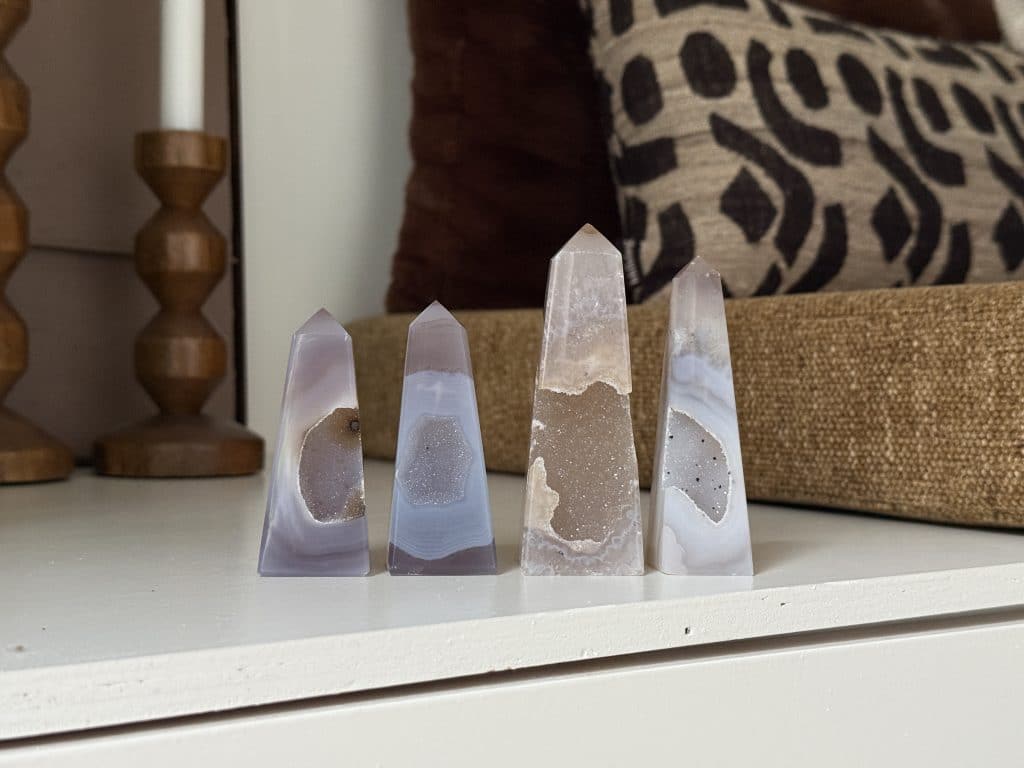
Druzy Agate, a beautiful stone that sparkles
Druzy Agate immediately catches the eye thanks to the thousands of tiny crystals that sparkle in the light. This unique stone combines the grounding properties of agate with a sparkling crystal surface that offers plenty...
Read more