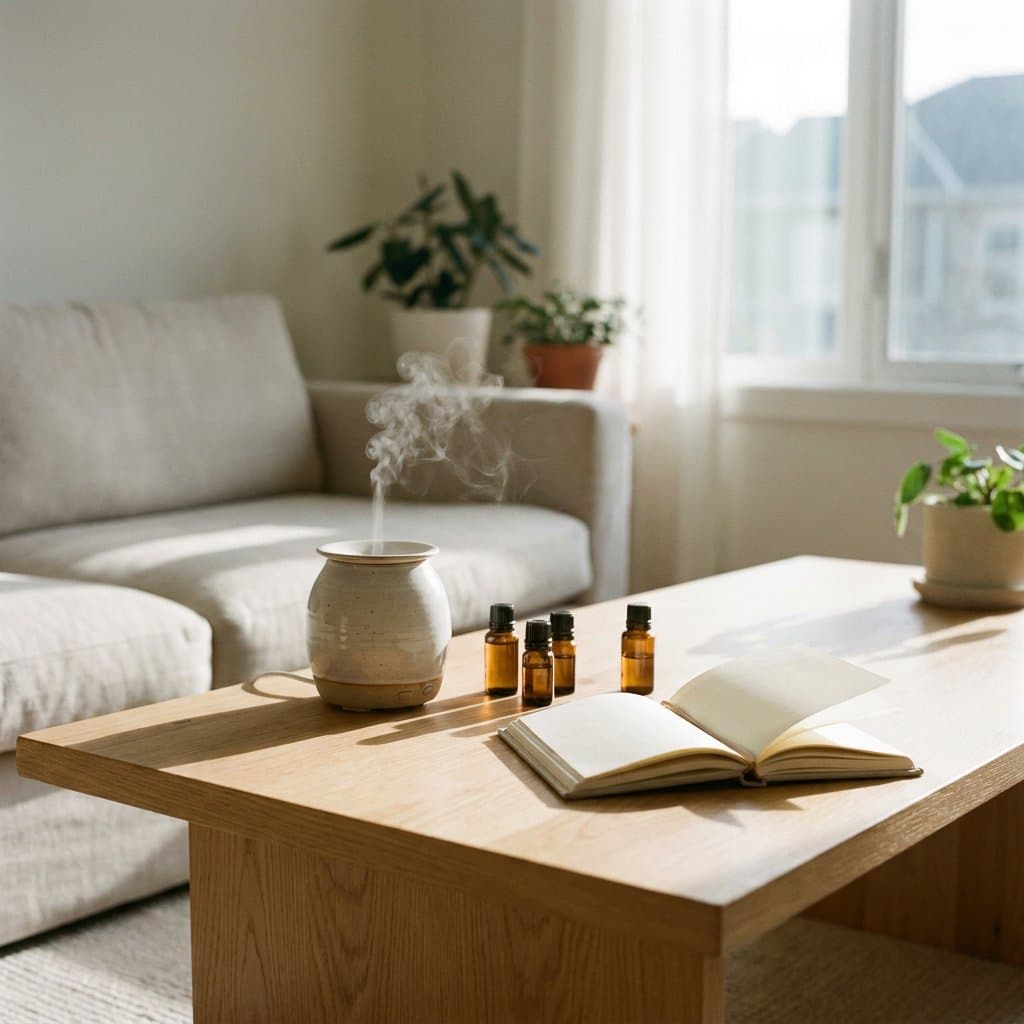

A good diffuser blend is a quick way to add atmosphere to a room. On this page, you’ll find simple essential oil recipes for your diffuser, plus practical tips on how to blend scents beautifully. This way, you can take your time to discover which blend suits your mood, from focusing at your desk to unwinding in the evening.
Always use 100% natural essential oil and follow the instructions for your diffuser. The exact number of drops depends on the size of the water reservoir and the strength of the scent you prefer.
How to make a lovely diffuser blend
A good blend doesn’t have to be complicated. The easiest way is to start with two or three oils that complement each other. This keeps the scent fresh and prevents the blend from becoming too heavy or overpowering.
A useful starting point is:
- Fresh and light: citrus oils such as lemon or orange
- Calm and gentle: lavender-like or floral notes
- Clear and refreshing: peppermint or eucalyptus-like notes
It’s best to start with a simple ratio, for example 2 drops of the main scent and 1 drop of a complementary scent. Let the blend air out for a few minutes before adding any more. Less is often better.
Would you like to select by fragrance family? Discover essential oils by fragrance profile.
How many drops do you use in a diffuser?
There’s no set rule that applies to every diffuser, but it’s best to start small. It’s better to use a mild dose at first and then build it up if you want a stronger scent.
| Water in the diffuser | Initial dose |
|---|---|
| 100 ml | 3 to 5 drops |
| 200 ml | 5 to 8 drops |
| 300 to 400 ml | 8 to 12 drops |
If you’re using a potent oil such as peppermint, you can often stick to the lower end of this dosage range. Always add the oil to the diffuser’s water reservoir, not undiluted into an empty diffuser.
Read more about the safe use of essential oils.
Essential oil recipes for the diffuser
Looking for more inspiration? See Diffuser blends for every moment of the day.
A quiet evening
- 3 drops of lavender
- 2 drops of orange
A gentle, soothing blend for the evening or a quiet moment on the sofa.
A fresh focus
- 3 drops of peppermint
- 2 drops of lemon
Clear and refreshing. Ideal for your workplace or whenever you want to stay focused. Peppermint oil is often used in a diffuser to promote concentration and clarity.
Take a deep breath
- 3 drops of eucalyptus
- 2 drops of peppermint
A powerful, fresh fragrance that’s perfect if you want your home to feel open and clean.
A sunny atmosphere
- 3 drops of orange
- 2 drops of lemon
- 1 drop of lemongrass
Light, cheerful and sparkling. Perfect for daytime, in the living room or kitchen.
Mellow and balanced
- 2 drops of lavender
- 2 drops of bergamot
- 1 drop of orange
A well-rounded, harmonious blend in which freshness and softness come together beautifully.
Focus at your desk
- 2 drops of peppermint
- 2 drops of lemon
- 1 drop of eucalyptus
Ideal for times when you want to keep a clear head. For those who prefer to use a ready-made blend, there are also blended oils designed for use in a diffuser, such as a focus blend for work or study.
Which essential oils blend well together?
If you want to create your own essential oil blends for the diffuser, these combinations almost always work:
- Citrus with mint: fresh, lively and bright
- Citrus with lavender: gentle, approachable and balanced
- Lavender with eucalyptus: fresh with a subtle undertone
- Bergamot and lavender: round, slightly floral and relaxed
- Orange with lemongrass: sunny, energetic and sparkling
If you’re not sure, choose one main fragrance and add one complementary oil. That’s often the quickest way to create a blend that smells lovely in your home.
Want to find the right oils quickly? Take a look Single essential oils (A–Z).
Practical tips for better diffuser recipes
- Keep it simple: Two to three oils per blend is usually enough
- Start of layer: you can always add an extra drop
- Look at the space: In a small room, a lower dose is often more pleasant
- Only use oil that is suitable for use in a diffuser: Preferably choose pure, 100% natural essential oil
- Make a note of your favourite mixes: This way, you can easily recreate a successful blend
FAQ
What is the best oil to use in a diffuser?
That depends on your preference. Orange is often popular because its scent is soft, warm and approachable. If you’d prefer something refreshing, lemon or peppermint are popular choices.
Which essential oils blend well together in a diffuser?
The scent profiles of essential oils help when creating blends. Citrus oils often blend very easily with lavender, peppermint and bergamot. Eucalyptus can also work well as a refreshing addition to a blend. Start with two oils and only add a third afterwards.
Can you also adapt essential oil recipes to suit your own diffuser?
Yes. Think of a recipe as a starting point. If your diffuser has a smaller reservoir, use fewer drops. If the scent is too subtle, add one extra drop at a time. If you’re not using a diffuser yet, have a look at electric diffusers.
Is a ready-made blend more convenient than mixing it yourself?
That’s certainly possible. A ready-made blend is handy if you want to create a particular atmosphere quickly without experimenting yourself. Mixing your own is great if you enjoy discovering which fragrance combinations suit you best. If you’re looking for a complete starter kit, diffuser sets can be useful.
For warmer, grounding blends, you could also try woody oils. If you plan to use these recipes regularly, do read up on the Caring for your diffuser.
Related articles

Koshi, discover the magic of sound and nature
A gentle breeze, the sound of rippling water or the rustling of leaves. Sound can have a special effect on you. It can take you out of your head and draw your attention...
Read more

Working with Koshi’s, the magic of sound and the four elements
Perhaps you’ve experienced that moment when someone plays a Koshi. During a yoga class or some other relaxing moment. The first notes sound clear and soft, and then seem to….
Read more
Happy Autumn: turning inwards, letting go and enjoying the moment
Autumn is here. Whilst for some it means cosiness, for others autumn can evoke a completely different feeling. And with that different feeling, I am...
Read more