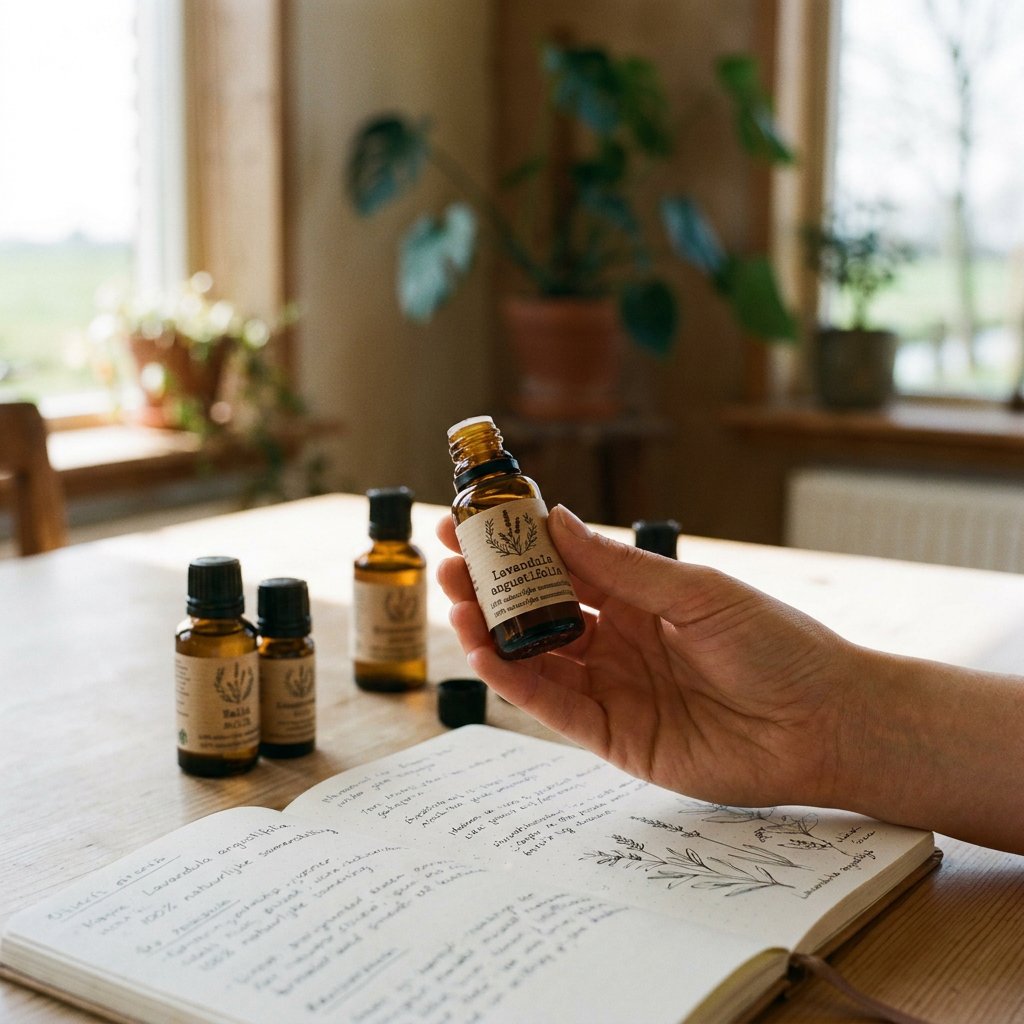

You cannot tell if an essential oil is pure simply by the word “pure” on the label. The really important indicators are a clear botanical name, a 100% natural composition, transparency regarding its origin and honest advice on use. This helps you to the difference between essential oil and fragrance oil to see, or a highly diluted product. Below, we’ll explain in simple terms what to look out for, so you can make your choice with greater confidence.
What is pure essential oil?
Pure essential oil, also known as pure essential oil, is a highly concentrated plant extract. The oil is extracted from, for example, flowers, leaves, peels, wood or resin and contains no synthetic fragrances. A 100% pure essential oil therefore clearly states whether it is Single essential oils (A–Z) or whether it is a blend of exclusively natural essential oils. “Naturally scented” or “aroma oil” does not automatically mean the same thing. Would you like to know how we use and assess diluted variants? Read more about the purity of our 10% solutions.
How can you tell if an essential oil is genuine?
Anyone wishing to buy pure essential oil would be well advised to read the label and product information first. Pay particular attention to the following points:
- The botanical name is given, as Lavandula angustifolia.
- It is clearly stated which part of the plant the oil comes from.
- The formulation is transparent and contains no perfume or synthetic additives.
- The manufacturer should, where possible, state the origin, batch number or production details and provide the relevant certificates.
- The usage advice is careful and does not make exaggerated claims.
- With blends, you can see which oils have been combined.
- When it comes to expensive oils, such as pure rose oil or pure jasmine oil, an extremely low price is often a warning sign.
Red flags on the label
Be particularly sceptical if a product mainly uses marketing jargon but provides little real information. Terms such as “fragrance oil”, “perfume oil” or simply “aroma” without a botanical name are not specific enough. A bottle that lacks warnings, a list of ingredients or clear instructions for use also warrants closer scrutiny.
Can I use essential oil undiluted?
Usually not directly on the skin. Essential oils are highly concentrated and can irritate the skin, particularly if you have sensitive skin or are using potent oils such as clove, eucalyptus or rosemary. It is safer to dilute the oil in a carrier oil, or to use it in a diffuser in accordance with the instructions on the product. Avoid contact with the eyes, mucous membranes and broken skin. After all, ‘natural’ does not automatically mean that something is always gentle.
Pure essential oil for diffusers and other uses
For a diffuser, a pure essential oil is often the logical choice, as it allows you to experience the scent of the plant itself without any synthetic additives. Always use the correct dosage for your diffuser. The same applies to pure lavender oil, pure eucalyptus oil or pure rosemary oil: it’s best to start with just a few drops and build up gradually. Dilution is important when using essential oils on the skin or in massage oil. Do not simply add undiluted essential oil to bath water.
Take extra care during pregnancy and with children
Extra caution is important during pregnancy, whilst breastfeeding, and when caring for babies and young children. Not every essential oil is suitable in these circumstances, even if it is a pure oil. Choose only products that come with clear guidance for this group and, if in doubt, seek personal advice. A reputable supplier will be clear about this and will always prioritise safety over quick sales.
Frequently asked questions about pure essential oil
What is the best essential oil?
That depends on your purpose and your preference for scents. For relaxation, people often choose lavender; for a fresh scent, they tend to go for citrus or eucalyptus. The best choice is, above all, an oil that is genuinely pure and suits how you intend to use it.
What is the difference between essential oil and fragrance oil?
Essential oils are derived from plants. Fragrance oils may contain synthetic fragrances and are not necessarily suitable for use as pure essential oils. You should therefore always check the ingredients and ensure that the product is genuinely described as 100% pure essential oil.
What is the best way to store pure essential oil?
Keep the bottle tightly closed, in a cool place and away from direct sunlight. This will help the fragrance remain more stable and ensure the oil retains its quality for longer.
At De Groene Linde, we believe that clear information is just as important as a lovely fragrance. That is why we opt for 100% natural ingredients, honest explanations and a focus on quality management and safety.
Related articles

Samenwerking in Ontspanning en Welzijn voor de Zorg!
Stichting Massage voor de Zorg is een prachtig initiatief waar wij graag mee in verbinding zijn. Door het fijne contact met operationeel directeur Eric Both hebben wij al veel mogen...
Read more

Koshi, discover the magic of sound and nature
A gentle breeze, the sound of rippling water or the rustling of leaves. Sound can have a special effect on you. It can take you out of your head and draw your attention...
Read more

Working with Koshi’s, the magic of sound and the four elements
Perhaps you’ve experienced that moment when someone plays a Koshi. During a yoga class or some other relaxing moment. The first notes sound clear and soft, and then seem to….
Read more