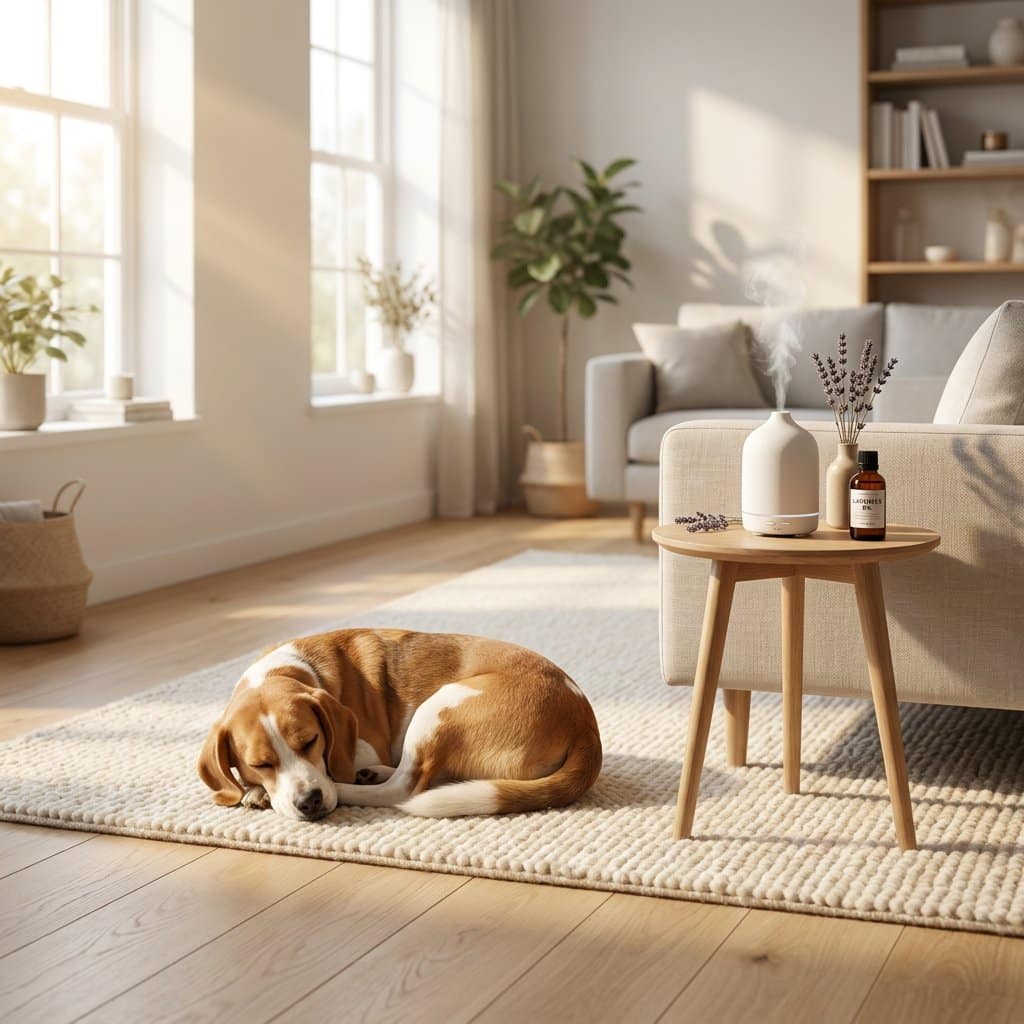

Lavender oil is often chosen for its gentle, soothing scent, but extra caution is needed when it comes to dogs. Dogs have a much keener sense of smell than we do, and they do not all react in the same way to essential oils. On this page, you can read about when it is or isn’t advisable to use lavender oil around a dog, and what you need to bear in mind to ensure safe use.
This will help you decide whether a standard lavender oil is suitable for your situation, or whether one specially formulated for animals blend is more logical. At De Groene Linde, we like to take a down-to-earth approach: ‘natural’ does not automatically mean suitable for every animal.
Can dogs tolerate lavender oil?
Sometimes, yes, but not every dog. Lavender oil is a concentrated essential oil, so caution is always advised when using it around animals. Some dogs seem to tolerate a gentle scent of lavender perfectly well, whilst others become restless, start sneezing, withdraw or show skin reactions.
This difference is due, amongst other things, to sensitivity, age, health and the way in which the oil is used. A dog may react through inhalation, through the skin or by licking. Please also note the distinction between different types of lavender: Spike lavender oil (Lavandula latifolia) has a different composition and may be less suitable for dogs. Would you like to compare the different varieties and their characteristics? Take a look at Lavender: so many varieties and differences. That is precisely why it is wise not to rely on general statements such as “lavender is always safe for dogs”.
Reasons why lavender oil is sometimes used around dogs
Lavender oil for dogs is not usually chosen for its medicinal properties, but rather for its scent in situations where an animal is feeling stressed or anxious. Examples include loud noises, a change in surroundings, or a time when you want to create a calm atmosphere.
In addition, lavender is sometimes used in products intended for use in a dog’s sleeping area or in its immediate surroundings. It is important to keep a close eye on how your dog reacts and to always allow your dog the space to move away from the scent.
Is it safe to use lavender oil on a dog?
Applying essential oils directly to a dog requires the utmost caution. Applying undiluted essential oil to the skin or coat is not a good idea. This increases the risk of irritation, particularly in sensitive dogs, puppies, older dogs and animals with skin or respiratory problems.
Even diluted use is not automatically suitable. What works well for one dog may be too strong for another. That is why indirect use in the dog’s environment is usually safer than direct application to the skin. If you do decide to use it close to your dog, do so sparingly, well diluted, and stop immediately at any sign of discomfort.
How to use lavender oil safely on dogs
- Never use it undiluted on the dog – Undiluted essential oil is too strong.
- It is better to opt for indirect use – for example, in the surrounding area, not directly on the nose, ears, eyes or mucous membranes.
- Start with at least – When it comes to dogs, less really is better.
- Ensure there is ventilation – Always allow a dog to move away from the scent of its own accord.
- Avoid licking or swallowing – Oral administration is not suitable.
- Observe carefully – stop if the animal becomes restless, cowers, pants, scratches, sneezes or shows any skin reactions.
When it’s best to be extra careful
With some dogs, it is particularly important to exercise caution. This applies especially to puppies, older dogs and dogs that are already sensitive to smells, have skin problems or tend to become breathless easily. It is also wise to be cautious in multi-pet households, as not every animal has the same level of tolerance.
Are you unsure whether your dog might have a sensitive reaction? If so, it’s best not to experiment with pure essential oils. In that case, a product specially formulated for animals may be a more sensible choice, as it takes into account its use around animals.
Lavender oil or a blend for animals?
Pure lavender oil is a natural product, but that does not automatically make it the best first choice for use around dogs. For those specifically looking for something for a dog, a blend developed with animal sensitivity in mind is often a better option than mixing or measuring out the ingredients yourself.
At De Groene Linde, you’ll find both pure lavender oil and pet products containing lavender, such as indoor blends Bella’s Cure – a range of fragrances specially designed for pets. This is particularly relevant if you want to make a conscious choice between a general-purpose essential oil and a product that is more specifically designed for use around animals.
Which essential oils should not be used on dogs without careful consideration?
Not every essential oil is suitable for use around dogs. Apart from lavender, it is generally the case that strong, pungent or highly concentrated oils may pose an additional risk. It is therefore not advisable to automatically use oils intended for humans on animals as well. See also Essential oils and animals: staying connected for the broader context and guidelines.
If you use essential oils in your home and have a dog, always check the ingredients, strength and method of application carefully. Keep it simple, use sparingly and avoid combining several scents in the same room. When using a diffuser around dogs, it is important to pay particular attention to ventilation and dosage. Read more at Diffusers and dogs: what’s safe?.
FAQ
Do dogs hate lavender?
Some dogs do, others don’t. Dogs perceive smells much more intensely than humans. If a dog walks away, becomes restless or wants to leave a room, that is a clear sign that the smell is unpleasant.
Can you diffuse lavender oil if you have a dog at home?
Use sparingly and only in a well-ventilated area. Use a small amount, allow the dog to move freely, and stop immediately if you notice your dog avoiding the scent or reacting differently than usual.
Is it OK to put lavender oil on a dog’s sleeping area?
This may sometimes be possible to a very limited extent in the dog’s environment, but never to such an extent that the dog cannot escape it. It is best not to apply essential oil directly to a basket, blanket or cushion if you are unsure how your dog will react to it.
What should you do if your dog reacts badly to lavender oil?
Stop using the product immediately, ensure there is plenty of fresh air and remove the source of the odour. If symptoms persist or if your dog has ingested the oil, contact a vet.
Related articles

Samenwerking in Ontspanning en Welzijn voor de Zorg!
Stichting Massage voor de Zorg is een prachtig initiatief waar wij graag mee in verbinding zijn. Door het fijne contact met operationeel directeur Eric Both hebben wij al veel mogen...
Read more

Koshi, discover the magic of sound and nature
A gentle breeze, the sound of rippling water or the rustling of leaves. Sound can have a special effect on you. It can take you out of your head and draw your attention...
Read more

Working with Koshi’s, the magic of sound and the four elements
Perhaps you’ve experienced that moment when someone plays a Koshi. During a yoga class or some other relaxing moment. The first notes sound clear and soft, and then seem to….
Read more