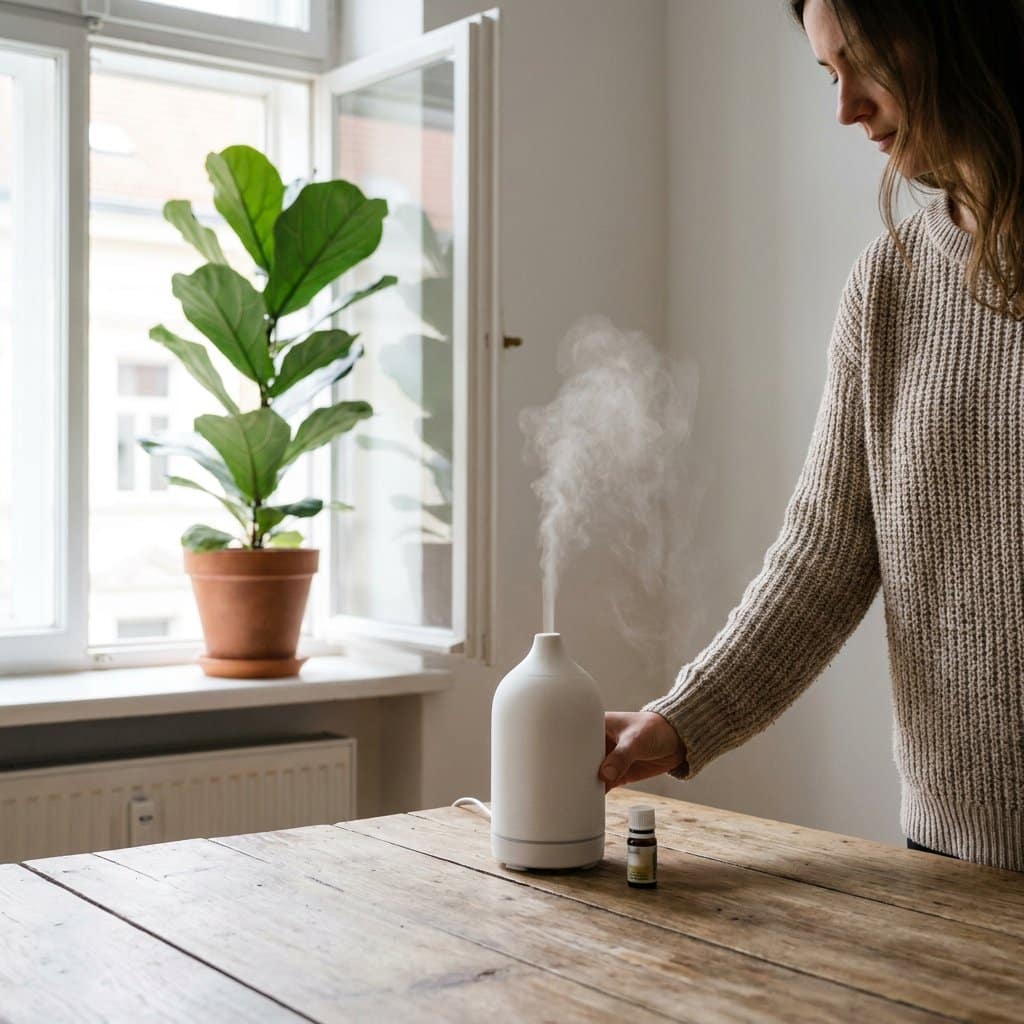

An aroma diffuser is not usually harmful to your health if you use it sensibly. The main differences lie not only in the device itself, but above all in the oil used, the quantity, the duration of diffusion and the ventilation in the room. If you’re unsure whether a diffuser is a good choice for you, it helps to focus on purity, sensitivity and using it in moderation.
For many people, a diffuser is a lovely way to add fragrance to the home without using fire. However, just because something is natural does not automatically mean it is always suitable for everyone. Extra caution is advisable, particularly for those with sensitive airways, those with pets, pregnant women or those with young children.
Is an aroma diffuser harmful or dangerous?
As a general rule, an aroma diffuser is not directly harmful or dangerous when used normally and with care. With electric and ultrasonic diffusers, the scent is usually dispersed without combustion, so there is no smoke or soot, unlike with products that use a flame.
That said, a diffuser can cause discomfort if you use too much oil, diffuse for too long, are in a poorly ventilated room, or are sensitive to certain scents. Possible symptoms include headaches, nausea, irritation of the airways or a feeling of breathlessness. The question, therefore, is not so much whether a diffuser is inherently unhealthy, but rather under what circumstances it is less well tolerated.
Where the risk usually really lies
People who search for “aroma diffuser unhealthy” often think of the device itself, but in practice the risk usually lies in the contents and how it is used. These are the key points to bear in mind:
- Oil quality – Not all fragrance oils are the same. Pure, natural essential oil is not the same as synthetic perfume oil or heavily diluted fragrance products.
- Dosage – More drops do not necessarily mean better. An overpowering scent can actually be unpleasant.
- Duration of use – Diffusing continuously for hours on end is often unnecessary and can lead to overstimulation more quickly.
- Ventilation – even when there’s a pleasant scent, fresh air remains important.
- Personal sensitivity – what one person finds pleasant may be too intense for another.
When a diffuser doesn’t fit properly
There are situations in which you may want to be extra cautious. If you suffer from asthma, are easily affected by smells, have sensitive mucous membranes or get headaches from perfume-based products, start off cautiously. Use just a few drops, switch the diffuser on for a short while and see how you react.
Caution is also advised in households with babies, young children or pets, or during pregnancy. Not every essential oil is a sensible choice in such situations. As sensitivity can vary greatly, it is wise to start cautiously and, if in doubt, seek professional advice tailored to your situation, especially if you would like to know more about safe use in babies and children. For expectant parents, you can find further guidance on this here Pregnancy and essential oils.
What should you look out for when choosing an aroma diffuser?
If you want to use a diffuser safely, a few practical choices are more important than all sorts of extra features:
- Choose a suitable type of diffuser – An electric diffuser or ultrasonic diffuser disperses fragrance without burning it.
- Use a small dose – It’s best to start off gently and only increase the intensity if it still feels comfortable. See also how many drops in the diffuser.
- Don’t go on and on – brief and deliberate use is often sufficient.
- Ensure there is ventilation – Open a window from time to time or use the diffuser in a well-ventilated room.
- Clean the appliance regularly – you don’t want oil and water residues to build up; see also Tips for looking after your diffuser.
- Stop if you experience any symptoms – If you experience a headache, irritation or nausea, switch off the diffuser and ventilate the room.
What is the healthiest type of diffuser?
There isn’t one single type of diffuser that is the healthiest for everyone, but generally speaking, many people prefer a flameless fragrance diffuser. An electric diffuser or a model that uses cold-water atomisation disperses fragrance without a flame, smoke or soot. This makes it a logical and gentler choice for many households compared to fragrance products that involve burning something.
At De Groene Linde, you’ll find electric diffusers and models featuring ultrasonic cold-water atomisation, amongst other things. Which option is best for you depends on the size of your room, how intensely you want the scent to be diffused, and how sensitive you or your housemates are to scent. Read more about fragrance diffusers here.
Common mistakes that make a diffuser unpleasant
- Using too many drops – a scent that is too strong can become stifling or overpowering.
- Leave the diffuser on all day – Continuous diffusion unnecessarily increases the odour load.
- Use in an enclosed room – without ventilation, the air can quickly start to feel stuffy.
- Blind faith in “natural” – even natural essential oils can be too strong or cause irritation.
- Not showing consideration for others in the house – Children, visitors or animals may react differently to you.
Our down-to-earth approach to safe diffusion
We believe in the power of pure, natural scents, but with care and common sense. An aroma diffuser doesn’t have to be unhealthy, as long as you choose quality products, use them sparingly and pay close attention to how you and those around you react. Precisely because scent is so personal, mindful use works better than diffusing as strongly or for as long as possible.
If you want to use a diffuser, it’s best to choose a reliable device and use pure essential oils that are suitable for your situation. This will help keep the scent in your home pleasant, natural and better balanced. For further background on the Safety when using essential oils It’s a good idea to read up on it thoroughly.
Frequently Asked Questions
Is having essential oil in the home bad for your health?
That depends on the type of product and how it is used. Products containing synthetic fragrances or a very strong perfume scent are less well tolerated by some people. Here too, dosage, ventilation and personal sensitivity are important factors. At De Groene Linde, you can be assured that all oils are 100% natural.
Is a diffuser bad for your hair?
Normal use of a diffuser at home is not intended to put a strain on your hair. Health concerns mainly relate to inhalation, scent intensity and sensitivity to certain oils. With normal use, this is not a major concern.
Could an aroma diffuser help if I’m sensitive to strong smells?
Sometimes, yes, but only if you start very gently. Choose a subtle scent, use just a few drops, diffuse for a short time, and stop immediately if you notice your body reacting negatively.
When should I avoid using a diffuser?
It is best not to switch on a diffuser if you are already experiencing shortness of breath, a headache or irritation caused by scents, or if anyone in the room is sensitive to them. It is also wiser to use them sparingly in small, poorly ventilated rooms. In some situations, other factors also come into play Contraindications for essential oils a role, for example in cases of heightened sensitivity or specific circumstances.
Related articles
Samenwerking in Ontspanning en Welzijn voor de Zorg!
Stichting Massage voor de Zorg is een prachtig initiatief waar wij graag mee in verbinding zijn. Door het fijne contact met operationeel directeur Eric Both hebben wij al veel mogen...
Read more

Koshi, discover the magic of sound and nature
A gentle breeze, the sound of rippling water or the rustling of leaves. Sound can have a special effect on you. It can take you out of your head and draw your attention...
Read more

Working with Koshi’s, the magic of sound and the four elements
Perhaps you’ve experienced that moment when someone plays a Koshi. During a yoga class or some other relaxing moment. The first notes sound clear and soft, and then seem to….
Read more