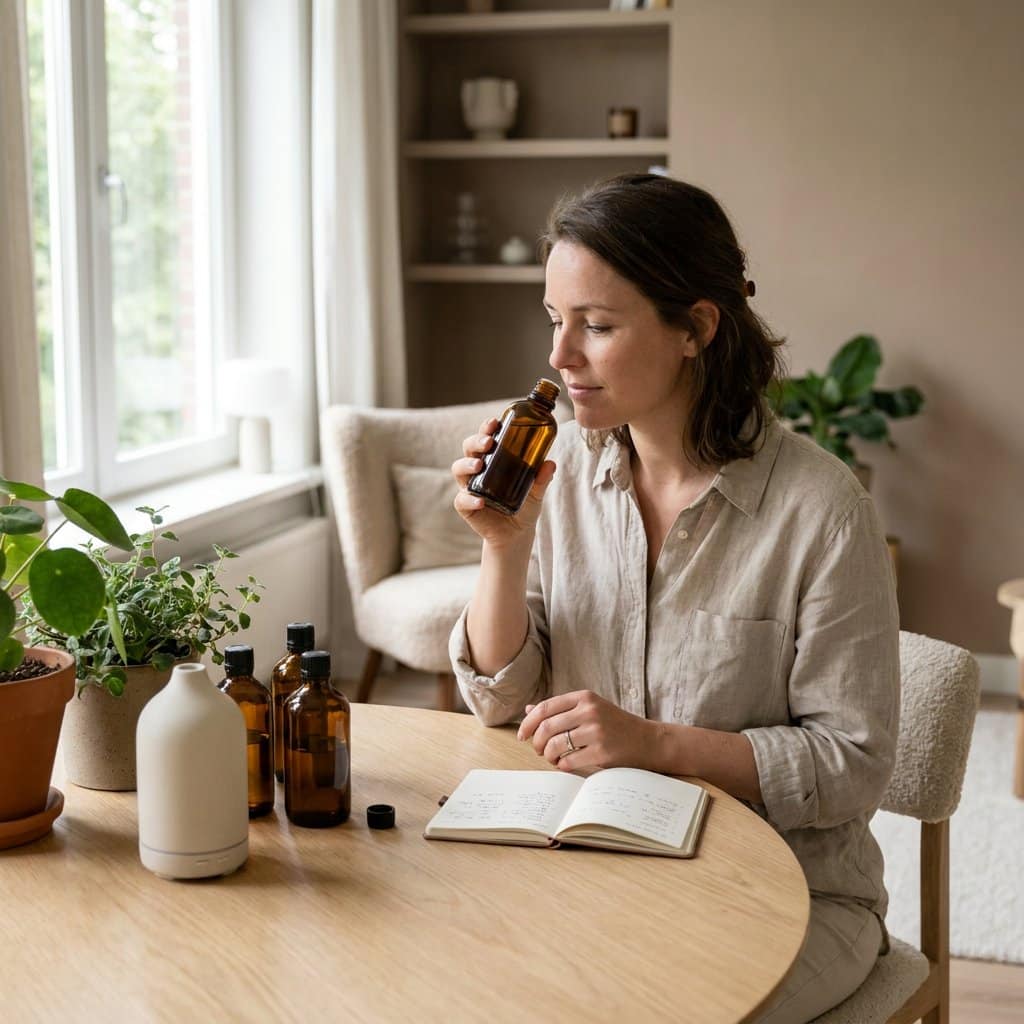

Aromatherapy for beginners
Would you like to get started with aromatherapy, but are you feeling overwhelmed by all the bottles, diffusers and advice? If so, it helps to start small. With a few pure essential oils, a simple method of use and some basic knowledge, you’ll soon discover which scents feel pleasant as part of your daily routine.
Aromatherapy doesn’t have to be complicated. As a beginner, in particular, you’ll benefit most from clear guidance: exactly what essential oils are, which oils are good to start with, the safe use of essential oils and what to look out for when it comes to quality. Below you’ll find those practical basics, without any unnecessary fuss.
What you really need to know as a beginner
What exactly is aromatherapy?
Aromatherapy is the conscious use of essential oils. These are highly concentrated plant extracts derived from, for example, bark, leaves, flowers, resin or wood. They are mainly used through scent, such as in a diffuser, on a scent stone or in an inhaler. Some oils can also be applied to the skin, but only when properly diluted in a carrier oil.
What you can expect
Think of aromatherapy primarily as a natural addition to your self-care routine. Many people choose certain scents to create a peaceful evening, a refreshing start to the day or a cosy atmosphere at home. Don’t expect a miracle cure. Of course, ‘natural’ doesn’t automatically mean ‘mild’. That’s why it’s so important to build up gradually, use the right dosage and opt for pure, high-quality products.
Your first aromatherapy starter kit
You really don’t need much to get off to a good start. These basics will take you a long way:
- a diffuser, fragrance stone or inhaler
- 3 to 5 pure essential oils
- a carrier oil such as jojoba, sweet almond or apricot kernel
- optional: an empty bottle for making your own diluted skin oil
Don’t have a device yet? We can help you with that Choosing a suitable diffuser.
It’s better to start with a small selection rather than ten scents at once. That way, you’ll learn more quickly which oils you like and how strong a scent you prefer. If you want to get off to a good start straight away, have a look at the Essential Oils Starter Kit.
10 popular essential oils for beginners
|
Oil |
Fragrance profile |
Often chosen for |
Point to note |
|---|---|---|---|
|
Lavender |
Soft, floral and spicy |
Evening routine and a moment of calm |
Start with a low dose |
|
Orange |
Warm, sunny citrus |
A cheerful atmosphere at home |
Store in a cool, dark place |
|
Lemon |
Fresh and clean |
Kitchen, workspace, morning |
Take care of your skin in the sun |
|
Peppermint |
Cool and refreshing |
A bright, fresh fragrance experience |
Use sparingly |
|
Eucalyptus radiata |
Green and airy |
A refreshing spa atmosphere |
Use sparingly and thoughtfully |
|
Tea tree |
Spicy and distinctive |
Fresh house blend |
Strong scent, a little goes a long way |
|
Incense |
Warm and resinous |
Meditation and an evening session |
Lovely in small doses |
|
Cedar wood |
Soft, woody |
A subtle foundation in blends |
Delightful with lavender or citrus |
|
Geranium |
Floral and green |
Balance in a mix |
1 to 2 drops is usually enough |
|
Mandarin |
Mildly sweet citrus |
An accessible fragrance for beginners |
Store in a cool, dark place |
How to use essential oils safely
In a diffuser
For many beginners, a diffuser is the easiest way to get started. Fill the reservoir with water as per the instructions and usually add 3 to 5 drops of essential oil. For a small room, 2 to 3 drops are often enough. Always start with a low dose, as the experience of scent is personal. If you don’t have a diffuser yet, a scent stone or tissue is a simple and affordable first step. If you’re unsure about the dosage, read How many drops should I put in the diffuser?
On the skin – always diluted
If you want to use essential oil on your skin, mix it with a carrier oil first. Consider jojoba, sweet almond or apricot kernel oil. This will soften the scent and reduce the risk of irritation. A simple ratio for beginners is 1 to 2 drops of essential oil to 10 ml of carrier oil. Apply this to a small area of skin and test how your skin reacts first. Read more about How to dilute essential oil safely.
A handy guide to diluting
It is better to use too little than too much. A low dosage is usually more comfortable, particularly with strong scents such as peppermint, tea tree and some herbal oils. If you notice any redness, itching or a burning sensation, stop immediately and rinse the skin with a vegetable oil, not with water.
In the bath
Essential oils do not mix with water on their own. You should therefore not add oil directly to a full bath. Instead, use a neutral bath base or choose a ready-made bath product in which the oil is already well blended. This is not only more pleasant, but also safer for your skin.
Get off to a safe start without any hassle
With a few basic rules, you can make aromatherapy a lot easier to understand straight away:
- Do not use pure essential oil undiluted on large areas of skin
- Diffuse in short sessions and air the room in between
- Keep bottles out of the reach of children and pets
- Be careful when applying citrus oils to your skin if you’re going out in the sun afterwards
- Do not ingest essential oils without expert guidance
- Take extra care if you are pregnant, breastfeeding, have sensitive skin or are in a vulnerable state of health
If you’re unsure whether an oil is suitable for your situation, play it safe and seek advice before you start experimenting. It’s not a hassle – it’s actually the smart way to start.
How can you tell if an essential oil is good?
Not every bottle with a lovely scent is a genuine essential oil. There are also fragrance oils and synthetic perfume oils. These may smell pleasant, but they are not the same as a pure, natural essential oil. Especially as a beginner, it’s good to know that you’re getting exactly what’s stated on the label.
Are you curious about the difference between essential oil and fragrance oil? This will help you, as a beginner, to understand the difference in quality and usability.
Always check the label
- Does it clearly say ‘100% essential oil’?
- the botanical name is given, such as Lavandula angustifolia?
- Can you see any information about the part of the plant, its origin or the batch?
- Is the oil in a dark glass bottle?
- Does the provider give a clear explanation of how to use the product safely?
At De Groene Linde, we use 100% natural oils and artisanal blends, offering personalised service and fair prices. Based in Heiloo, we make a conscious choice to prioritise quality that remains accessible, so you can get started with confidence.
Frequently Asked Questions
Which essential oil is a good one to start with?
For many beginners, lavender, orange, mandarin, lemon and cedarwood are good places to start. These scents are recognisable, easy to blend and usually pleasant in a diffuser. It’s better to choose a few gentle favourites rather than lots of strong oils straight away.
How long can a diffuser be left on?
For beginners, 15 to 30 minutes is often a good guideline. If you want to diffuse for longer, do so with breaks in between. Too much fragrance all at once can actually become unpleasant. In a small room, you’ll usually need fewer drops and less time.
Which scents go well together?
Start with a maximum of two or three oils in a single blend. Some lovely, simple combinations are lavender with orange, lemon with peppermint, cedarwood with lavender, and frankincense with mandarin. Make it easy for yourself: choose one base scent and add one fresh or floral note to it.
Which essential oil do many people choose when they feel unsettled whilst travelling?
Many beginners choose peppermint or ginger because of their fresh, spicy scent. It’s best to use them via a scent stone, tissue or a well-diluted roll-on rather than in their pure, concentrated form. Think of essential oils as a way to enhance the scent in your routine, not as a medical treatment.
Is aromatherapy safe during pregnancy?
It is important to take extra care during pregnancy. Not every essential oil is suitable at this time, and dosage is crucial. Choose only mild scents, diffuse for a short time and, if in doubt, seek expert advice before applying oils to the skin or blending them yourself.
Where can you buy reliable essential oils?
Buy from a specialist who is transparent about ingredients, botanical names and safe use. Look out for clear labelling, pure formulations and honest product information. A supplier who calmly explains what is and isn’t advisable will often be of more help to you than an online shop that merely makes grand promises.
The best way to get started with aromatherapy is often the simplest: choose a few pure essential oils, use them in one safe way, and discover, step by step, which scents suit you best. That way, you’ll gradually build up your confidence and get more enjoyment out of every drop.
Related articles

Samenwerking in Ontspanning en Welzijn voor de Zorg!
Stichting Massage voor de Zorg is een prachtig initiatief waar wij graag mee in verbinding zijn. Door het fijne contact met operationeel directeur Eric Both hebben wij al veel mogen...
Read more
Koshi, discover the magic of sound and nature
A gentle breeze, the sound of rippling water or the rustling of leaves. Sound can have a special effect on you. It can take you out of your head and draw your attention...
Read more

Working with Koshi’s, the magic of sound and the four elements
Perhaps you’ve experienced that moment when someone plays a Koshi. During a yoga class or some other relaxing moment. The first notes sound clear and soft, and then seem to….
Read more