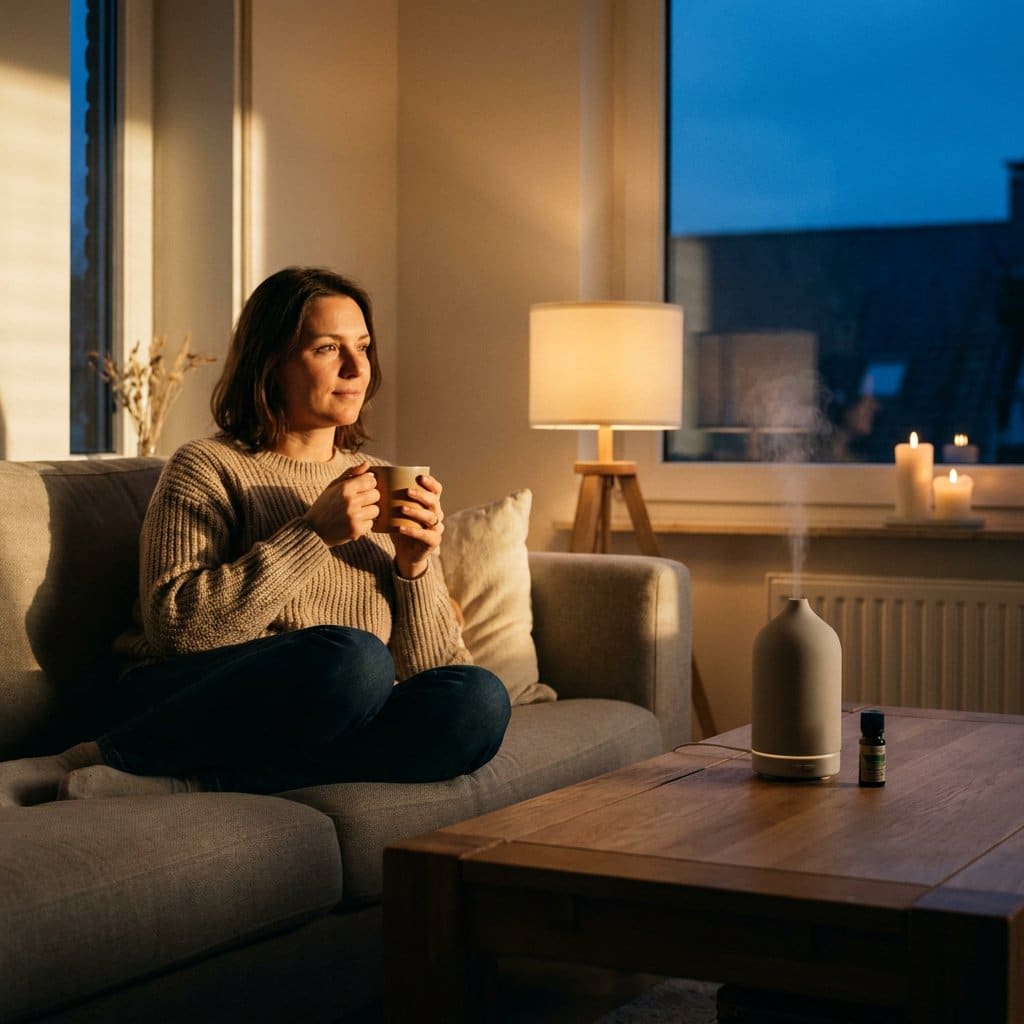

Stress often feels like restlessness in your mind and tension in your body. Aromatherapy can be a natural way to consciously create a moment of calm, for example with a diffuser, a massage oil or a fragrance blend for the evening. It is not a substitute for medical help, but it does offer welcome support if you want to bring more relaxation, balance and gentleness into your day.
At De Groene Linde, we use naturally pure essential oils and blends that form part of a mindful self-care routine. On this page, you can read about how aromatherapy helps with stress, which oils are commonly chosen, and how you can put them into practice at home.
How aromatherapy can help with stress
Scents are quickly taken in. When you smell an essential oil, that olfactory stimulus is processed by the sense of smell and linked to areas of the brain involved in emotion, memory and relaxation. That is precisely why a scent can have an immediate effect on how a moment feels.
In practice, managing stress is usually not about finding one big solution all at once, but about small, repeatable moments of calm. A familiar scent can help you make the transition from a hectic state to relaxation, from worrying to feeling grounded in your body, or from restlessness to a more pleasant evening routine.
For many people, aromatherapy works particularly well as part of a broader ritual, such as mindful breathing, a short massage, going to bed earlier or taking a quiet moment away from screens.
Which essential oil is usually best for relieving stress?
The best aromatherapy for stress isn’t the same for everyone. It depends on what you’re experiencing. If you’re mainly feeling tense, overstimulated, emotionally drained or finding it hard to fall asleep, your sense of smell may react differently. That said, there are a few options that are often chosen.
Lavender for calm and letting go
Lavender is a popular choice if you want to relieve tension and more peace and relaxation to help you wind down in the evening. The scent is often described as gentle, spicy and relaxing. Many people use lavender when they feel restless, are worrying or find it difficult to relax before going to bed.
Bergamot for tension and a heavy head
Bergamot has a fresh, warm citrus scent that is often chosen when stress is accompanied by low spirits, inner tension or a cluttered mind. It is a scent that both lifts the spirits and soothes, making it a good choice when you need balance rather than simply a way to numb tension.
Chamomile or gentle evening scents to help with overstimulation
If stress mainly manifests as overstimulation, heightened sensitivity or difficulty switching off, gentle, comforting scents are often found to be soothing. Think of blends such as oils for inner peace and meditation which create a peaceful evening atmosphere and help you unwind after the day.
Citrus scents when stress is sapping your energy
Sometimes stress is not only accompanied by tension, but also by tiredness and listlessness. In such cases, fresh citrus notes can help to make the room feel lighter, without it becoming too heavy or too sleep-inducing.
It helps not just to consider which oil is popular for stress, but above all to consider which scent is supporting you right now. Scent is a personal matter. What feels deeply relaxing to one person may be too overpowering for another.
How to use aromatherapy to relieve stress at home
The easiest way to get started is to choose one quiet moment in the day. That way, aromatherapy becomes not just a one-off activity, but an anchor in your routine.
Using a diffuser
A fragrance diffuser is ideal if you want to diffuse a scent throughout a room, such as the living room, bedroom or practice room. It’s perfect for an evening routine, a quiet moment’s reading or a short break after a busy day at work.
With massage oil
A massage oil is ideal when stress tends to build up mainly in the neck and shoulders, or when you feel as though you’re not properly grounded in your body. The combination of touch and scent makes it easier to consciously slow down.
As a regular evening ritual
Use a soothing scent at a regular time, such as before going to bed, whilst having a warm bath or whilst taking a few calm breaths. It is precisely this repetition that makes it so effective. Over time, your body will come to recognise that scent as a sign of relaxation.
Opt for simplicity and consistency
You don’t need to use lots of different oils at the same time. A single scent or blend that really suits you often works better than constantly switching between them. Keep it simple, so you can stick with it even on days when you need a bit of peace and quiet the most.
What should you look out for when choosing an oil to help with overstimulation or stress?
- Scent experience: Choose a fragrance that you genuinely find pleasant. Trying too hard will backfire.
- Time of use: An evening fragrance can be more subtle and gentle than a daytime fragrance.
- Form of application: A diffuser, massage oil or a ready-made blend can each have a different effect on your routine.
- Simplicity: Start with one product and see how you get on with it first.
- Quality: Choose naturally pure essential oils or carefully formulated blends without any unnecessary additives.
A gentle stress-relief routine with aromatherapy
If you want to use aromatherapy to combat stress, a simple routine is often the most helpful. For example: switch on the diffuser, put your phone away, sit quietly, breathe more deeply and just do nothing for a few minutes. Or have a quick shoulder massage with a soothing oil before going to sleep. It doesn’t have to be complicated to bring a noticeable sense of calm into your day.
For those who prefer ready-made options, relaxing blends and products such as Relaxation Essential Oil, Relaxation Massage Oil and Calming are an accessible way to get started. If you’d like to get a better feel for the scents and how to use them first, then you can diffuser recipes or guidance on how many drops to put in the diffuser to help you make a choice that really suits you.
Frequently asked questions about aromatherapy and stress
Which essential oil promotes a sense of calm?
Lavender is one of the best-known choices for calm and relaxation. Bergamot and gentle evening blends are also popular choices. Which scent provides the most calm varies from person to person and depends on what you need at that particular moment.
What is the best aromatherapy treatment for stress?
The best choice is a scent that helps your nervous system to wind down and that you genuinely enjoy using. For some, that might be a gentle lavender scent; for others, a warm citrus blend or a relaxing massage oil.
Which oil should you use for overstimulation?
In cases of sensory overload, people often opt for mild, gentle scents that are not too sharp or too stimulating. Calming evening blends, lavender or soothing relaxation products are often more suitable than very fresh or intense scents.
Can aromatherapy help with stress and poor sleep?
Aromatherapy is widely used to help wind down at the end of the day. A soothing scent in the bedroom or as part of your evening routine can help you relax more easily. If stress or sleep problems persist, it is advisable to look further into the cause and, if necessary, seek professional help.
Related articles

Samenwerking in Ontspanning en Welzijn voor de Zorg!
Stichting Massage voor de Zorg is een prachtig initiatief waar wij graag mee in verbinding zijn. Door het fijne contact met operationeel directeur Eric Both hebben wij al veel mogen...
Read more

Koshi, discover the magic of sound and nature
A gentle breeze, the sound of rippling water or the rustling of leaves. Sound can have a special effect on you. It can take you out of your head and draw your attention...
Read more

Working with Koshi’s, the magic of sound and the four elements
Perhaps you’ve experienced that moment when someone plays a Koshi. During a yoga class or some other relaxing moment. The first notes sound clear and soft, and then seem to….
Read more