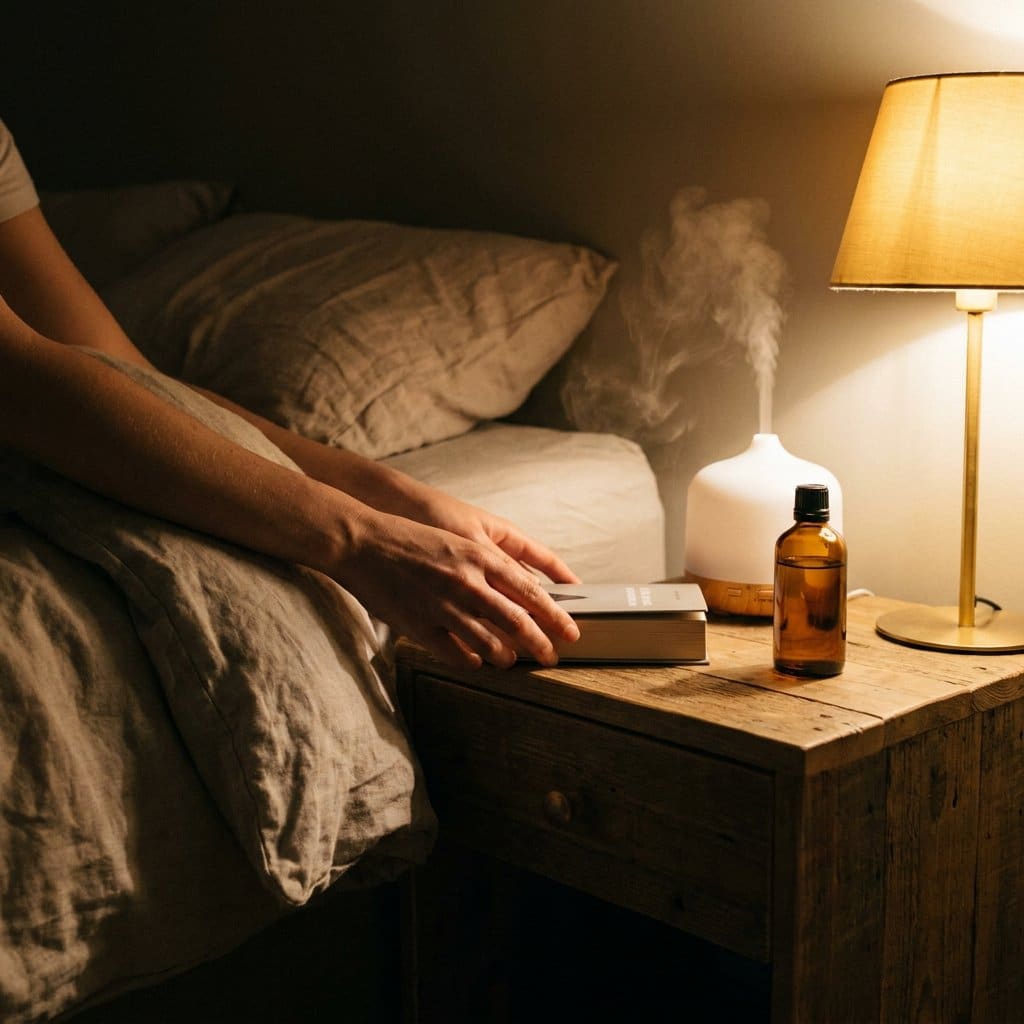

Do you find it hard to relax before going to bed, do you lie awake worrying, or would you like to wind down more calmly in the evening? Aromatherapy can be a lovely, natural way to bring more calm to your bedroom and your mind. With the right scent and a simple ritual, you can make it easier to switch off and go to bed feeling relaxed.
Aromatherapy for sleep isn’t about complicated routines, but about consciously experiencing scents. A few drops of essential oil in a diffuser, a pillow mist or a roll-on applied at a quiet moment in the evening can help to create a calm atmosphere. At De Groene Linde, you’ll find, amongst other things, naturally pure essential oils, sprays and roll-ons designed to aid relaxation and sleep.
How aromatherapy can help with sleep
Scent has a direct influence on how a space and a moment feel. That is precisely why aromatherapy is often used in the evening: not as a substitute for medical care, but to aid relaxation, tranquillity and a pleasant transition from day to night.
Particularly if poor sleep is linked to restlessness, tension or a mind full of thoughts, a familiar scent can help make your evening routine recognisable and soothing. By using the same scent every time at bedtime, your body will increasingly associate that scent with winding down, letting go and falling asleep.
Which essential oil is often chosen to help you sleep well?
Not everyone reacts to scents in the same way, but a number of essential oils are often chosen in aromatherapy to help with sleep problems or to promote a good night’s sleep. These are some well-known options:
- Lavender – one of the best-known scents for relaxation and sleep
- Roman chamomile – gentle and soothing, particularly lovely as part of a relaxing evening routine
- Mandarin – a mild, pleasant scent that is often perceived as relaxing
- Bergamot – refreshing and gentle at the same time, a favourite when stress takes over
- Sandalwood – warm and grounding, conducive to stillness
- Incense – is often used during quiet, meditative moments in the evening
For many people, lavender is the first thing that springs to mind when asked which scent helps you sleep. This is because it is a familiar, gentle scent that is often associated with tranquillity. At the same time, a blend or a different oil might actually suit you better if your restlessness mainly stems from worrying, emotional tension or difficulty letting go.
How to use aromatherapy before bedtime
The best way to use it is usually the one you can easily stick to. Keep it simple and choose a time to use it that suits your evening.
Diffuser in the bedroom
Use a diffuser about 20 to 30 minutes before you go to sleep. This gives the scent time to fill the room whilst you’re winding down. It fits in well with a peaceful evening routine featuring dimmed lighting, a book or a few mindful breaths. If you’d like some ideas for soothing evening blends, take a look at the diffuser recipes. If you’re unsure about the correct dosage, please read: How many drops should you put in your diffuser?
Pillow mist or spray
A spray is handy if you want to create a soothing atmosphere quickly. You can use it in the bedroom or as part of your regular bedtime routine. The Groene Linde range includes sleep-focused sprays such as Bedtime Smudge, ‘Sleep Well’ fragrance range and Pillow Mist.
A roll-on for when you’re out and about or to keep by your bedside
A roll-on is handy if you want to use a fragrance close to your skin without a diffuser. This can be helpful on evenings when you find your mind is still racing. One example from the range is the ‘Peace of Mind’ roll-on, ‘Sleep Well’.
Pure essential oil
If you prefer to use pure essential oil, lavender oil is a logical choice to start with. This way, you keep the scent pure and can take your time to find out whether it suits your bedtime routine. Do you prefer to use oil in the bath? Then take a look at these tips for essential oil for the bath.
A simple evening ritual with fragrance
A regular routine often makes aromatherapy more effective than just trying it out now and then. It doesn’t take much effort:
- 1. Choose one fragrance or blend that you only use in the evening
- 2. Switch on your diffuser or use your spray at a set time
- 3. Minimise stimuli such as bright light and screen time
- 4. Take 5 quiet minutes to breathe, read or sit quietly
- 5. Repeat this for a period of time so that you associate the scent with a sense of calm
It is precisely that repetition that makes all the difference. The scent then becomes not just something that smells nice, but part of a recognisable moment of relaxation.
Which products are best for when you’re trying to sleep but have a lot on your mind?
People searching for ‘aromatherapy for sleep’ are often looking not just for a scent, but for a solution that suits the type of restlessness they are experiencing. De Groene Linde’s range includes various sleep-focused products, such as:
- Peace of Mind, A Good Night’s Sleep – as an aura spray and essential oil, designed for evenings when your mind is racing
- Peace of Mind roll-on, Sleep Well – for relaxation, inner peace and to aid sleep
- Bedtime Smudge, Sleep Tight – a natural spray to use before going to bed
- Calming, Sleep Well, Sweet dreams, Sleep well and Sleep, Little Sheep – additional sleep-focused ranges within the product range
- Lavender oil – a classic choice for anyone who wants to start simply with a single fragrance
If you’re unsure whether to choose a loose oil, a spray or a roll-on, simply go for whatever suits your routine best. A diffuser or loose oil is ideal if you want to create a pleasant atmosphere throughout the whole room. A spray or roll-on, on the other hand, is handy if you’re looking for a quick, immediate application. For more inspiration, you can also take a look at Sleep & Dreams within the range.
Important to know
Aromatherapy can be a valuable aid to restful sleep, but it is not a substitute for medical advice or treatment. If you have long-term or severe sleep problems, it is advisable to have the underlying cause investigated as well.
Frequently asked questions about aromatherapy and sleep
Which essential oil helps you sleep well?
Lavender is the most popular choice, but chamomile, mandarin, bergamot, sandalwood and frankincense are also often used in a soothing evening ritual. Which oil is best for you depends on your personal preference and the type of restlessness you’re experiencing.
Which scent helps you sleep?
There isn’t a single scent that works the same for everyone. Gentle, soothing scents such as lavender and chamomile are the most popular choices when the aim is to relax before bed.
What is the best oil for sleeping?
For many people, lavender is a good place to start, as this scent is familiar and versatile for use in the evening. If you’re mainly suffering from a heavy head, or if you’d prefer a complete sensory experience, a soothing oil or spray might be a better choice than a single oil on its own.
Which aromatherapy plant is suitable for sleep problems?
Plants commonly used in aromatherapy to aid sleep include lavender, Roman chamomile, mandarin and sandalwood. In practice, the choice is often based on the scent experience and the specific moment when you are seeking support, such as when falling asleep, winding down or settling in for the night.
Related articles

Koshi, discover the magic of sound and nature
A gentle breeze, the sound of rippling water or the rustling of leaves. Sound can have a special effect on you. It can take you out of your head and draw your attention...
Read more

Working with Koshi’s, the magic of sound and the four elements
Perhaps you’ve experienced that moment when someone plays a Koshi. During a yoga class or some other relaxing moment. The first notes sound clear and soft, and then seem to….
Read more
Happy Autumn: turning inwards, letting go and enjoying the moment
Autumn is here. Whilst for some it means cosiness, for others autumn can evoke a completely different feeling. And with that different feeling, I am...
Read more