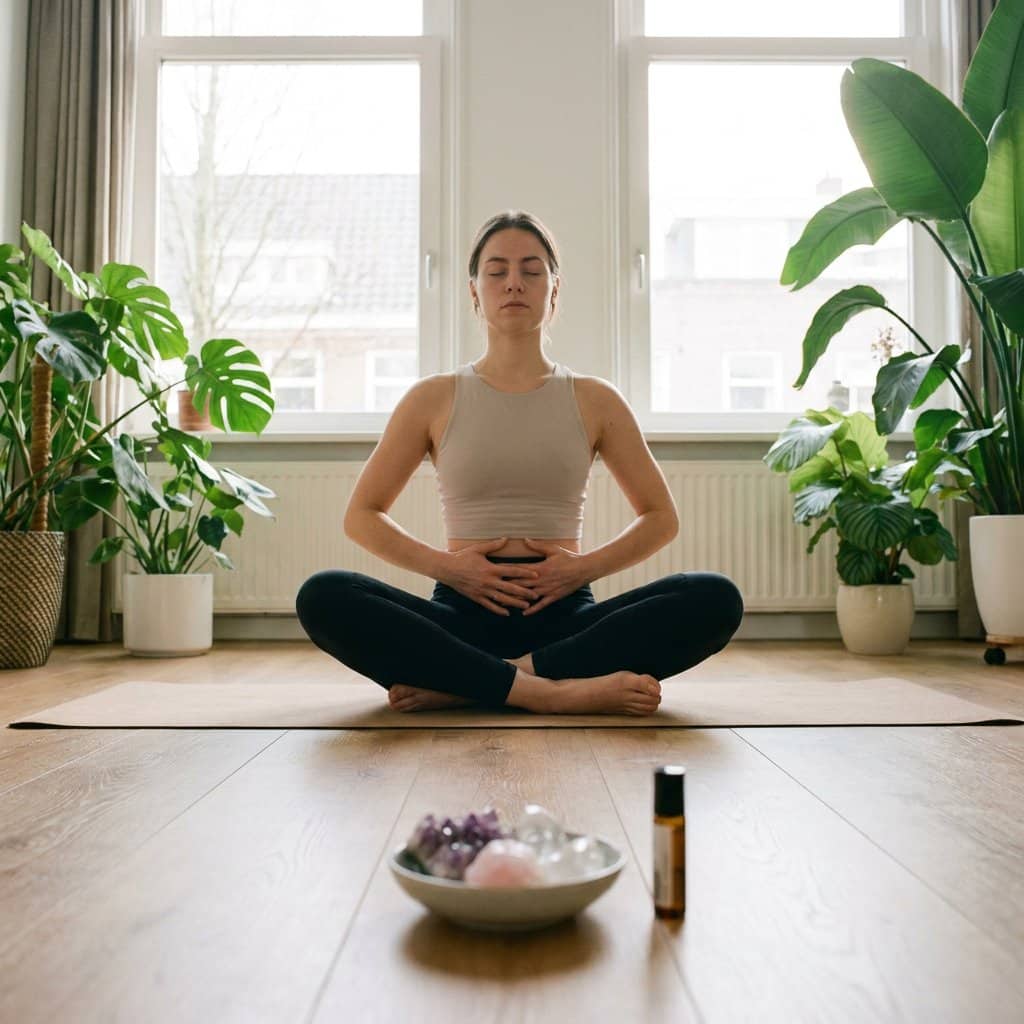

Chakra meditation is a gentle form of meditation in which you move your attention step by step through the body. You use breathing, visualisation and, if you wish, colour to consciously reflect on what you are feeling. It is a personal moment to slow down, ground yourself and be more mindful of your inner self.
What is chakra meditation?
In spiritual traditions, chakras are described as energy centres linked to various themes, such as security, creativity, communication and intuition. During a chakra meditation, you focus your attention on these points, usually working from the bottom up.
You don’t need to force anything or expect to experience anything out of the ordinary. The aim is not to achieve anything, but to create space for calm, breath and awareness. Think of the chakras primarily as a helpful framework for self-reflection and meditation, not as a medical explanation for physical or mental symptoms.
A simple 7-step chakra meditation
- Choose a quiet spot – Sit or lie down comfortably. Turn off notifications and give yourself about ten to fifteen minutes.
- Calm down – Close your eyes and take a few calm breaths in and out. Notice how your body makes contact with the chair, the floor or the surface beneath you.
- Start with the basics – Focus your attention on the area around your tailbone and pelvis. Breathe calmly and, for example, visualise the colour red.
- Move slowly upwards – Move your attention from your lower abdomen, through your stomach, chest, throat and forehead, up to the crown of your head. Stay with each area for a few breaths.
- Use a colour or a word – Visualise the colour associated with it, or choose a simple word that resonates with you, such as peace, space, gentleness or trust.
- Observe without judgement – Do you feel tension, restlessness, or perhaps very little of either? Just let it be. Gently bring your attention back to your breath each time.
- Finish off gently – Feel your whole body again, take a few deeper breaths in and out, and open your eyes when you’re ready.
Do you find it difficult to focus on all seven chakras at once? If so, choose one area that needs your attention at that moment. You could, for example, start with the first chakra. If you like to use crystals during your meditation, have a look at Seven chakra stones.
The 7 chakras as areas of focus
| Chakra | Location in the body | Colour | A theme for your meditation |
|---|---|---|---|
| Base or root chakra | At the base of the spine | Red | Grounding, safety and being present |
| Sacral chakra | Lower abdomen | Orange | Emotion, creativity and enjoyment |
| Solar Plexus Chakra | Upper abdomen | Yellow | Personal strength and self-confidence |
| Heart chakra | Chest area | Green or pink | Connection, compassion and loving care |
| Throat chakra | Throat area | Blue | Communication and self-expression |
| Third eye chakra | Between the eyebrows | Indigo | Insight, attention and intuition |
| Crown chakra | On top of the head | Violet or white | Silence, mindfulness and connection |
Visualisation using chakra colours
Colours can help you maintain your focus during meditation. For each chakra, imagine a soft colour that grows larger or brighter in time with your breath. Keep it simple: you don’t need to see a clear image. Just the idea of a colour or a warm point of light is enough. Do you use crystals during your meditation? Read more about cleansing chakra stones.
Do you find your thoughts wandering? That’s perfectly normal. Return your attention to the colour, the part of your body or the rhythm of your breathing. In this way, chakra meditation becomes a practice in mindfulness, not in perfection.
Scent as part of your meditation ritual
A familiar scent can help you consciously mark the start of your meditation session. De Groene Linde has a Chakra fragrance range as an essential oil and aura spray, based on the seven chakras. You can choose a scent that corresponds to the chakra you wish to meditate on. Also essential oils for inner peace and meditation can support your ritual.
Use an aura spray in the room or, when using essential oils, always follow the instructions for use. Chakra roll-ons They can also be a lovely, practical ritual for meditation, yoga or breathing exercises. In this context, scent complements your moment of mindfulness; it is not a substitute for professional help with persistent symptoms.
Frequently asked questions about chakra meditation
How do you cleanse your chakras?
Many people use the term ‘cleansing the chakras’ to describe a moment of focused attention, breathing and letting go. You can breathe calmly from the base chakra to the crown chakra, visualising as you go that you are making space for clarity and relaxation in each area. If you experience discomfort or strong emotions, don’t push yourself – opt for a shorter, gentler session instead.
How do you activate your chakras?
There is no set method or verifiable test for activating chakras. However, when meditating, you can focus your attention on a chakra by breathing gently into it, visualising a colour or setting an intention. Consistency and a gentle approach are more important than an intense experience.
How can you tell if your chakras are out of balance?
In chakra work, feelings such as restlessness, difficulty setting boundaries or difficulty expressing oneself are sometimes linked to certain chakra themes. Please regard this as an invitation to self-reflection, not as a diagnosis. If you experience persistent physical, psychological or emotional symptoms, it is important to seek appropriate professional help.
Related articles

Samenwerking in Ontspanning en Welzijn voor de Zorg!
Stichting Massage voor de Zorg is een prachtig initiatief waar wij graag mee in verbinding zijn. Door het fijne contact met operationeel directeur Eric Both hebben wij al veel mogen...
Read more
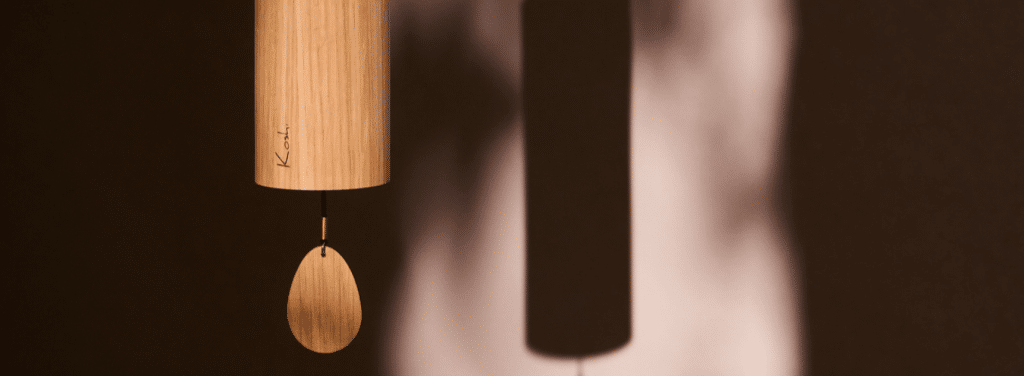
Koshi, discover the magic of sound and nature
A gentle breeze, the sound of rippling water or the rustling of leaves. Sound can have a special effect on you. It can take you out of your head and draw your attention...
Read more

Working with Koshi’s, the magic of sound and the four elements
Perhaps you’ve experienced that moment when someone plays a Koshi. During a yoga class or some other relaxing moment. The first notes sound clear and soft, and then seem to….
Read more