
Carrier oil for essential oils
A carrier oil is the base in which you dilute essential oil before applying it to the skin. This makes the mixture more pleasant to use and helps to prevent direct contact with the skin. Which carrier oil is best suited to essential oils depends mainly on what you want to make: a roller, massage oil, skin oil or a simple blend for home use. Would you like an overview of the standard carrier oils for mixing with essential oils? Take a look at the base oils.
What is a carrier oil?
A carrier oil, also known as a base oil, is a vegetable oil that acts as a carrier for essential oil. Examples include jojoba oil, sweet almond oil, grape seed oil and avocado oil. Unlike essential oil, a carrier oil is oily, does not evaporate quickly and remains on the skin for longer. This is precisely why it is so suitable for distributing essential oil evenly. A good carrier oil for essential oils therefore does two things at once: it dilutes the potent fragrance and ensures that your blend spreads smoothly over the skin.
Why should essential oils always be diluted?
Essential oil is highly concentrated. You therefore only need a small amount for a skin blend. Using it undiluted can be too intense, particularly on sensitive skin, on the face, over larger areas of skin or with daily use. By diluting it in a carrier oil, you can distribute the essential oil more evenly and control the amount you use much more precisely.
Diluting has another practical advantage: a blend feels softer, spreads more easily and feels more comfortable on the skin during a massage or skincare treatment. Even when working with high-quality pure oils, such as essential oils from De Groene Linde, this basic rule remains the same. Pure does not automatically mean suitable for use undiluted on the skin. You should therefore opt for a suitable carrier oil and build up gradually, especially when trying a new oil for the first time. Would you like to read through the guidelines again at your leisure? Take a look at How to dilute essential oil safely.
Dilute essential oil in a carrier oil
Useful guidelines on the number of drops
The number of drops of essential oil you add depends on the intended use, the sensitivity of your skin and the specific oil. As a practical guideline, you can use approximately 1 to 2 drops per 10 ml of carrier oil for a mild facial oil or for sensitive skin. For daily use on the body, 2 to 4 drops per 10 ml is often a common starting point. For a massage blend for adults, 4 to 6 drops per 10 ml is often used. More is not necessarily better. Some essential oils actually require a lower dosage, so always check the label and product information.
How to make a blend
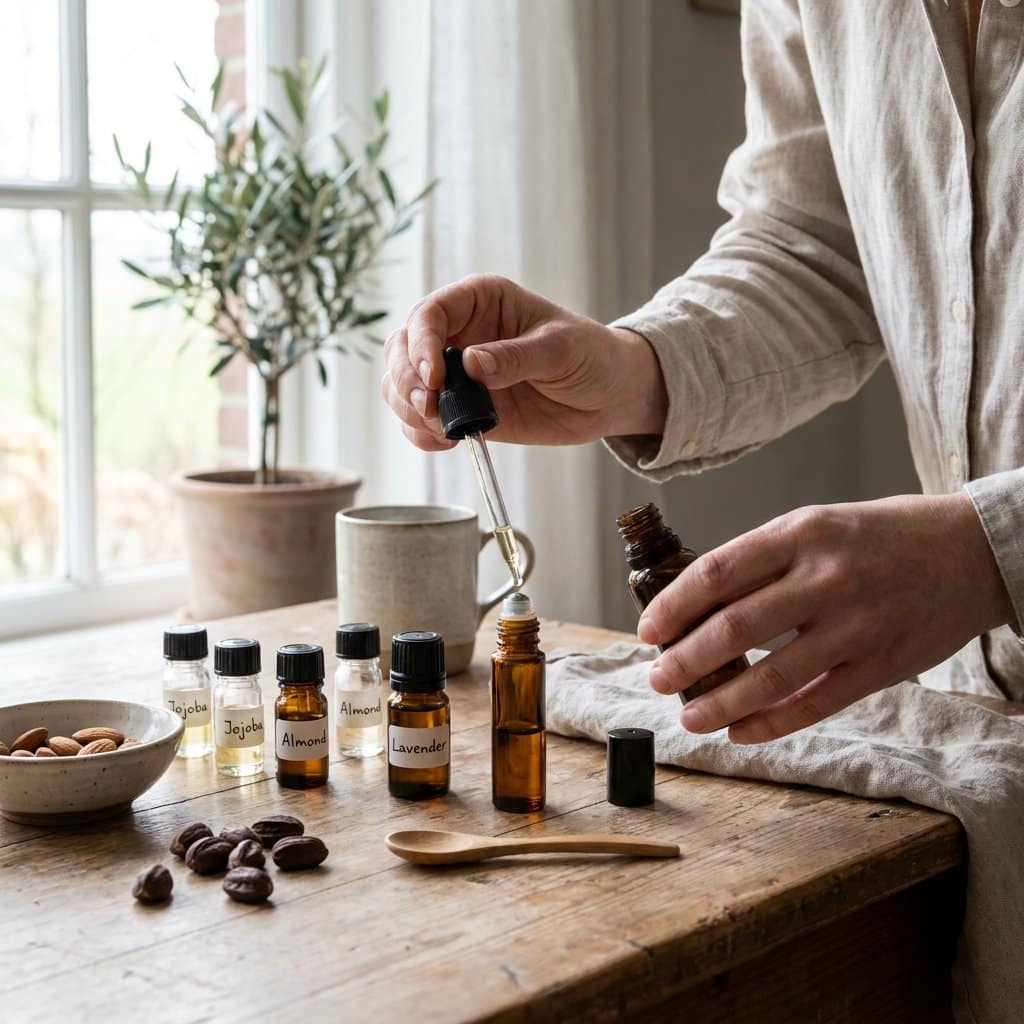
Use a clean bottle, preferably made of dark glass. First fill it with the carrier oil, then add the essential oil. Gently shake or roll the bottle so that the mixture blends thoroughly. It’s also a good idea to note down the contents and the date, especially if you often make your own blends. Test a new mixture on a small patch of skin first, then wait about 24 hours to see how your skin reacts.
Why water is not a good alternative
Essential oil does not mix with water. If you add drops directly to a bowl of water, a bath or a foot bath, they will remain as small, concentrated droplets. This is not the same as diluting. For use on the skin, a carrier oil is therefore much more suitable. If you want to make something for the bath, water alone is not enough. First mix the essential oil with a suitable base bath oil and only add it just before use, or choose a product specifically designed to help disperse the oil more effectively in water.
Which carrier oil is best suited to your application?
For a roller or light skin oil
Jojoba oil and grape seed oil are often the easiest choices. Jojoba feels light, is stable and is widely used in roll-ons and skin oils. Grape seed oil is also quite light and fairly neutral in scent, which allows the scent of the added essential oil to come through beautifully. If you want a base that isn’t too greasy, you’ll usually be fine with these two. If you’re looking for a premium carrier oil with specific skin benefits, take a look at our exclusive base oils. Would you like to make a roll-on? If so, follow the instructions for a How to make an essential oil roller.
For massage
Almond oil is a classic carrier oil for massage. It provides plenty of glide, feels smooth and is a pleasant, accessible base for many people. If you’re looking for something richer, you can combine a lighter oil with a small amount of avocado oil or castor oil. Castor oil is thicker and richer, so you don’t usually use it on its own, but rather as an addition to a blend.
For dry skin or a richer feel
Avocado oil, argan oil and coconut oil often leave the skin feeling richer than, for example, jojoba or grape seed oil. This can be pleasant if you’re looking for a richer, more nourishing body oil. Coconut oil is less practical for every use, as it solidifies at lower temperatures. This is often less practical for a roller, but for a body blend it can actually be a good thing. If you’re looking for extra herbal benefits, do have a look at macerates.
Cold-pressed or refined?
Cold-pressed carrier oils often have a more distinctive scent, colour and character. Refined oils are usually more neutral in scent and texture. Neither is inherently better. If you want the essential oil to take centre stage, a refined carrier oil is often a good choice. If you prefer a more natural, pure oil experience, cold-pressed is often a better option. Read more about the difference between refined, cold-pressed and macerated.
Can you use cooking oil as well?
Sometimes, yes, but it isn’t always the best choice. Sunflower oil is usually lighter than olive oil and therefore more suitable as a quick stopgap. Olive oil is an option, but it often feels heavier and has a more pronounced scent. Coconut oil is also an option, provided it’s liquid, but it’s more suitable as a body or hair oil than for a roller. If you regularly make your own blends, a proper cosmetic carrier oil is usually preferable because the scent, how it feels on the skin and the quality are more predictable.
Frequently Asked Questions
What is the best carrier oil?
There isn’t one single ‘best’ carrier oil that suits everyone. If you’re looking for an all-round base, jojoba oil and grape seed oil are often safe and pleasant choices. Almond oil is widely used for massage. For a richer blend, you might consider avocado oil or a small amount of castor oil combined with a lighter base.
How many drops of essential oil go into 10 ml of carrier oil?
For a mild blend, you usually use 1 to 2 drops per 10 ml. For daily use on the body, 2 to 4 drops is often a sensible starting point. For a stronger massage blend for adults, 4 to 6 drops are often used. Always check the instructions for the specific essential oil, as not every oil has the same recommended dosage.
Can I apply essential oil directly to the skin?
This is not recommended. Essential oils are highly concentrated and can be too potent, particularly on sensitive skin, on the face or with repeated use. Diluting them in a carrier oil is therefore the most common and pleasant way to ensure the safe use of essential oils.
Can I use a carrier oil with essential oils from De Groene Linde?
Yes. Whether you’re using De Groene Linde or another brand, the principle remains the same: use a suitable carrier oil for application to the skin and follow the product information provided with the oil itself. The brand does not alter the need to dilute carefully.
How long does a homemade mixture keep?
That depends on the carrier oil chosen, the essential oil used and how it is stored. A blend usually keeps its quality better if you use a clean, dark-coloured glass bottle and store it in a cool, dark place. Making small batches is often best, as this allows you to work with fresh ingredients and helps preserve the scent and quality better.
If you’re still unsure which carrier oil suits your essential oil, start by choosing based on your intuition and intended use. If you want something light and neutral, go for jojoba or grapeseed oil. If you want it to glide more easily, choose almond oil. If you’re looking for a richer base, add a little avocado oil or castor oil to a lighter oil. This is a simple way to create a blend that suits your skin and how you intend to use it.
Related articles

Koshi, discover the magic of sound and nature
A gentle breeze, the sound of rippling water or the rustling of leaves. Sound can have a special effect on you. It can take you out of your head and draw your attention...
Read more

Working with Koshi’s, the magic of sound and the four elements
Perhaps you’ve experienced that moment when someone plays a Koshi. During a yoga class or some other relaxing moment. The first notes sound clear and soft, and then seem to….
Read more
Happy Autumn: turning inwards, letting go and enjoying the moment
Autumn is here. Whilst for some it means cosiness, for others autumn can evoke a completely different feeling. And with that different feeling, I am...
Read more