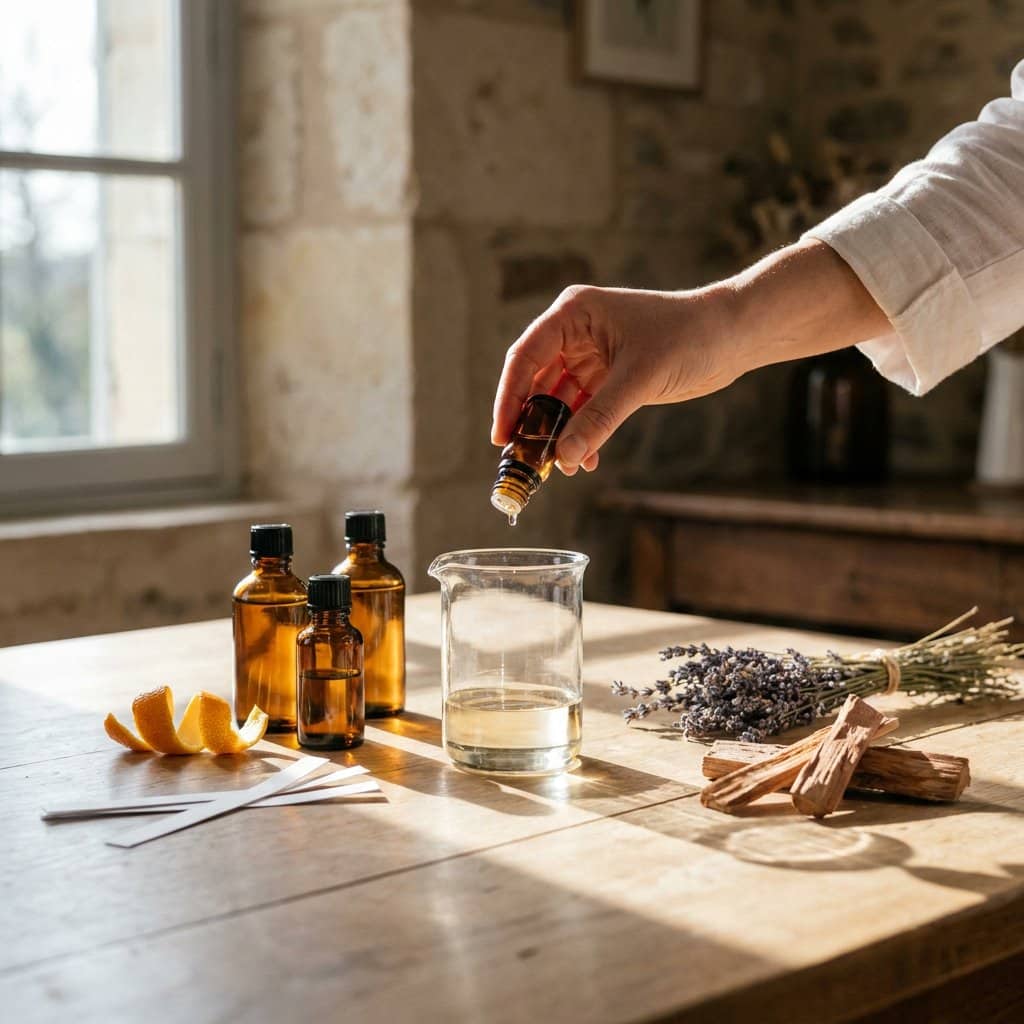

With the right scent combinations, you can get more out of essential oils than with a single scent on its own. A good blend feels more well-rounded, remains more pleasantly balanced and is better suited to the atmosphere you wish to create, such as tranquillity in the evening, clarity whilst working or a fresh atmosphere in the home. On this page, we’ll show you how to combine essential oils effectively and give you examples you can start using straight away.
You don’t need to be a skilled perfumer to do this. If you know a few simple blending rules and listen to what you like, you can easily create your own fragrance combinations for diffusers, fragrance stones or bath oils.
Why some scents work so well together
Essential oils blend best when there is a balance between freshness, softness and depth. Citrus scents often provide a light, sparkling opening. Floral and herbal oils form the heart of the fragrance. Woody or warm oils bring a sense of calm and ensure the blend lasts longer.
That is why a blend usually has a richer scent than a single oil. First you notice the fresh note, then the heart note comes to the fore, and finally a gentle base note lingers. It is precisely this layered effect that makes essential oil blends so pleasant in a diffuser or as part of a homemade wellness routine.
The simplest way to combine essential oils
If you want to mix your own, three fragrance rolls are often all you need:
- Top notes – fresh, light and immediately noticeable, such as lemon, bergamot or orange
- Heart notes – cohesive and well-rounded, such as lavender, geranium or rosemary
- Base notes – warm, grounding and longer-lasting, such as cedar wood, sandalwood or vetiver
A safe way to start is to use two or three oils. This keeps the scent clear and prevents the different scents from getting mixed up. A simple ratio is 2 parts top note, 2 parts heart note and 1 part base note. This isn’t a hard and fast rule, but it’s a good starting point.
Practical mixing tips
- Start small – try a few drops first
- Choose one main subject – for example, soothing, refreshing or invigorating
- Only add depth at the very end – base notes often tend to become too dominant
- Make a note of your blend – that way, you can recreate a great combination later on
Want to get started step by step? Read Mixing essential oils for the diffuser.
Which scents go well together?
There are lots of lovely combinations to choose from, but a few pairings almost always work well because they complement each other in character. Would you like some guidance on choosing? Take a look at fragrance profiles (citrus, floral, spicy, woody) for complementary families.
| Fragrance type | Often goes well with | Effect on the perception of odour |
|---|---|---|
| Citrus | Lavender, rosemary, geranium, woody notes | Fresher, lighter and more vibrant |
| Floral | Citrus, woody, soft herbal notes | Rounded and softer |
| Spicy | Citrus, lavender, woody | Bright with more character |
| Woody | Citrus, floral, resinous | Warmer and with more depth |
Not sure? Then these are often safe combinations to start with: lavender and bergamot, lemon and rosemary, orange and cedarwood, or eucalyptus and lemon.
Examples of essential oil fragrance combinations
For peace and relaxation
- Lavender + Bergamot + Cedarwood – gentle, soothing and beautifully balanced
- Lavender + Ylang-ylang – floral and warm, perfect for a cosy evening atmosphere
- Mandarin + Lavender – friendly, gentle and approachable
For focus and a clear mind
- Lemon + Rosemary + Peppermint – refreshing and invigorating
- Eucalyptus + Lemon – clean, clear and light
- Rosemary + Bergamot – invigorating without being too harsh
For a fresh atmosphere in your home
- Orange + Lemon + Lime – sparkling and sunny
- Eucalyptus + Scots pine + Lemon – fresh with a green character
- Grapefruit + Bergamot – slightly bitter, clean and modern
For a warm, rich fragrance
- Orange + Cinnamon + Cedarwood – warm and welcoming
- Bergamot + Sandalwood – soft, elegant and serene
- Mandarin + Patchouli – warm with more depth
Looking for more inspiration? Discover diffuser recipes by theme and mood.
Which essential oils blend well in a diffuser?
In a diffuser, blends that aren’t too heavy work particularly well. Citrus, lavender, rosemary, eucalyptus, peppermint, geranium and light woody notes are often good choices. They diffuse nicely throughout the room and usually remain pleasant, even if the scent lingers for a little longer.
For your first test, you can start with a total of 3 to 5 drops, depending on your diffuser and the size of the room. Not sure about the correct dosage? Read more about how many drops in the diffuser. Keep the blend simple. Two oils are often enough to create a lovely scent.
Make your own bath oil or create a fragrant experience
If you’re using essential oil on your skin or in the bath, don’t use it undiluted – always mix it with a suitable carrier oil. For a relaxing bath, for example, you could add a few drops of your favourite fragrance combination to a basic bath oil. This ensures the scent diffuses more pleasantly and allows you to use the oil responsibly. Read more Safety when using essential oils for key rules on blending and dilution.
The same applies to a scented stone or a personal ritual: start small, take a sniff every now and then, and adjust as you go. A blend doesn’t have to follow any set rules to perfection. The most important thing is that the scent feels right to you and suits the moment.
Grinding or opting for a blended mix
Not everyone wants to experiment with individual oils themselves. In that case, a ready-made blend can be a good choice. De Groene Linde offers both single essential oils and carefully formulated fragrance frequencies and blends. These allow you to enjoy a balanced scent straight away, or find inspiration for your own combinations.
If you’d rather blend your own, you can start with a few individual favourites that complement each other well. Work within a single theme and keep your initial combinations simple. That’s the quickest way to discover which fragrance profiles you find most pleasant.
Browse through the Single essential oils A–Z to quickly find singles that blend well together.
Frequently Asked Questions
What essential oil scent combinations are there?
There are many possible combinations, but popular choices include soothing, fresh, invigorating and warm. Think of lavender with bergamot for relaxation, lemon with rosemary for focus, or orange with cedarwood for a gentle home fragrance.
What are some good oils to start with?
An accessible starting point is a fresh citrus oil, a gentle heart note such as lavender, and a soothing base note such as cedarwood. With these, you can create plenty of simple blends without the fragrance becoming too complex. For beginners, a Essential Oils Starter Kit could also be a practical first step.
What are some popular essential oils to combine?
Oils that are often chosen for fragrance blends include lavender, bergamot, lemon, orange, eucalyptus, peppermint, rosemary and cedarwood. They are versatile and usually blend easily with other scents.
How can you tell if a blend is balanced?
A balanced blend opens up nicely, without becoming too sharp or too sweet, and retains a subtle undertone. If one scent dominates the blend, it often helps to use fewer drops or to simplify the blend to two or three oils. If you’d like to get started straight away, have a look at our tips for blending in a diffuser or find inspiration with some diffuser recipes.
Related articles

Koshi, discover the magic of sound and nature
A gentle breeze, the sound of rippling water or the rustling of leaves. Sound can have a special effect on you. It can take you out of your head and draw your attention...
Read more

Working with Koshi’s, the magic of sound and the four elements
Perhaps you’ve experienced that moment when someone plays a Koshi. During a yoga class or some other relaxing moment. The first notes sound clear and soft, and then seem to….
Read more
Happy Autumn: turning inwards, letting go and enjoying the moment
Autumn is here. Whilst for some it means cosiness, for others autumn can evoke a completely different feeling. And with that different feeling, I am...
Read more