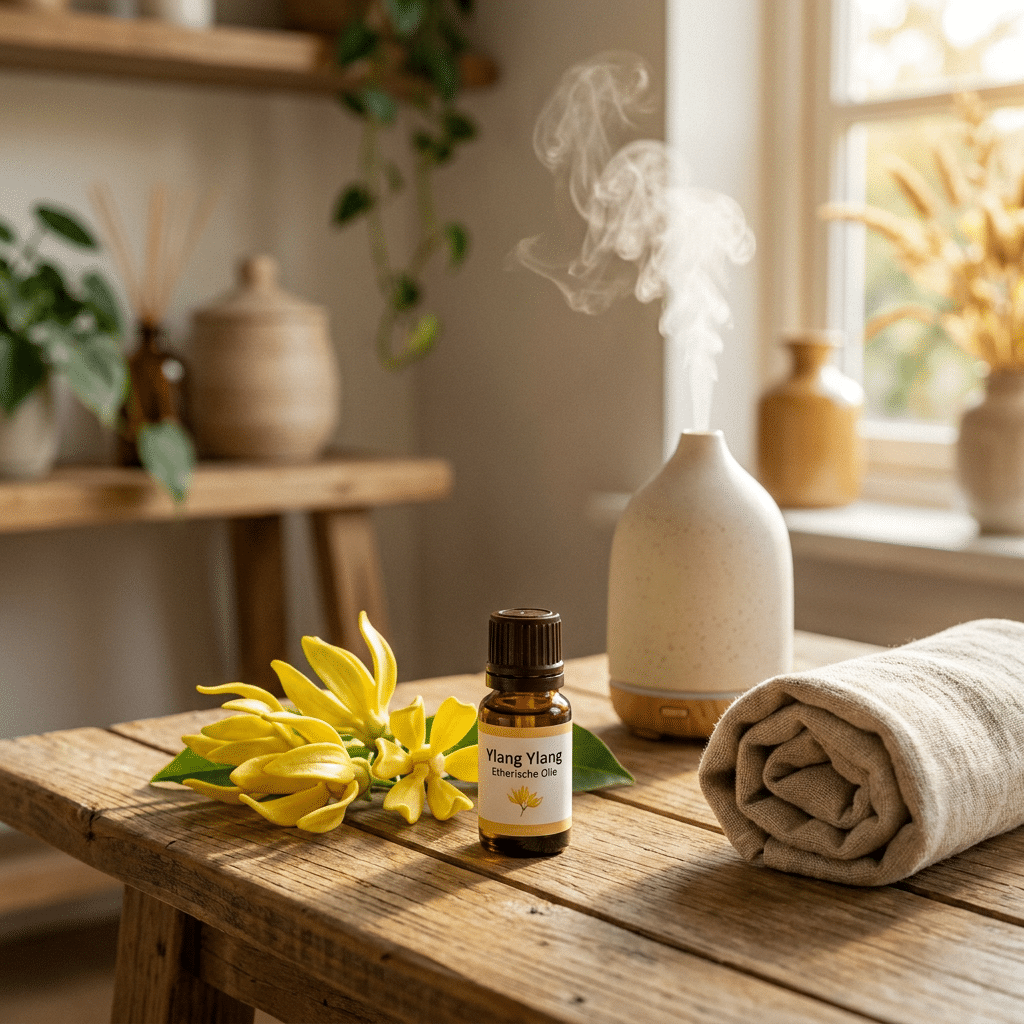

Ylang-ylang essential oil is known for its rich, sweet, floral scent. It is an oil that many people choose to bring a sense of calm, gentleness and a warm, fragrant moment into their home or as part of a self-care routine. The scent is full-bodied, exotic and distinctly noticeable, meaning that just a few drops are often enough.
Would you like to know what ylang-ylang oil is good for, how to use it and why you come across different grades, such as ‘extra’ or ‘complete’? Below you’ll find the most important information clearly summarised, including practical tips for use in a diffuser, for massage, for skincare and Safe use of essential oils.
What is ylang-ylang used for?
Ylang-ylang essential oil is mainly used for its scent. Many people find this oil comforting, relaxing and sensual. That is why it is ideal for an evening ritual, a gentle massage or a moment when you want to consciously slow down.
- For a warm, floral atmosphere in your home
- As a fragrance in a diffuser or oil burner
- In a diluted massage or body oil
- As part of a natural perfume blend
- Used in small quantities in skin or hair care products
If you’re looking up the effects of ylang-ylang essential oil, it’s usually about this combination of scent, atmosphere and skincare benefits. It’s not an oil you need in large quantities. In fact, it’s when used sparingly that its character really comes into its own.
What exactly is ylang-ylang?
Ylang-ylang oil is steam-distilled from the flowers of Cananga odorata, a tropical tree that grows in Madagascar, the Comoros and other warm regions, amongst others. The flowers naturally have an intense, perfume-like aroma. It is no coincidence that ylang-ylang is often translated as “flower of flowers”.
The scent is sweet, floral, creamy and slightly spicy. Some people recognise notes reminiscent of jasmine, banana or a delicate floral perfume. It is precisely this complexity that makes ylang-ylang popular in aromatherapy and natural perfumery.
Ylang-ylang and cananga: what’s the difference?
Ylang-ylang and Cananga oil (related to ylang-ylang) They come from the same botanical family, but they don’t smell the same. Ylang-ylang is generally considered to be more delicate, rounder and more floral. Cananga often smells greener, drier and a little more robust. So, if you see both names listed on products, it’s worth bearing in mind that the scent experience can vary considerably.
How is ylang-ylang essential oil made?
The harvest is crucial for producing high-quality ylang-ylang oil. The flowers are picked when their scent is at its strongest. They are then processed as quickly as possible, as the aroma of fresh flowers is delicate. The oil is produced by steam distillation: hot steam passes through the floral material, carrying the aromatic compounds with it, and is then cooled. This causes the water and oil to separate.
Harvesting and steam distillation
Ylang-ylang is an oil for which timing is crucial. Not only the condition of the flower, but also the duration of the distillation process influences the scent. As a large number of flowers are needed to produce a small quantity of oil, this is a costly raw material. This also explains why genuinely pure ylang-ylang rarely comes at a price that seems “too good to be true”.
Extra, I, II, III and complete
With ylang-ylang, you often come across different fractions or quality designations. This isn’t just a marketing ploy, but is actually down to the distillation process. During the process, different fractions are collected at different stages.
Ylang ylang Extra is the first fraction. It usually has the most refined, light and distinctly floral scent and is widely used in perfumery. This is followed by Ylang Ylang I, II and III, which often have a slightly fuller, warmer or heavier scent. Ylang-ylang ‘complete’ is not a separate first fraction, but a blend of the entire distillation. As a result, the scent is often rounder, deeper and more natural as an overall impression.
Which variant you prefer depends on your purpose. For an elegant fragrance experience, many people opt for ‘Extra’. For use in a diffuser or for a more earthy, fuller aroma, ‘Complete’ is often a lovely choice. If you’re looking to buy ylang-ylang oil, this is one of the first things to check on the label.
The effects and scent profile of ylang-ylang oil
In practice, the effects of ylang-ylang oil are primarily associated with atmosphere and experience. It is a scent often chosen to clear a cluttered mind and bring a sense of calm to a room or ritual. Many people find it helpful for inner peace and meditation, yoga, massage or a quiet evening.
At the same time, ylang-ylang is not a “fresh” or neutral oil. It is rich, sensual and distinctive. As a result, it is usually used in small quantities or in combination with other oils. Some lovely scent combinations include sweet orange, bergamot, mandarin, lavender, geranium, cedarwood, sandalwood and patchouli.
If you find the scent a bit too strong, start with a very small amount. One drop too many can make the difference between a lovely, warm scent and one that’s just a bit too overpowering.
How to use ylang-ylang oil
In the diffuser
Ylang ylang works best in a diffuser when used as an accent oil. For a basic guide and practical tips: Essential oil in the diffuser. Start with 2 to 3 drops, for example; see How many drops should I put in the diffuser? and combine it with a fresh or woody oil. This keeps the blend balanced. An accessible combination is ylang-ylang with sweet orange or bergamot. For a calmer, warmer scent, consider cedarwood or lavender.
For massage and body oil
When used in a massage oil, ylang-ylang imparts a soft, luxurious scent. Always use it diluted in a carrier oil such as sweet almond oil, jojoba or apricot kernel oil. For the body, 1% is often more than enough. That works out at about 5 to 6 drops of essential oil to 30 ml of carrier oil. For the face, it’s best to use an even lower concentration.
In skin and hair care
Ylang ylang is also used in natural skin and hair care, mainly because of its scent and the nourishing sensation it provides when used in an oil blend. Do not apply it undiluted to the skin; instead, mix a small amount into a neutral carrier oil, hair oil or mask. Due to its strong scent, less really is more in this case.
In the bath
Usage Essential oil in the bath Never add it undiluted directly to bath water. Oil does not mix with water and may therefore come into contact with the skin in a highly concentrated form. You should therefore first mix ylang-ylang with a bath oil, a neutral shower base or a spoonful of vegetable oil. The same rule applies here: a few drops are usually enough.
Safe use, dosage and pregnancy
Ylang-ylang is a potent essential oil. Not because you need to use a lot of it, but precisely because the scent and skin reaction can quickly become intense if you use too much. If used in excess, some people may experience headaches, nausea or find the scent overwhelming. See also: Contraindications for essential oils for situations where you need to be extra careful or would be better off avoiding them.
- Always use the oil diluted on the skin
- Start with a low setting, especially when using the diffuser or in the bath
- Avoid contact with the eyes and mucous membranes
- Do not apply to irritated or damaged skin
- If you have sensitive skin, carry out a patch test first
- Use only in accordance with the label and product information
For external use, a low dosage is usually sufficient. For the body, you might use around 1%; for the face, a lower amount; and in a diffuser, often 2 to 4 drops in total per session. More is rarely better.
Pregnancy and other sensitive situations
We often come across the question, “Which essential oil should I use during pregnancy?” Caution is always the guiding principle here. During pregnancy, whilst breastfeeding, with young children or if you have a sensitive health condition, you should only use essential oils after seeking personal advice from an expert who is familiar with your situation. This also applies to ylang-ylang. In any case, never use it undiluted, and be particularly cautious with strong scents if you are prone to nausea or have a sensitive reaction.
What should you look out for when buying ylang-ylang oil?
If you’re thinking of buying ylang-ylang oil, don’t just look at the price or the packaging. With this oil in particular, the product information says a lot about its quality.
- The botanical name Cananga odorata
- Indication of the part of the plant used: flowers
- The extraction method: steam distillation
- Whether it’s Extra, I, II, III or the complete set
- A 100% pure formulation with no added fragrances
- A dark glass bottle and clear safety information
Whether you’re buying online or in a shop, a transparent label is more important for single-note essential oils than a quick bargain. At De Groene Linde, we believe it’s important that an oil not only smells lovely, but is also presented honestly and clearly.
Frequently Asked Questions
What is ylang-ylang used for?
Ylang ylang is mainly used to create a warm, floral scent in diffusers, massage oils, bath rituals and natural perfume blends. Many people choose this oil for relaxation, softness and a luxurious pampering experience.
Can you use ylang-ylang essential oil directly on the skin?
No, that’s usually not a good idea. Always use ylang-ylang diluted in a carrier oil or skincare base. The oil has a strong scent and can be too intense for sensitive skin if applied undiluted.
What is the difference between ylang-ylang extra and ylang-ylang complete?
Ylang ylang Extra is the first and most refined distillation fraction and is often chosen for use in perfumes. Ylang ylang Complete consists of the entire distillation and usually has a fuller, warmer and slightly deeper scent.
Which essential oil should you use during pregnancy?
There is no standard answer to this, as sensitivity and circumstances vary from person to person. Use essential oils with caution during pregnancy, and preferably only after seeking personal advice from an expert. This also applies to ylang-ylang.
Which oils blend well with ylang-ylang?
Ylang-ylang blends beautifully with citrus oils such as sweet orange, mandarin and bergamot, as well as with lavender, geranium, cedarwood, sandalwood and patchouli. This allows you to make the scent fresher, calmer or, conversely, deeper.
Related articles

Koshi, discover the magic of sound and nature
A gentle breeze, the sound of rippling water or the rustling of leaves. Sound can have a special effect on you. It can take you out of your head and draw your attention...
Read more

Working with Koshi’s, the magic of sound and the four elements
Perhaps you’ve experienced that moment when someone plays a Koshi. During a yoga class or some other relaxing moment. The first notes sound clear and soft, and then seem to….
Read more
Happy Autumn: turning inwards, letting go and enjoying the moment
Autumn is here. Whilst for some it means cosiness, for others autumn can evoke a completely different feeling. And with that different feeling, I am...
Read more